


More news on this day
Passengers on Nigerian carrier Air Peace have faced hours-long delays and disruption across the airline’s network after a power surge knocked out a critical IT system used for crew scheduling and flight planning, according to local media reports.
Get the latest news straight to your inbox!
Power surge hits core airline systems
Reports from Nigerian aviation media indicate that the disruption began when a power surge affected one of Air Peace’s main IT infrastructure servers, temporarily disabling tools used to assign crew and plan flight rotations across its domestic and regional routes. The fault, which emerged at the start of a busy travel period, quickly cascaded into widespread delays as aircraft and staff could not be deployed in their usual sequence.
According to published coverage, the outage left the airline temporarily unable to access up-to-date crew rosters and operational data, forcing manual workarounds and slowing decision-making. Without automated scheduling systems, seemingly routine tasks such as matching pilots and cabin crew to aircraft, validating duty-time limits and confirming turnaround times became significantly more complex.
The airline has described the event as a technical setback linked to its back-end infrastructure rather than a safety issue, and available information suggests that flights already in the air continued operating. The main impact was felt on the ground, where departures were held while teams tried to reassemble accurate schedules and revalidate flight plans.
Aviation analysts often note that modern airlines are highly dependent on interconnected IT platforms for everything from dispatch and maintenance tracking to crew logistics. When a single critical server or application fails, the knock-on effects can resemble a network-wide traffic jam, even if the underlying hardware fault is short-lived.
Passengers face long waits and frayed nerves
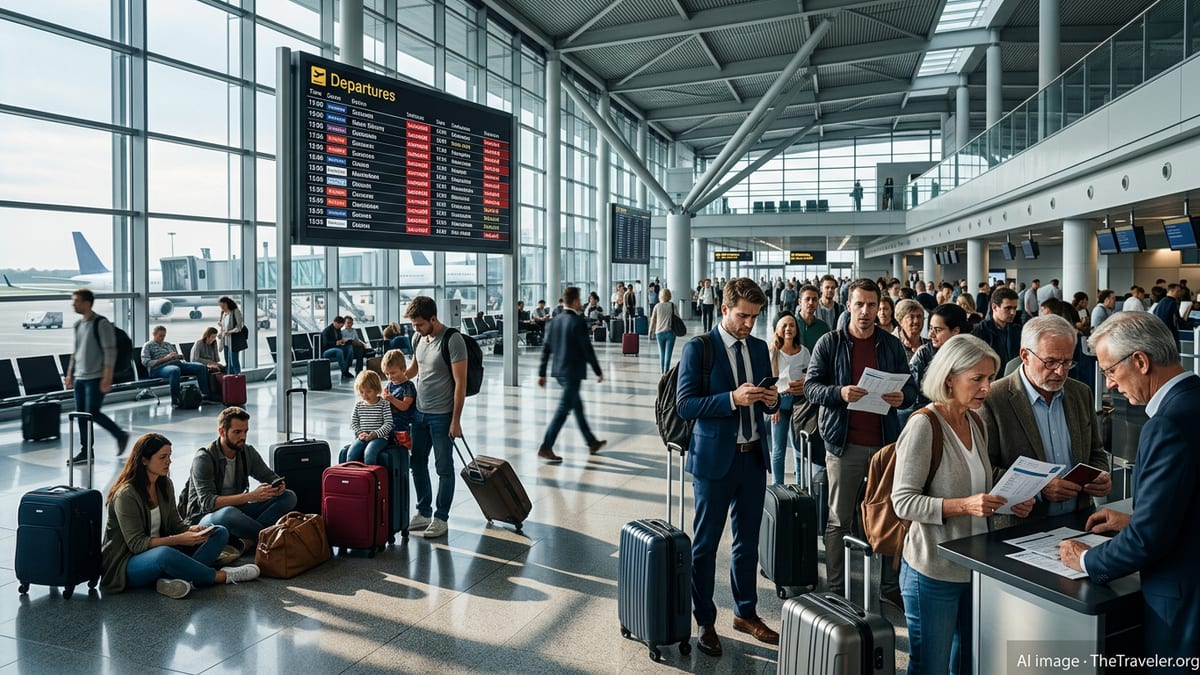
Travelers flying with Air Peace on affected routes reported extended waits at departure gates and check-in counters, with some domestic services departing several hours behind schedule. Local news accounts describe crowded terminal areas, lines at customer-service desks and a shortage of clear information as staff tried to keep up with rapidly changing departure times.
On some routes, passengers were reportedly boarded and then held on aircraft as new crew assignments and flight plans were loaded, adding to frustration. Others said they received multiple schedule updates as flights were successively retimed while the airline worked through the backlog created during the outage window.
Visible disruption appeared most acute at the carrier’s main base in Lagos, where a high volume of domestic connections and regional services increases the risk of missed onward flights when delays accumulate. Travelers relying on tight connections faced particular uncertainty, with some having to abandon same-day plans or seek hotel accommodation while waiting for new departure options.
Publicly available commentary from consumer advocates suggests that the experience at Air Peace mirrors broader patterns seen when airlines encounter sudden IT failures. Once rotations are knocked out of sequence, aircraft and crew can end up in the wrong place at the wrong time, creating a rolling wave of delays that can take many hours, and in some cases days, to fully resolve.
Air Peace response and efforts to restore operations
According to Nigerian press reports, Air Peace has apologized to customers affected by the disruption and said its technical teams moved to restore the impacted server and bring systems back online. The airline has indicated that the issue has been addressed and that work is under way to stabilize schedules and normalize operations across its network.
In the immediate aftermath, the carrier focused on recovering its most time-critical services, prioritizing flights with large numbers of connecting passengers and those serving busy business and international routes. This triage approach is common when airlines rebuild schedules following an outage, as it can reduce broader disruption even if some point-to-point routes continue to face delays.
Operational updates shared through public channels encouraged passengers to arrive early for flights, monitor status via the airline’s app and contact customer-service teams for rebooking assistance where necessary. Industry observers note that, in similar incidents globally, a combination of overloaded call centers and crowded airport desks can slow the rebooking process, making digital tools an important alternative for travelers who still have access to them.
While details of any formal review have not yet been widely reported, aviation specialists generally expect airlines hit by such failures to examine backup power protection, server redundancy and disaster-recovery procedures, with an eye to reducing the risk of a repeat occurrence.
IT failures highlight aviation’s digital vulnerability
The Air Peace incident adds to a growing list of airline disruptions around the world linked to IT outages, software glitches or data-center problems. Recent months have seen carriers in North America, Europe and Asia deal with check-in failures, reservation-system crashes and crew-scheduling issues that have led to significant flight delays and cancellations.
Industry analyses frequently highlight that modern aviation depends on large, complex software stacks that must remain available around the clock. Power problems, failed updates, cybersecurity incidents or third-party vendor issues can all ripple through this ecosystem, leaving airlines scrambling to maintain basic services while engineers work in the background.
For airlines based in fast-growing markets, the challenge is often compounded by rapid expansion in route networks and passenger volumes. As carriers add new destinations and aircraft, their IT and operational systems must scale accordingly. If technology investment and redundancy measures do not keep pace, even a single point of failure can have outsized consequences for travelers and staff.
Specialists also point out that climate-related disruptions, crowded airspace and resource constraints at airports have already left global aviation more vulnerable to cascading delays. When an IT failure occurs on top of these existing pressures, the result can be a network that takes longer to recover, particularly during peak travel periods.
What affected travelers can do next
For passengers caught up in the latest Air Peace delays, consumer groups recommend keeping detailed records of boarding passes, booking confirmations and receipts for extra expenses such as meals, ground transport or accommodation. These documents can support any later request for refunds or reimbursement, depending on the airline’s policies and applicable regulations.
Travel-rights organizations generally advise travelers to review the specific terms and conditions of their tickets, as well as any protections included with travel insurance or credit card benefits. In some jurisdictions, passenger-compensation rules distinguish between disruptions caused by extraordinary external events and those linked to internal operational or technical issues, which may affect eligibility for cash payments.
Experts also suggest that passengers remain proactive about rebooking options during major disruptions. In previous global cases, travelers who simultaneously joined airport service lines, used airline apps and contacted call centers often managed to secure earlier departures or alternative routings than those relying on a single channel.
While the immediate priority for Air Peace is to clear the backlog created by the IT outage and restore a stable schedule, the incident is likely to renew scrutiny of how airlines in the region invest in resilient technology and communicate with customers when digital systems fail.