


More news on this day
Italy’s yacht design scene is spotlighting a new 33 metre concept, the Wanderlust95, a layered, resort-inspired motor yacht that aims to turn coastal cruising into a boutique hotel experience at sea.
Get the latest news straight to your inbox!
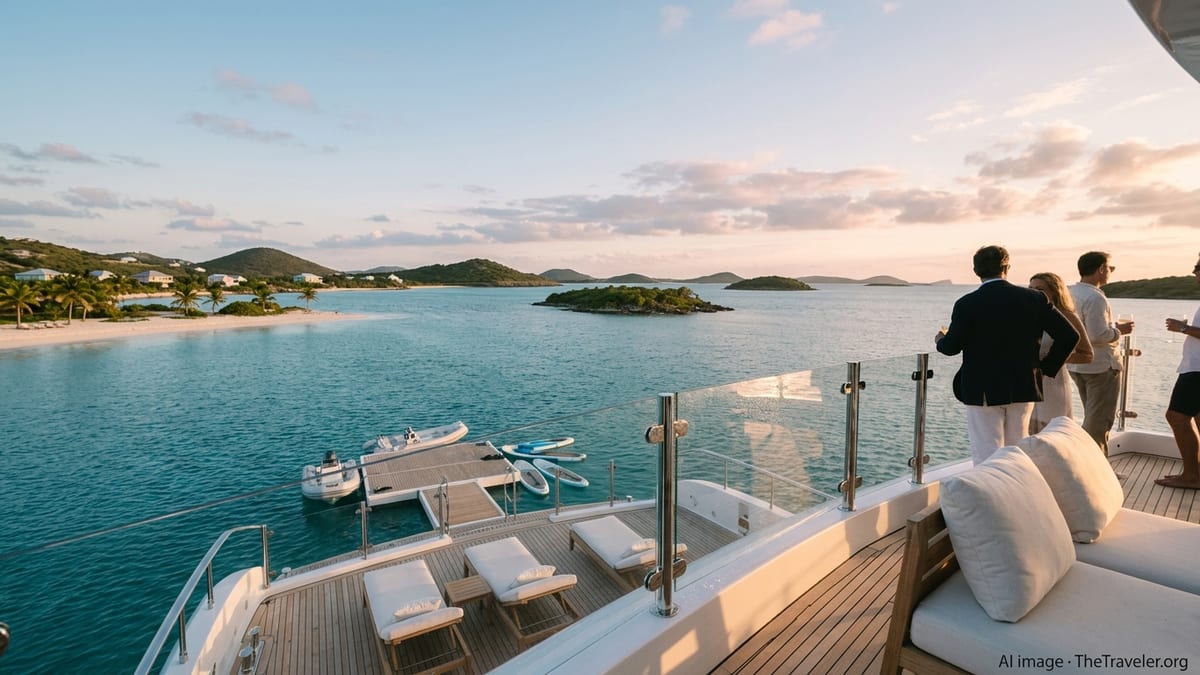
Layered Architecture Reimagines Space On A 33 Metre Hull
Early design material on the Wanderlust95 indicates that Italian designers are leaning into a layered architectural approach more commonly seen on much larger superyachts. Instead of a traditional, linear profile, the 33 metre concept is organised as a series of horizontal tiers, visually stacked to accentuate length while preserving a low, streamlined silhouette.
The decks are arranged as overlapping platforms, with the superstructure carved back to create deep overhangs and shaded terraces. Large bands of glazing run almost uninterrupted along the profile, a design move that has been gaining traction on recent Italian superyacht concepts and is now migrating into the sub‑40 metre segment. The intention is to dissolve the boundary between interior lounges and open decks so that views of the sea remain present from nearly every social area on board.
The layered profile is not purely aesthetic. The stepped geometry allows the designers to shift volume forward and outboard, freeing up space at the stern for a full‑beam beach club and open‑air pool terrace. It also helps control the yacht’s apparent height, a recurring challenge for designers working within strict length and tonnage brackets while still responding to owners’ requests for multi‑level outdoor living.
Resort-Style Beach Club At The Heart Of The Concept
Published descriptions of the Wanderlust95 concept suggest that the aft section is treated as the yacht’s focal point, echoing the resort beach club layouts that have become a signature of many Italian‑built superyachts. Fold‑out bulwarks are expected to expand the beam at water level, transforming the stern into a broad, teak‑clad platform for lounging, swimming and tender access.
At the centre of this terrace, design visuals indicate a pool aligned longitudinally with the hull, framed by sun pads and loose resort furniture rather than fixed benches. This approach mirrors trends seen on larger concept yachts, where open, flexible deck plans allow owners and charterers to reconfigure spaces between daytime relaxation and evening events. Access down to the sea is handled through wide, central steps that double as informal seating.
Inside, the beach club connects to a wellness zone through sliding glass doors, creating a climate‑controlled extension of the water‑level terrace. Designers appear to be drawing inspiration from spa suites in contemporary coastal hotels, with soft lighting, warm timber finishes and an emphasis on tactile materials. This connection between indoor and outdoor spaces reflects a broader shift in yacht design toward lifestyle‑driven layouts instead of purely technical compartmentalisation.
Interiors Take Cues From Boutique Mediterranean Hotels
Although the Wanderlust95 remains a design study, the interior palette described in early coverage aligns with the “floating residence” language widely used across Italy’s latest yacht launches. Light, neutral tones, pale woods and textured fabrics are favoured over glossy finishes, creating an atmosphere more reminiscent of a boutique Mediterranean resort than a traditional, formal yacht interior.
The main deck is expected to feature an open‑plan salon and dining area with nearly full‑height windows, emphasising cross‑ventilation and daylight rather than heavy partitions. Designers are reportedly favouring freestanding furniture and modular seating to allow layouts to evolve with different cruising patterns, from family trips along the Tyrrhenian coast to charter weeks in the Adriatic.
In the owner’s suite, located forward on the main deck, the layered design theme continues through architectural headboards, ribbed wall panels and recessed lighting. The intention is to create depth and rhythm without resorting to ornate detailing, in line with the quiet luxury aesthetic now prevalent in Italian yacht interiors. Guest cabins on the lower deck repeat the neutral palette, with carefully placed mirrors and indirect light used to amplify the perception of volume within the 33 metre envelope.
Made-In-Italy Know-How Targets Long-Stay Coastal Cruising
Information available so far places the Wanderlust95 clearly within Italy’s tradition of long‑range, comfort‑focused motor yachts. While full performance figures have not yet been disclosed, the concept appears tailored for extended coastal cruising rather than short, high‑speed hops. Emphasis on hull efficiency, noise reduction and stabilisation mirrors recent Italian projects in the 30 to 35 metre range, where owner demand has shifted toward slow, comfortable passages between resort destinations.
The layered superstructure and expansive glazing also respond to a practical requirement for liveability. As more owners and charter guests choose to spend several weeks at a time aboard, designers are challenged to provide the same variety of spaces as a compact shore‑side hotel. The Wanderlust95’s configuration of shaded lounges, open sun decks, indoor salons and water‑level wellness areas reflects this mandate to offer multiple “micro‑environments” within a relatively modest footprint.
The concept’s Italian provenance is evident in the detailing outlined by design notes, from the integration of sculptural staircases to the use of custom loose furniture and locally sourced stone. These touches are increasingly important in a market where yachts compete as much on the quality of their onboard lifestyle as on pure engineering.
Sign of a Growing Resort-At-Sea Trend
Industry observers view the Wanderlust95 as part of a wider movement that blurs the boundary between private yacht and luxury resort. Recent initiatives in Italy that pair high‑end hotels with dedicated yachts and marine experiences show how the country’s shipyards and hospitality groups are aligning their strategies. Concepts like the Wanderlust95 slot neatly into this landscape, offering a platform that can serve private owners while also being readily adaptable for boutique charter operations.
For travellers, this evolution means that experiences once reserved for very large superyachts are now appearing on vessels under 40 metres. Layered decks, beach‑club pools and spa‑inspired interiors are gradually becoming standard expectations rather than rare amenities. The Wanderlust95’s unveiling underscores how Italian designers are using architectural techniques, materials innovation and hotel‑influenced planning to compress an entire resort into the footprint of a 33 metre yacht.
As the design progresses, attention is likely to focus on how efficiently the layered exterior translates into everyday functionality at sea, including crew circulation, storage and service logistics. If these considerations are resolved as cleanly as the early visuals suggest, Wanderlust95 could offer a blueprint for the next generation of compact, resort‑style yachts tailored to itineraries along Italy’s own coasts and beyond.