


More news on this day
Passengers on American Airlines–marketed Republic Airways flight AA4631 from Indianapolis to New York experienced an unexpected diversion to Pittsburgh International Airport, underscoring how routine operational decisions can temporarily reshape travel plans across the busy Northeast corridor.
Get the latest news straight to your inbox!
What Happened on Flight AA4631
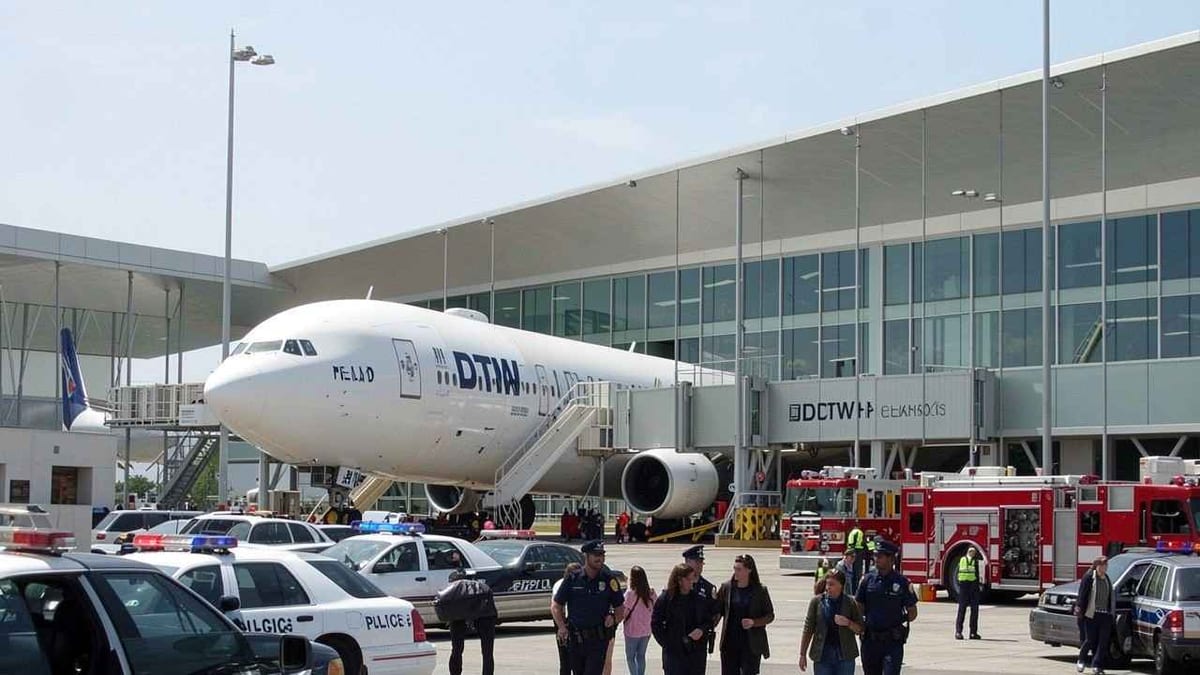
Publicly available flight-tracking and schedule data indicate that AA4631, marketed by American Airlines and operated by regional partner Republic Airways using an Embraer 175, was scheduled to operate from Indianapolis International Airport to New York. Instead of continuing to its planned New York destination, the flight diverted to Pittsburgh International Airport, a key facility in western Pennsylvania that frequently receives rerouted traffic when conditions tighten at major East Coast hubs.
The diversion meant passengers arrived at a different airport than ticketed, a scenario that is relatively uncommon on any given day but not unusual within the broader context of U.S. domestic air operations. Diversions are typically ordered for reasons such as weather constraints in the destination area, congestion in busy airspace, or operational considerations involving fuel, crew duty limits, or flow-control measures.
While specific real-time reasons for individual diversions are not always publicly disclosed, tracking platforms and historical weather or traffic patterns around New York and the surrounding region suggest that a combination of airspace and scheduling pressures often drives such decisions. For travelers, the result is an unplanned intermediate stop that triggers a cascade of rebooking and ground-handling actions.
Why Airlines Divert Flights in the Northeast Corridor
The airspace serving New York’s major airports is among the most congested in the world. In this environment, regional flights like AA4631 are more exposed to delays, holding patterns, and potential diversions when traffic volume or weather makes it difficult to safely and efficiently maintain the planned arrival sequence. When conditions deteriorate or capacity is reduced, dispatchers, crews, and air traffic management work within defined procedures to redirect aircraft to alternate airports.
Pittsburgh International Airport often functions as a practical alternate in such situations. It offers sufficient runway length, available gate space, maintenance support, and established relationships with multiple carriers and regional operators. For Republic Airways, which has long-standing operational ties to Pittsburgh and maintains a sizable Embraer 175 fleet, the airport provides a familiar environment for handling an inflight route change.
Across the industry, diversions are considered a safety-first tool rather than an exception dictated by convenience. When fuel reserves, weather conditions, or traffic saturation risk pushing a flight beyond the buffers built into its dispatch plan, landing at a suitable alternate is treated as a routine protective measure. Most diverted flights eventually continue to their original destination or, if schedules and crew limits make that impractical, are replaced with later departures.
Republic Airways’ Role and the Embraer 175 Aircraft
Republic Airways operates one of the world’s largest fleets of Embraer 170 and 175 regional jets and flies under the American Eagle brand on behalf of American Airlines, as well as for other major U.S. carriers. The airline is headquartered in Indianapolis and uses several hubs, including New York LaGuardia and Pittsburgh, to connect smaller and mid-sized markets into larger networks.
The Embraer 175 used on AA4631 is a common regional jet on short and medium domestic routes. It typically seats around 70 to 76 passengers in a two-class configuration, with a mix of first class and economy seating. Aviation forums and passenger feedback sites often describe the E175 as comparatively comfortable among regional aircraft types, with standard overhead bin capacity and a cabin height that allows many passengers to stand fully upright.
In diversion scenarios, the characteristics of the aircraft and the operator’s network matter. A regional jet like the Embraer 175 can typically operate into a wide range of airports while still offering the range required to support alternate routing decisions. For Republic Airways, familiarity with both Indianapolis and Pittsburgh, along with its broader Northeast operations, supports efficient handling when last-minute adjustments are needed.
What Passengers Can Expect After a Diversion
When a flight such as AA4631 diverts to an airport like Pittsburgh instead of continuing to New York, travelers generally face a series of follow-on steps involving rebooking, ground transfers, or an eventual continuation flight. Airline systems are designed to automatically seek alternative options, reassigning passengers to later departures, partner flights, or in some cases ground transportation, depending on timing and capacity.
Public guidance from airlines and consumer information from U.S. transportation authorities indicate that passenger rights and assistance vary depending on the cause of the disruption. If the diversion is related to weather or broader air traffic control constraints, lodging and meal vouchers are less consistently offered, as these events are typically categorized as outside the carrier’s direct control. When operational or mechanical factors within an airline’s responsibility are involved, more extensive amenities or accommodations may be provided.
Travelers affected by a diversion are often advised by consumer advocates to monitor airline apps, airport departure boards, and text notifications for updated information on new flight numbers, gates, or rerouting plans. At a large facility like Pittsburgh International, multiple daily departures to major hubs can help absorb displaced passengers, although peak-period demand may still lead to extended connections or overnight stays for some.
How to Prepare for Future Disruptions
Events like the diversion of AA4631 highlight the value of preparation when flying through congested airspace or during seasons with elevated storm risk. Travel specialists frequently recommend that passengers leave extra time for connections, especially when transiting through or into New York, and consider earlier departures in the day to reduce exposure to cumulative delays that build up across an airline’s schedule.
Maintaining up-to-date contact details in airline profiles, enabling push notifications in mobile apps, and saving booking references offline can help travelers respond quickly when plans change. In the case of a diversion, rapid awareness of the new arrival airport, the revised itinerary, and any rebooking options can make it easier to coordinate with ground transportation, hotels, or connecting flights.
For business and leisure travelers alike, diversions remain a relatively rare outcome of air travel, but they form a predictable part of how airlines and regional partners like Republic Airways manage complex networks safely. Understanding the basic mechanics of why a flight might shift from Indianapolis to New York and instead pause in Pittsburgh, as AA4631 did, can help set expectations and reduce uncertainty the next time operational realities reshape a planned journey.