


More news on this day
Japan Airlines’ flagship Boeing 777-300ER First Class, branded as the JAL Suite, continues to operate key long haul routes in 2026, even as the carrier’s newer A350-1000 cabins set a higher bar. For travelers planning premium trips to and from Japan, the question is no longer whether JAL First is luxurious, but whether this older 777 product still justifies its price and points premium over business class and the latest-generation suites.
Get the latest news straight to your inbox!
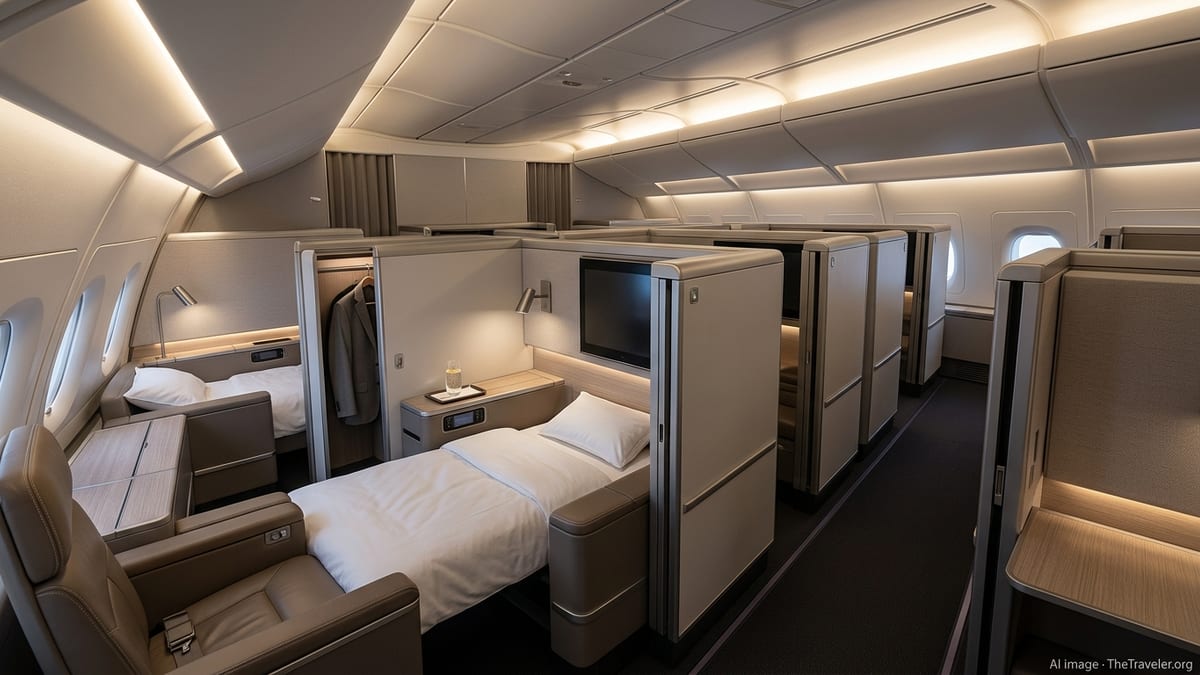
The JAL Suite: Space, Privacy and an Aging Design
Japan Airlines equips its Boeing 777-300ER First Class cabin with just eight JAL Suite seats set in a 1-2-1 configuration across two rows, creating an intimate front cabin separated from business class. Publicly available seat maps and airline materials indicate each suite is wide, fully flat and paired with Airweave bedding designed specifically for the carrier’s international First Class, aimed at turning the seat into a genuinely comfortable bed for overnight sectors.
Reviews from the last few years consistently highlight generous personal space, large dining tables and extensive storage as core strengths of the 777-300ER JAL Suite. Flyers generally report that the hard product excels at facilitating both work and sleep, with partitions offering a sense of seclusion even though the suites stop short of the fully enclosed doors now seen on the newest competitors.
At the same time, many recent trip reports describe the design language as clearly from an earlier era. Wood accents, large but lower resolution in-flight entertainment screens and relatively open side walls contrast with the ultra-modern styling on Japan Airlines’ A350-1000 First Class and some rival carriers. The result is a comfortable but visibly older cabin, which matters for travelers who prioritize a cutting-edge aesthetic as much as usable space.
Temperature control and lighting are often singled out as mixed aspects. Some flyers praise the warm, residential feel, while others note the lack of individual air nozzles and a cabin that can feel warm compared to newer aircraft. These details do not negate the overall comfort, but they contribute to the sense that the 777 product is no longer at the very forefront of hardware innovation.
Service, Dining and Japanese Hospitality Remain Standout
Where the 777-300ER First Class still draws strong praise is in its soft product. Reports from 2025 and 2026 describe consistently attentive crews, precise service routines and a level of hospitality that many travelers consider a key reason to choose JAL First regardless of aircraft type. Cabin staff are frequently noted for anticipating preferences, pacing meals carefully and maintaining a quiet, calm atmosphere even on full flights.
Catering is another major selling point. International First Class menus on the 777-300ER continue to offer a choice between elaborate Japanese kaiseki-style courses and Western fine dining, often designed in partnership with well known chefs. Recent reports indicate that high end champagne and premium sake remain part of the offering, alongside made to order snacks and light dishes throughout the flight.
Bedding and amenities reinforce the premium feel. Airweave mattress toppers, large pillows and quality duvets are widely cited in reviews as turning the already spacious seat into a genuinely comfortable sleeping surface. Amenity kits typically feature Japanese skincare brands and practical items such as eye masks and earplugs, while pajamas and slippers are usually provided on overnight sectors.
These elements combine to create an experience that many travelers still rank among the world’s best First Class services, even if the physical seat is no longer state of the art. For passengers who value hospitality, food and rest above avant garde cabin design, the 777-300ER JAL Suite remains a compelling proposition.
777-300ER First Class vs A350-1000 and JAL Business Class
The value question in 2026 hinges less on whether JAL First is good and more on what it is being compared to. Since early 2024, Japan Airlines has been rolling out all new cabins on its Airbus A350-1000 fleet, including a radically updated First Class with just six suites in a 1-1-1 layout, floor to ceiling walls, larger screens and a significantly more modern feel. Public information from the airline and independent reviewers portrays this A350 product as a generational leap over the 777-300ER JAL Suite.
On routes where both aircraft operate, frequent flyers often describe the A350-1000 First Class as markedly superior in privacy, technology and overall wow factor. The 777-300ER, by contrast, is now viewed as the “classic” or outgoing First Class: still spacious and premium, but clearly overshadowed by the newer design. Travelers who prioritize the very best available product and have flexibility in routing may therefore gravitate toward A350 services when possible.
JAL’s own business class also complicates the value calculation. The airline’s Sky Suite business product on the 777-300ER is widely regarded as one of the strongest business cabins in the market, offering fully flat beds, direct aisle access and significant privacy in a staggered configuration. In many independent reviews, passengers point out that the gap between JAL 777 business and First has narrowed, especially considering that business fares and award prices are typically much lower.
For cost conscious premium travelers, JAL business class on the 777-300ER may deliver enough comfort to make First Class feel like a luxury rather than a necessity. The incremental benefit of First, in this context, becomes about exclusive service touches, more space and upgraded food and beverage rather than an entirely different category of comfort.
Pricing, Points and Where the 777-300ER Still Shines
From a cash perspective, published premium fares between North America, Europe and Japan on the 777-300ER often place JAL First among the more expensive options in the market, particularly on nonstop flights to Tokyo. However, pricing can vary significantly by season and route, and occasional sale fares or consolidator offers may narrow the gap between First and business class.
For many international travelers, the more relevant question is whether the 777-300ER JAL Suite is worth it when booked with points or miles. Various frequent flyer programs, including oneworld partners, continue to publish award charts where First Class redemptions on Japan Airlines are available at a premium over business. In practice, the decision often comes down to availability patterns: some routes still see better award space in First than in business, especially far in advance or very close to departure.
In situations where the mileage premium is modest and availability is favorable, many experienced travelers consider the 777-300ER First Class an excellent use of points, particularly on longer overnight sectors such as Los Angeles to Tokyo or Tokyo to London. The combination of dedicated First Class ground services, quieter cabin and higher quality dining can make a meaningful difference on flights exceeding ten hours.
Conversely, when the mileage or cash premium is substantial and only the older 777 product is available, some travelers now choose to save points by flying business or to adjust their itinerary to secure the newer A350 First suite. That shift reflects how strongly the latest generation of premium cabins has reset expectations at the very top of the market.
Is JAL 777-300ER First Class Worth It in 2026?
Weighing the hardware, service and competitive landscape, Japan Airlines’ 777-300ER First Class remains a high quality product that delivers notable comfort and a refined expression of Japanese hospitality. The cabin’s age is evident in its design and technology, but the seat size, bedding and overall space still place it comfortably in the global First Class tier.
For travelers able to secure reasonable fares or mileage redemptions, particularly on long overnight flights where sleep and personalized service matter most, the JAL Suite on the 777-300ER can absolutely be worth the investment. Its strengths align well with travelers seeking quiet, privacy and attentive yet unobtrusive care rather than cutting edge design touches.
However, the arrival of Japan Airlines’ A350-1000 First Class and the strength of its business cabin mean that the 777-300ER JAL Suite is no longer the automatic top choice it once was. In 2026, value depends heavily on aircraft type, route, pricing and personal priorities. For some, the classic JAL Suite will remain a bucket list experience; for others, a well priced business seat or a re-routed A350 flight will represent the smarter upgrade.