

More news on this day
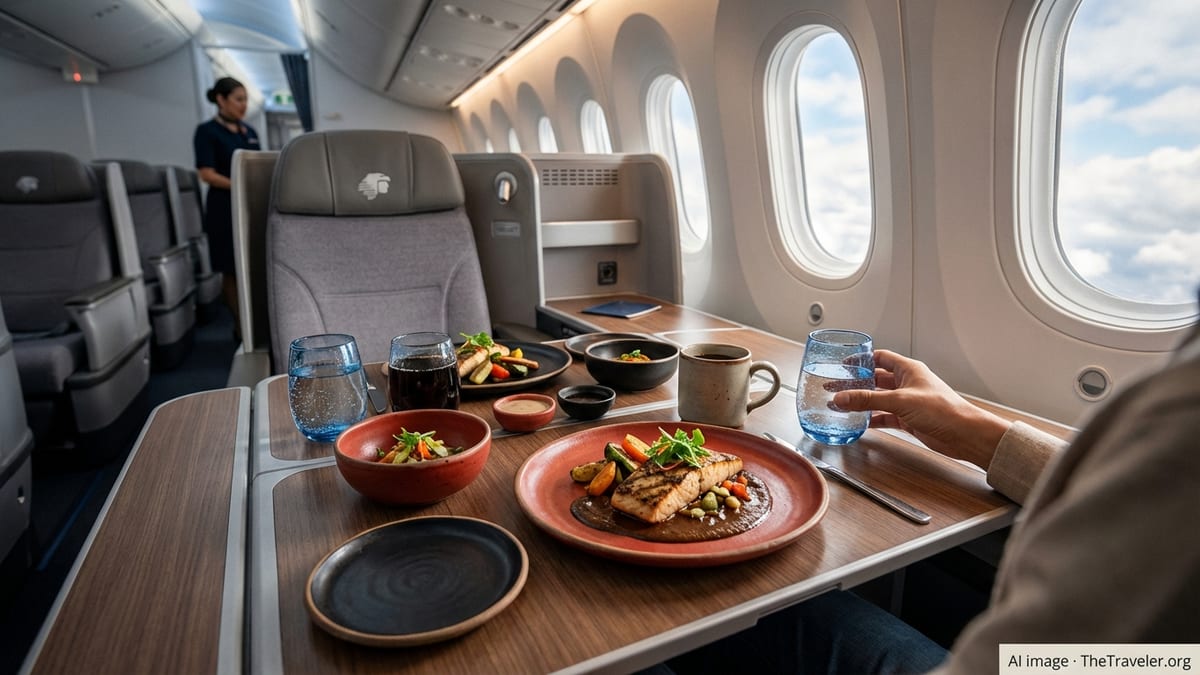
Japan Airlines is stepping up its premium long haul offering with a refreshed business class dining experience on major routes between Japan, the United States and Europe, positioning the carrier as a refuge for travelers navigating persistent global flight disruptions and congested hubs.
Get the latest news straight to your inbox!
Targeted Upgrade on High-Demand Transpacific and Europe Services
According to recent announcements and product information from Japan Airlines, the carrier is progressively renewing inflight meal service across all international cabins from spring 2026, with particular emphasis on First and Business Class. The airline’s North America and Europe networks, which include nonstop services from Tokyo to key US gateways such as New York, Dallas Fort Worth and Los Angeles, as well as European cities including London and Paris, stand among the primary beneficiaries of the upgrade focus.
Publicly available network data indicates that Japan Airlines currently operates dozens of international routes and continues to position North America and Europe as core pillars of its growth strategy. That long haul focus makes the business class dining refresh especially significant for travelers on overnight transpacific flights where meal quality, pacing and flexibility can have an outsized impact on comfort.
The service enhancements arrive as Japan Airlines deploys its latest Airbus A350-1000 flagship on headline routes such as New York to Tokyo and Dallas to Tokyo. While the new business class suites with closing doors have drawn most of the attention, the carrier is now clearly working to bring its soft product, particularly dining, in line with its latest cabin hardware.
Travel commentary and recent trip reports from frequent flyers highlight Japan Airlines’ international business class as one of the most in-demand products between the United States, Europe and Japan, with award seats often difficult to secure. Those same reports increasingly point to inflight meals, and the ability to dine on one’s own schedule, as a deciding factor when choosing between rival airlines on busy transpacific corridors.
Chef-Driven Menus and Expanded Pre-Order for Business Class
Details released in Japan Airlines’ English-language materials on enhanced inflight dining show that the carrier is adding new chef collaborations to First and Business Class from spring 2026. Two internationally active chefs are being introduced to curate menus that combine Japanese culinary sensibilities with global fine-dining trends, with rollouts timed across the international network.
Business class travelers on routes linking Japan with the United States and Europe are set to see an expanded range of seasonal Japanese and Western main courses, more refined presentation and a stronger emphasis on fresh, regionally inspired ingredients. The move builds on Japan Airlines’ long-running “BEDD” restaurant-in-the-sky concept, which already emphasizes multi-course meals designed by prominent Japanese and international chefs.
Japan Airlines is also stressing flexibility. Pre-order options for business class main dishes, as well as special meals that address dietary and religious requirements, are being promoted more prominently through the airline’s digital channels. Travelers are encouraged to select meals in advance via their booking management tools, improving the chance of securing preferred dishes on heavily booked US and Europe departures.
For passengers connecting at Tokyo Haneda or Narita from regional Japanese cities, the upgraded dining is intended to deliver a consistent experience from departure to arrival. The strategy is to ensure that, despite operational pressures and tight connections, business class customers encounter a predictable, restaurant-style service flow once seated on long haul segments.
Positioning Business Class as a Sanctuary Amid Global Travel Chaos
The timing of Japan Airlines’ business class dining refresh coincides with an extended period of strain across the global air transport system. Recent seasons have been marked by air traffic control staffing challenges, weather-driven disruptions and infrastructure constraints at major hubs in North America and Europe. As a result, travelers are increasingly seeking carriers that can provide a sense of calm once onboard, regardless of what unfolds at the airport.
Japan Airlines’ latest public statements emphasize “comfort” and “high-quality relaxation” as guiding principles behind its international meal service renewal. The airline is explicitly framing the upgraded dining experience as a key component of a broader sanctuary-like environment in premium cabins, combining quieter, more private seating with unhurried, multi-course service that can be tailored to each traveler’s schedule.
Industry observers note that such enhancements are no longer just a matter of prestige for full-service airlines. In an environment where delays and missed connections can quickly erode traveler goodwill, a consistently high standard of onboard food, beverage and hospitality has become a critical tool for rebuilding trust and encouraging repeat bookings, especially in high-yield business class cabins.
Japan Airlines appears to be betting that well-executed dining, paired with upgraded lounges and digital tools that smooth the journey, will help offset the frustration of crowded terminals and security queues. For time-pressed corporate travelers shuttling between US and European financial centers and Tokyo, this combination is likely to carry significant weight when choosing preferred carriers.
Integration with Wider Premium Experience: Cabins, Lounges and Digital Tools
The business class dining overhaul does not stand alone. Japan Airlines’ broader strategy documents for the current financial year reference a multi-layered premium upgrade program across aircraft cabins, lounges and digital platforms. On long haul international routes, this includes the phased introduction of all-suite business class cabins on next-generation aircraft and the refurbishment of key lounges at Tokyo Haneda and other hubs.
As part of these efforts, the airline is redesigning its mobile app and online interfaces to offer more intuitive access to options such as inflight meal selection, seat preferences and real-time flight updates. The aim is to minimize friction at the planning and airport stages so that, once boarding, travelers can focus on rest, dining and work rather than logistics.
In parallel, Japan Airlines has been refreshing its premium beverage program, pairing curated wines, Japanese sake and non-alcoholic options with the updated menus. Travelers on US and Europe routes can expect a more structured pairing philosophy, with cabin crew trained to guide passengers through the choices based on individual tastes and timing during the flight.
By aligning an elevated dining experience with seat privacy, improved lounges and streamlined digital touchpoints, the carrier is constructing a more holistic definition of business class. The goal is for passengers to perceive the entire journey, from booking to baggage claim, as a single, coherent premium product rather than a series of disjointed steps.
Competitive Pressure in the Transpacific and Europe–Asia Premium Market
Japan Airlines’ renewed focus on business class dining comes amid intensifying competition on routes linking the US and Europe with East Asia. Rivals including All Nippon Airways and major European network carriers have launched their own next-generation business class seats and upgraded culinary programs, raising expectations among frequent flyers.
In this context, Japan Airlines’ decision to double down on chef-led menus and expanded meal customization can be seen as an effort to secure a differentiated position. Rather than competing solely on seat width or direct aisle access, the airline is leaning into Japanese hospitality and cuisine as core elements of its value proposition for global travelers.
Travel industry analysts suggest that premium passengers choosing between airlines for long haul trips are increasingly weighing soft-product details such as food quality, service style and the ability to dine on demand. For those flying from the United States or Europe to Japan for business or high-end leisure, the promise of a quiet suite, carefully considered dishes and responsive service may be decisive when the hard products appear similar on paper.
As the northern hemisphere summer peak approaches and pressure on airports shows little sign of easing, Japan Airlines’ upgraded business class dining is likely to be closely watched by both travelers and competitors. Early feedback from transpacific and Europe–Japan routes will offer a gauge of whether the carrier’s strategy to provide a sanctuary in the sky matches the expectations of a demanding premium market.