


More news on this day
Air travel across Europe faced fresh disruption on June 18 as more than 80 flights were cancelled and around 576 delayed, with services by Virgin Atlantic, SAS, British Airways, KLM, Air Canada and other major carriers affected at airports in the UK, Netherlands, Norway, Germany, Switzerland, France, Finland and Italy.
Get the latest news straight to your inbox!
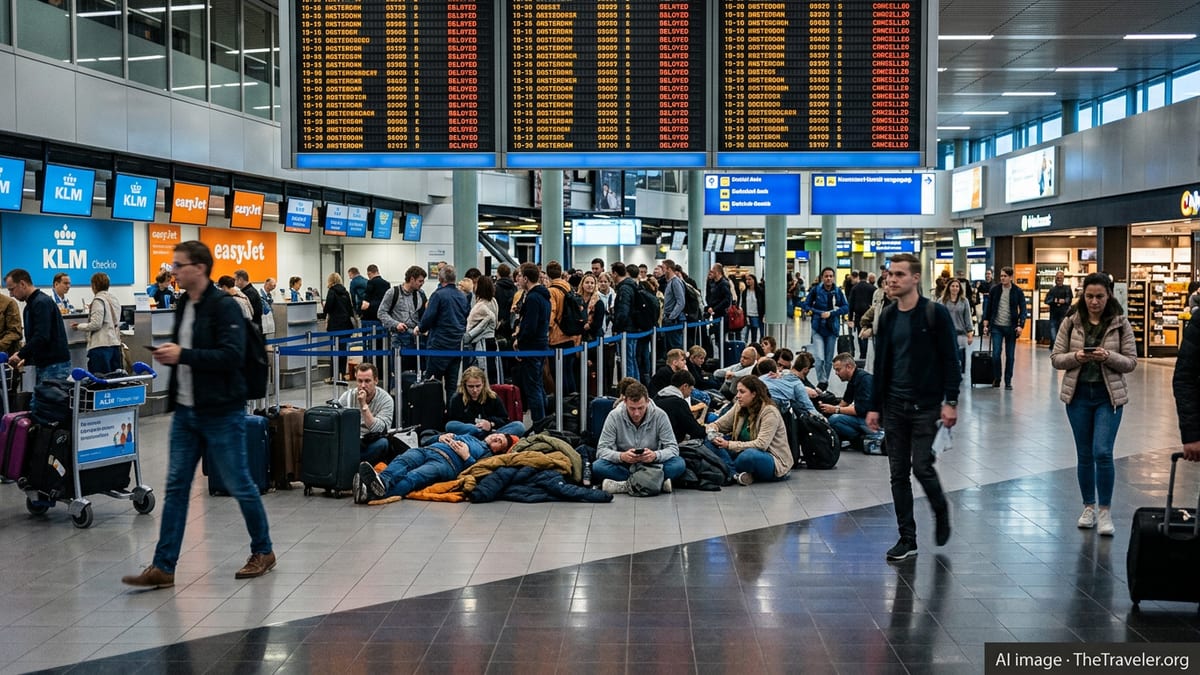
Wide Network Impact Across Key European Gateways
The latest wave of disruption hit some of Europe’s busiest hubs, including London, Amsterdam, Oslo, Frankfurt, Zurich, Paris, Helsinki and Rome. Data from real time flight tracking and operational performance reports indicates that a combination of airline scheduling adjustments, capacity constraints and knock on reactionary delays contributed to the cancellations and late departures.
Operational statistics from major UK airports show elevated delay incidents for long haul and transatlantic carriers such as Virgin Atlantic and Air Canada, alongside European operators including British Airways, SAS, KLM and Swiss. These reports highlight that reactionary delays, airport related bottlenecks and ground handling issues now account for a significant share of day to day disruption, compounding the effect of any single cancellation across airline networks.
In Amsterdam, earlier schedule reductions by KLM in response to fuel cost pressures and broader capacity planning have left the airline operating with tighter margins on some European routes. Industry coverage in recent weeks has noted that KLM has already removed a portion of its short haul services in and out of Schiphol this spring, and the latest cancellations and delays appear to reflect the continued fragility of its summer timetable.
Scandinavian airports have also been feeling the strain. In Norway and Denmark, recent experiences shared by passengers and regional media have pointed to late in the day cancellations on SAS routes and difficulties with rebooking on partner airlines, a pattern that has fed into wider disruption when services connect to long haul flights operated by carriers such as Virgin Atlantic and British Airways.
Virgin Atlantic, SAS, British Airways and KLM Under Pressure
Operational reporting for June shows that Virgin Atlantic and British Airways have logged dozens of delay incidents in recent weeks at major UK airports, with a mix of airline driven and airport driven causes. Publicly available performance summaries list reactionary delays as a leading factor, indicating that once an early service runs late, subsequent rotations often depart behind schedule, narrowing the buffer in already busy summer schedules.
KLM has faced particular scrutiny after announcing cuts to around 80 European return flights over a one month period this spring as part of a cost saving strategy tied to jet fuel prices. While the airline described those cancellations as a small fraction of its total European programme, they have reduced overall resilience on certain routes, increasing the likelihood that isolated problems cascade into wider network disruption when traffic peaks.
SAS continues its own restructuring and fleet optimisation, and recent passenger reports describe repeated cancellations on specific long haul links out of Copenhagen, combined with complex rebooking processes involving partner airlines. When those services are disrupted, travellers connecting onto British Airways, Virgin Atlantic, Air France KLM group companies or other alliance partners can face extended delays or rerouting through alternative hubs.
Air Canada, which serves several major European cities from hubs in Toronto and Montreal, also appears in UK airport performance data with a notable number of delay events. While the carrier’s overall operation in Europe remains stable, its services are exposed to the same congestion and staffing challenges affecting ground handling and air traffic flow at key gateways such as London and Frankfurt.
Airports Grapple With Compounding Delays and Local Disruptions
Airports across the continent are contending with a mix of structural and short term issues that magnify the effect of each individual cancellation. Operational performance documents from major UK airport groups attribute delay incidents to air traffic flow restrictions, weather, airport infrastructure constraints and ground servicing bottlenecks, alongside airline related causes such as late arriving aircraft.
In parts of continental Europe, local disruptions have added to the strain. Earlier in June, industrial action involving air traffic control staff in Belgium led to hours long closures of national airspace and the cancellation of hundreds of flights, forcing diversions and creating knock on delays across neighbouring countries. While that specific episode was time limited, its effects rippled through airline rotations and aircraft positioning, contributing to lingering timetable instability in the region.
Major hubs in Germany, Switzerland and France continue to handle dense banks of arrivals and departures for European and long haul networks. Public reporting on airport punctuality highlights that when stands, security lanes or baggage handling resources are stretched, departing flights can be held at the gate even when aircraft and crew are ready, resulting in increased airport related delay categories in monthly statistics.
Finland and Italy, both important endpoints and transfer points for northern and southern European traffic, have seen similar patterns. Higher summer demand, constrained runway slots at peak times and a reliance on intricate connections through hubs such as Helsinki and Rome mean that a single cancelled feeder service can leave large numbers of passengers misconnecting onto long haul departures.
Passengers Face Missed Connections, Rebooking Challenges and Crowded Terminals
The immediate impact for travellers has been a familiar combination of missed connections, unexpected overnight stays and long queues at service desks. With around 576 flights reported delayed across the affected airports, many passengers have found that even when their own departure operated, connecting flights left late or were cancelled after boarding times, causing confusion and additional rebooking needs.
Consumer advocacy information circulating online reminds passengers that, under European and UK air passenger rights rules, travellers affected by cancellations are often entitled to rerouting, care such as meals and accommodation, and in some cases financial compensation. However, recent passenger accounts suggest that securing these rights in practice can be slow, particularly when multiple airlines are involved in a single itinerary or when flights are sold through online travel agencies.
Reports from several airports describe crowded terminals as travellers wait for updates on rescheduled departures, with some airlines turning to digital channels and automated notifications to manage demand at physical service counters. While these tools can speed up basic rebooking, they may not always offer the most convenient alternative routings, leaving passengers to weigh longer journeys against the prospect of additional delays.
For families and leisure travellers at the start of the summer season, the disruption has led to altered holiday plans and, in some cases, abandoned trips. Business travellers connecting between regional European cities and intercontinental hubs have also been affected, particularly where schedules rely on tight transfer windows that leave little room for disruption.
What Travellers Can Expect in the Coming Weeks
Aviation industry analysis published in 2026 points to a sector still adjusting to higher operating costs, tight labour markets and continuing airspace constraints on some long haul corridors, all of which increase the risk of disruption in peak periods. Airline and airport performance data suggests that reactionary delays are a growing feature of the operating environment, meaning that an early morning issue can influence punctuality throughout the day.
Travel experts and consumer groups advise passengers flying in or out of the UK, Netherlands, Norway, Germany, Switzerland, France, Finland and Italy in the coming weeks to allow extra time at the airport and to build longer connection windows into their itineraries where possible. They also recommend monitoring flight status closely via airline apps and airport departure boards, as schedules can change at short notice when airlines adjust their operations.
While there is no indication of a single underlying crisis driving the current wave of cancellations and delays, the convergence of localised industrial actions, cost driven schedule changes and airport capacity limits has produced a fragile operating environment. With summer demand expected to remain strong, travellers across Europe may continue to experience pockets of disruption, particularly on busy Fridays and Sundays and around major holiday dates.
For now, airlines including Virgin Atlantic, SAS, British Airways, KLM and Air Canada are operating the vast majority of their planned services, but the latest figures underline how quickly Europe’s interconnected aviation network can experience widespread knock on effects when a relatively small number of flights are cancelled or significantly delayed.