


More news on this day
Japan’s Meteorological Agency is warning that the first strong cold surge of the 2026–27 winter from November 20 to 22 could bring heavy snow to Hokuriku and parts of Tohoku, raising the risk of short-notice delays and limited cancellations on rail and road links that many visitors rely on in northern Honshu.
Get the latest news straight to your inbox!
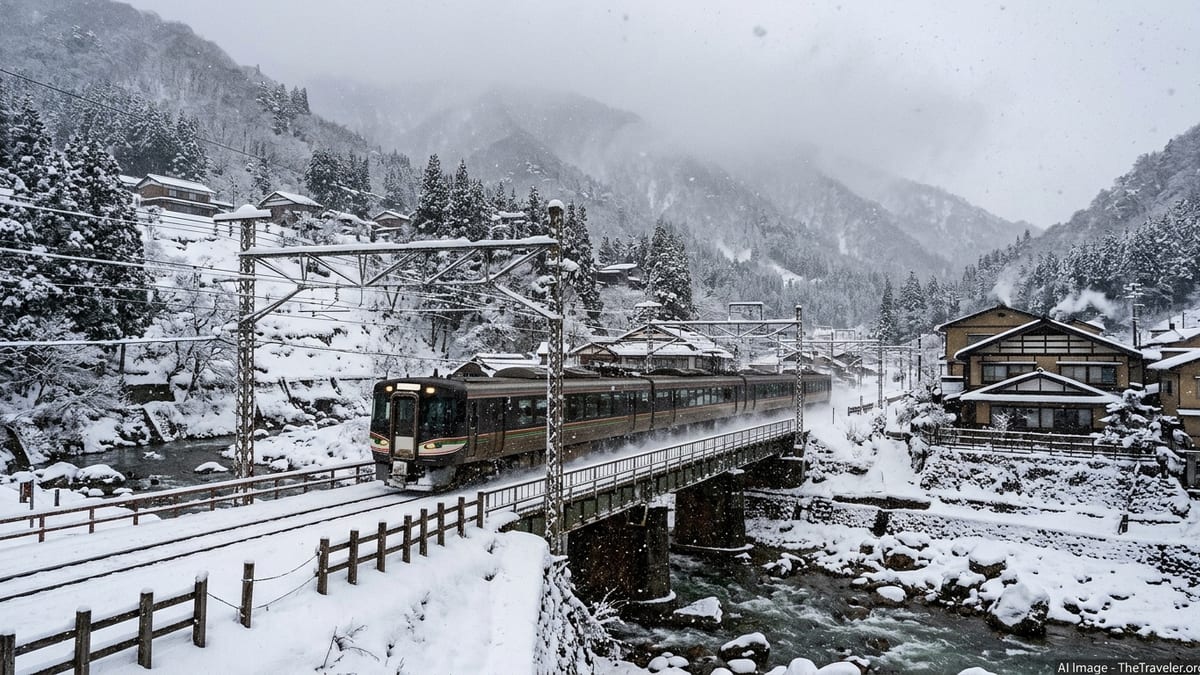
JMA flags heavy snow risk for Hokuriku and northern Honshu
In outlooks issued this week, the Japan Meteorological Agency (JMA) projects that a strong winter-type pressure pattern will develop from Friday November 20 through Sunday November 22, allowing very cold air to pour over the Sea of Japan side of the country. JMA materials and derivative forecast tools highlight a heightened risk of warning-level heavy snowfall in northern Japan around November 20 and 21, particularly where moist air from the Japan Sea converges over coastal and mountainous areas.
Early warning outlooks for Niigata and other Hokuriku prefectures indicate a high likelihood of conditions that typically trigger heavy snow advisories during the November 20–22 window, including a rapid drop in freezing levels and persistent snow bands over inland and upland areas. Television and online forecasts in Japan echo this message, describing the incoming system as the season’s first widespread winter storm, with some mountain zones in Hokuriku and Tohoku forecast to receive significant accumulations if snow bands remain stationary.
While precise snowfall totals at specific resorts or towns remain uncertain, the timing is now well defined: the strongest effects are expected from the night of November 20 through November 21, with lingering snow and mixed precipitation possible into November 22. For travelers, this means that late-November itineraries on the Sea of Japan side of Honshu are entering a more weather-sensitive period, especially for road, bus and slower rail connections.
How Japan’s alerts and tourism guidance frame the risk
JMA’s system distinguishes between advisories, warnings and the rarely used emergency warnings. Heavy snow advisories and warnings are issued when conditions are expected to cause transport disruption, including reduced visibility, snow-packed roads and potential closures of mountain passes. Emergency warnings are reserved for once-in-decades events and are not being indicated at this stage for Hokuriku or Tohoku around November 20–22.
The Japan National Tourism Organization’s Japan Safe Travel information explains that heavy snow advisories and warnings can trigger a series of knock-on responses. These may include cautious speed restrictions on expressways, pre-emptive closures of certain mountain roads and suspension or reduction of bus services in hard-hit districts. For rail, operators may slow trains through heavy-snow segments, adjust timetables or, in more severe cases, suspend particular sections where snow, ice or fallen trees threaten safe operation.
Current outlooks suggest that the incoming system fits the pattern of a strong early-season event that authorities are accustomed to managing, rather than an unprecedented disaster. However, because the cold surge coincides with a weekend and the start of the winter recreation period in some areas, visitors heading for Hokuriku onsen towns, ski areas and coastal cities should treat weather alerts as practical planning tools and be prepared for itinerary changes at short notice.
Rail impact so far: monitoring Tohoku and Hokuriku lines
As of the morning of Friday November 20, JR East’s English and Japanese train status pages for Shinkansen services, including the Tohoku, Yamagata and Akita lines, were operating on their normal reporting schedule without broad suspension notices tied to snow. The status portal is configured to highlight anticipated and actual delays of more than 30 minutes and any cancellations for each Shinkansen route between 4 a.m. and 2 a.m. the following day, and at this time it was not flagging widespread weather-related disruption on the Tohoku Shinkansen corridor.
On the Hokuriku side, JR West’s Hokuriku Shinkansen status page for November 20 similarly did not list major suspensions as of early morning local time. This reflects the typical pattern in which high-speed services often continue running with modest speed restrictions or isolated delays while operators closely monitor snowfall intensity, wind and the risk of obstructions along the tracks.
The situation can evolve quickly, particularly on conventional lines that traverse snow-prone passes or inland valleys in Akita, Yamagata, Niigata and northern Miyagi. These local and limited-express routes are more exposed to accumulations at track level and to fallen branches, and they are often scaled back earlier than Shinkansen services when heavy snow bands move through. Travelers using rural segments to reach resorts or onsen towns should recheck JR East and JR West route-specific pages on the day of travel and remain flexible about departure times.
Road and bus vulnerabilities in Hokuriku’s snow belt
Alongside the JMA outlooks, the Hokuriku Regional Bureau of Japan’s Ministry of Land, Infrastructure, Transport and Tourism has circulated guidance that snow and snow accumulation are forecast across much of the Hokuriku region between November 20 and 22, asking road users to prepare for winter conditions and to pay close attention to official road information channels. These communications describe the potential for precautionary or temporary closures on some expressways and national highways if snowfall intensifies or if visibility and road surface conditions deteriorate.
In practice, this means that bus services linking major Hokuriku rail stations with ski areas and onsen resorts could operate with delays or, in stronger snow bands, be partially suspended while road managers clear snow and assess safety. Urban road networks in cities such as Niigata and Kanazawa are generally maintained throughout winter, but even there, early-season storms can bring periods of slush, icy patches and slower traffic flows that lengthen transfer times between stations, hotels and airports.
Self-driving visitors should treat winter tires or chains as essential for any mountain or rural routes during the November 20–22 cold surge and verify current road advisories before setting out. Where forecasts highlight heavy snow at low elevations, postponing optional long-distance car trips or rerouting via Shinkansen services can meaningfully reduce exposure to sudden closures or hazardous conditions.
What late-November travelers should check next
For those traveling through Hokuriku and Tohoku from November 20 to 22, the most useful resources are the official, frequently updated channels that reflect conditions on the ground. JMA’s forecast and warning maps show where snow is expected to intensify and when heavy snow advisories or warnings have actually been issued. These should be checked alongside the Japan Safe Travel information so visitors understand how alert levels relate to likely transport impacts.
On the rail side, JR East’s and JR West’s English-language train information pages provide line-by-line status for Shinkansen and key conventional routes, highlighting delays, operation suspensions and partial cancellations as they are announced. Because Shinkansen networks are designed to be resilient in winter, most travelers can expect many services to keep running, but they should also be prepared for slower journeys through affected segments and the possibility of last-minute timetable changes if snow combines with strong winds or debris on the tracks.
MLIT’s regional road information systems, along with roadside electronic signs and station announcements, round out the picture for those combining rail, bus and car travel. With the first major winter system of the season now arriving, itineraries that cross the Sea of Japan side of northern Honshu over the November 20–22 period will benefit from extra buffer time, backup route ideas and a habit of checking official updates several times a day.