


Perched high above Puerto Rico’s central mountains, Jayuya’s tethered aerostatic balloon and three run zipline circuit offer some of the island’s most dramatic views. They are also among the region’s most changeable attractions, with weather, road works and safety inspections regularly affecting their schedule. This 2026 guide focuses on what visitors need to know right now: the latest operating status, realistic prices, access details and the fine print on who can ride.
Get the latest updates straight to your inbox!
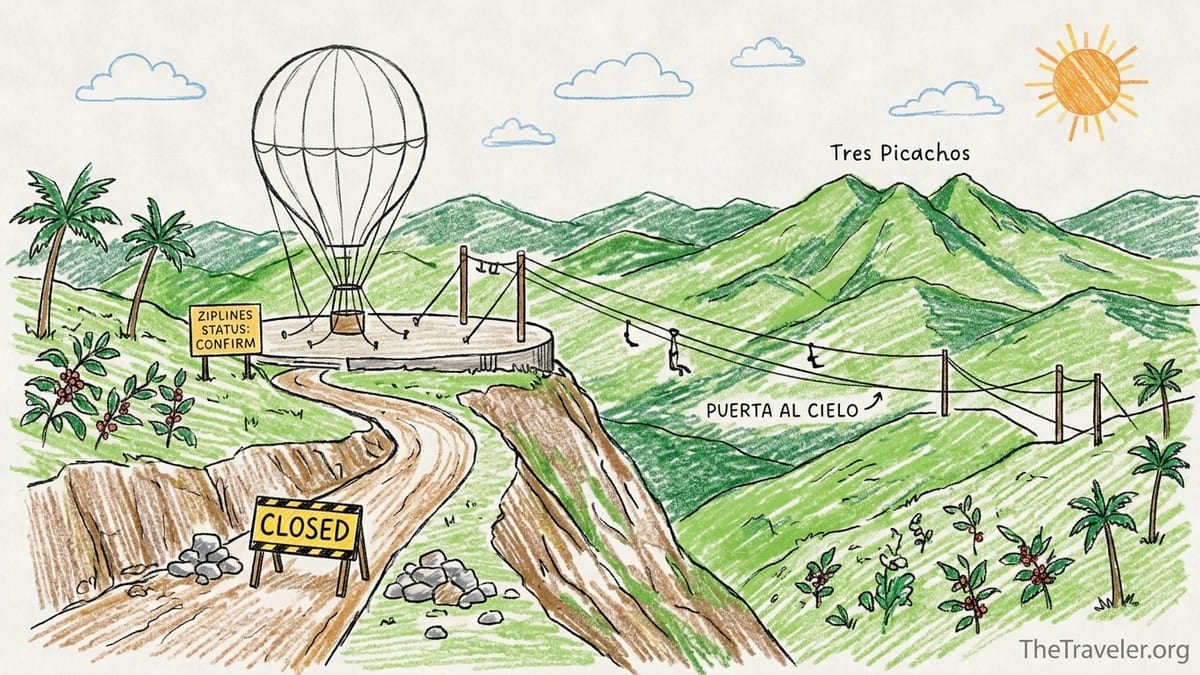
Critical 2026 Status Update: Read This Before You Go
In early and mid 2026, the Jayuya balloon and zipline complex experienced a series of closures that anyone planning a visit this year must factor into their plans. In March 2026 local outlets reported that the rebuilt Globo Aerostático de Jayuya and its companion zipline circuit had resumed operations with regular hours and published prices. Only weeks later, operations were temporarily suspended for 24 hours when federal authorities briefly restricted Puerto Rico’s airspace, halting all aerostatic balloon activity for safety reasons.
More importantly for 2026 travelers, a June 2026 report on Puerto Rico zipline attractions documented another closure of the Jayuya site linked to ongoing work on the access road. That report noted that the balloon and zipline shut again for roughly a month starting June 12, 2026 so that repairs on the mountain road to the platform could continue, and that no clear public reopening announcement had appeared afterward in official tourism listings or local news. As of the latest research for this article, there is still no confirmed, dated notice that the attraction has fully reopened after that June closure.
Because of this, visitors should not assume the Jayuya balloon or ziplines are operating on any given day in late 2026, even if older posts, blogs or brochures describe them as open. Treat every price, schedule and package as “subject to on the day confirmation.” Before you invest time in the steep mountain drive, call the numbers published by the municipality and tourism office, or check their most recent social updates, and ask specifically whether both the balloon and ziplines are running, whether the access road is open all the way to the platform and whether any work crews or weather alerts are affecting operations.
For trip planning, it is safer to treat Jayuya’s balloon and zipline as a bonus experience that you might enjoy if conditions align, not as the sole reason for a long day trip. Build a day that would still feel worthwhile even if, when you arrive, staff can only offer scenic views from the platform, the café or the viewpoint without rides.
What the Jayuya Balloon and Ziplines Actually Are
The Jayuya attraction is built on Cerro Cumbre Alta in the barrio Mameyes, at a platform around 3,200 feet above sea level. From this ridge, a helium filled aerostatic balloon is tethered to a fixed platform and rises roughly another 500 feet when conditions allow, giving riders a 360 degree panorama that can include Tres Picachos, Cerro Maravilla and, on exceptionally clear days, hints of Puerto Rico’s north coast and distant hills. The same hilltop hosts a three run zipline circuit widely promoted as among the highest in the Caribbean, where riders glide across the mountain landscape with long green valleys dropping away beneath them.
It is important to understand that this is not a free flying hot air balloon that drifts over the countryside. According to municipal information, the balloon is a fixed helium aerostat designed to go straight up from its platform and return to the same spot, attached by cables and controlled from the ground. A typical ride lasts around 8 to 15 minutes, including ascent, time at height and descent, and at full capacity the gondola can hold roughly 20 to 30 passengers standing at the rail.
The zipline component consists of three separate runs that start and end near the same mountain complex. Local tourism descriptions often highlight one of the lines, sometimes referred to by names like “Puerta al Cielo,” as a signature run because of its high starting point and open views over forested ridges. The course is geared toward adventurous visitors rather than technical climbers, so you ride in a harness with guides handling the braking and safety equipment, similar to other commercial zipline parks elsewhere in Puerto Rico.
Because the balloon and zipline share the same hilltop, weather and road access decisions often affect both at the same time. Even on a day when the access road is open and ziplines are operating, strong winds or low clouds can still keep the balloon grounded. Travelers who understand this distinction in advance tend to have a better experience, avoiding disappointment if only one part of the complex is running on the day of their visit.
Tethered Balloon vs Free Flying Hot Air Balloon: Key Differences
Many visitors arrive in Jayuya expecting a classic sunrise hot air balloon flight, drifting for an hour or more above farmland like the rides sold in Cappadocia or the American Southwest. The reality is quite different. A tethered aerostatic balloon is anchored to the ground by strong cables and is designed to rise and descend vertically over a fixed point. Rather than chasing winds and landing miles away in an open field, operators simply winch the balloon up to its allowed height, pause so riders can enjoy the view and photos, then winch it back down to the same landing platform.
This design has several practical implications. First, the experience is shorter and more predictable in duration. Past descriptions from Jayuya and local media describe flights on the order of 10 to 20 minutes, as opposed to hour long sunrise excursions. Second, you never leave the immediate vicinity of the platform, which means you always see a sweeping 360 degree panorama of the same area rather than traversing a long route. For many travelers, especially those prone to motion sickness or nervous about landings in rough fields, this can be an advantage.
A free flying hot air balloon, by contrast, relies on heated air in a fabric envelope rather than helium, travels wherever the wind carries it and lands at a different point every time. Those flights require chase vehicles to follow on the ground, much longer operating windows, and far more open land than the dense mountains around Jayuya can easily provide. They also carry different sets of aviation regulations and insurance requirements. This is one reason why Puerto Rico’s inland balloon experiences have focused on tethered designs at fixed tourist sites rather than point to point flights.
For visitors comparing options, an easy way to think about it is to imagine Jayuya’s balloon as a mountain viewpoint that simply rises higher into the sky on a cable, similar in spirit to a scenic tower or observation wheel. The emphasis is on the stationary 360 degree view, short duration and the novelty of standing in an open basket above the hills, not on a journey or route along the countryside.
Tickets, Packages, Prices and Who Can Ride
Reliable prices around March 2026 came from a detailed local feature on the attraction that listed admission and ride costs as the municipality was relaunching the complex. That report described a small general entry fee to access the hilltop facilities, plus separate charges for the balloon and ziplines. As of spring 2026, the quoted prices were 5 dollars for general entry to the site, around 30 dollars for adults riding the balloon, 20 dollars for children between roughly 2 and 12 years old, and 40 dollars per person for three zipline runs. Many visitors therefore treated the combined balloon and zipline experience as a premium half day outing rather than a quick stop.
Because the June 2026 road related closure interrupted operations again and no clearly dated reopening announcement has followed, these ticket figures should be treated as a historical reference, not a guarantee. Operators may adjust prices when they reopen, particularly if road work, insurance costs or staffing needs change. Before you plan a budget, call ahead and ask staff for the current rate for balloon rides, zipline circuits, any combo packages and whether local residents, seniors or children still receive different pricing.
Past coverage and municipal notes give a picture of how access rules are likely to look when the site operates. The balloon is designed to carry groups standing in an open basket with waist high rails, which usually requires that children meet a minimum height and be accompanied by an adult. Toddlers and infants are often restricted or at least discouraged for safety reasons and because the experience involves noise, changing air temperatures and occasionally swaying motion if there is wind. The ziplines have more precise physical requirements, typically including both minimum and maximum weight limits, a harness fit range and prohibitions for some medical conditions such as serious heart or back problems.
Travelers should not rely on outdated printed brochures for these rules. For example, a zipline listing may still describe previous limits like a minimum weight of around 70 pounds and maximum of around 230 pounds, but operators could alter those thresholds after new equipment inspections. When you contact the attraction or the municipal tourism office, verify the current weight range, whether guests with reduced mobility can access the platform and harness, and whether there are age based restrictions on certain lines. Ask also if the balloon and zipline are sold as separate tickets or as part of bundled “adventure day” packages that may give better value for couples or families.
Hours, Weather, Safety Inspections and Cancellations
When the Jayuya complex was running steadily in early 2026, its hours looked similar to other rural adventure parks in Puerto Rico. A recent zipline guide that reviewed the attraction reported that in April 2026 it operated Thursday and Friday from 9 a.m. to 5 p.m., and on Saturdays and Sundays from 9 a.m. to 6 p.m. Later that same year, local tourism announcements described a slightly expanded schedule of Wednesday through Sunday, roughly 10 a.m. to 7 p.m., as the municipality experimented with longer visiting windows and afternoon sessions.
Because the attraction has since experienced road related interruptions and there is no verifiable, up to the minute schedule published for late 2026, travelers should treat those hours as a guideline only. In practice, operators in Jayuya already advise visitors to call the listed phone numbers on the morning of a planned visit to confirm two separate things: first, that the road and platform area are open for visitors that day, and second, that the balloon and ziplines are actually operating given that day’s weather and wind conditions.
The balloon in particular is more sensitive to weather than the zipline runs. Helium balloons are typically grounded in strong winds, during thunderstorms or when low cloud ceilings limit visibility. There are also days when winds at ground level feel moderate, but higher altitude gusts make it unsafe to rise to full height. During those periods, staff may keep the balloon fully grounded or offer only zipline runs and access to the viewpoint. Heavy or persistent rain can also suspend zipline operations, both because wet cables change braking performance and because lightning in the area poses a risk on exposed platforms.
On top of weather, the attraction is subject to equipment inspections and, in rare circumstances, wider aviation restrictions. In January 2026, for example, operations paused when airspace over Puerto Rico was temporarily restricted as part of a broader federal safety response to international tensions. While that kind of closure is unusual, it illustrates how even a locally run mountain balloon can be affected by larger aviation or regulatory decisions. Visitors who have pre booked group outings should therefore ask what happens to their payment in case of weather or regulatory cancellations, whether refunds are issued or whether credits are offered for another date.
Getting There: Road Access, Parking and On site Facilities
The Jayuya balloon and zipline complex is not in town but on a high mountain road above the municipality, in the vicinity of PR 144 and Ramal 530 in barrio Mameyes. From central Jayuya’s plaza area, drivers typically take winding local roads uphill for around 20 to 30 minutes, depending on traffic and weather. From San Juan, the drive can take in the region of one hour and 40 minutes or more, often via the main highways toward the interior followed by slower, twisting mountain routes. Public transport does not reach the platform; you need either a rental car or a private driver familiar with the area.
Recent municipal guidance and local travel anecdotes stress that navigation apps are not always reliable near the top of the mountain. It is common for visitors to lose mobile signal or for mapping apps to route them onto narrow rural lanes instead of the correct access road. Before you set out, note down the local emergency numbers and the attraction’s phone contacts, and if possible, pick up directions from the tourism office in Jayuya’s town center or download offline maps.
The June 2026 closure tied to access road works is a reminder that even if the balloon and ziplines themselves are ready, the final stretch of mountain road may be limited to construction traffic or closed for safety. When you call ahead, ask specifically whether private vehicles can drive all the way to the parking lot by the platform or whether visitors are currently asked to park lower down and walk or take a shuttle. The last segment of the drive involves steep curves and, after heavy rain, occasional potholes or debris, so drivers should be comfortable with mountain conditions.
On site, past reports describe a small parking area near the platform, basic restroom facilities and a modest café or kiosk area where visitors can purchase drinks or light snacks. Even when the rides are suspended for weather, the municipality has sometimes allowed visitors to use the viewpoint area and café during posted opening hours, turning the site into a scenic overlook. Policies can change, however, especially during road works or partial closures, so you should confirm before you drive up whether you will at least be able to park, stretch your legs and enjoy the views if the balloon is grounded.
Costs Compared With Other Jayuya Activities
When the Jayuya balloon and zipline ran with the prices reported in March and April 2026, a couple who paid for entry, one balloon ride each and a shared zipline circuit could easily spend in the region of 150 dollars or a bit more once taxes and small extras were included. A family of four with two children paying the lower balloon rate but four full price zipline tickets might see their total climb toward 250 dollars or higher, depending on whether they bought food and drinks on site or added side visits such as a nearby museum.
By comparison, many of Jayuya’s alternative attractions are significantly less expensive. Visiting the town’s famous petroglyph site at Piedra Escrita, spending time at the Museo El Cemí, or stopping at a coffee hacienda or local waterfall viewpoint around the municipality typically involves only small entry fees or parking costs, plus meals in local cafés. For example, a family of four could often have a complete cultural day in Jayuya, with museum entry, snacks and a sit down lunch, for the same ballpark price as a single set of zipline runs for everyone.
This does not mean the balloon and ziplines are overpriced. They require expensive infrastructure, trained guides, constant maintenance and insurance, especially after weather events in Puerto Rico’s central mountains. For many travelers, especially adventure lovers or photographers chasing dramatic aerial perspectives, the premium can feel justified. The key is to weigh that cost against how central the high altitude experience is to your trip. If you mainly want to understand Jayuya’s coffee culture, Taíno history and small town rhythm, you might allocate more of your budget to museums, guided cultural walks and meals, while treating the balloon as an optional splurge rather than an essential.
Given the current uncertainty around post June 2026 operations, it is unwise to pre pay nonrefundable packages that hinge entirely on the balloon being open months in advance. Instead, consider building your itinerary around other Jayuya experiences that can be confirmed and using same week or same day bookings for the balloon and ziplines when you are already in the area and have checked that everything is running.
Who This Adventure Suits, What To Confirm and Backup Plans
The Jayuya balloon and zipline experience tends to suit certain traveler profiles especially well. Active couples and groups of friends who enjoy the combination of a scenic drive, moderate adrenaline and big mountain views often rank it among their favorite central Puerto Rico outings. Photographers and drone free content creators also appreciate the unusual vantage point, especially in late afternoon when the light turns soft over the ridges. Because the ziplines are short enough to fit into a few hours but high enough to feel distinct from lowland canopy tours, they work well as part of multi day road trips through the Cordillera Central.
Families with older children and teens often find the outing rewarding, while those with toddlers or babies may struggle with the logistics. Long drives on winding roads, waiting periods while staff assess weather and height or weight restrictions can all be challenging with very young travelers. Visitors with significant mobility issues or medical concerns should have an honest conversation with their doctor and with attraction staff before planning to ride, as the combination of altitude, harness equipment and exposure to sudden gusts of wind at height can be demanding.
Before you pay for any tickets or packages, there are a few non negotiable points to confirm directly with the operators or municipal tourism office. Ask whether the attraction has officially reopened to the public after the June 2026 road related closure and on what date regular operations resumed, if at all. Confirm the current daily schedule, any planned construction pauses, the exact prices for balloon rides and zipline runs, and whether rides are being sold separately or as combined packages. Verify the latest age, height and weight restrictions for both attractions, whether visitors with limited mobility can reach the platform and board, and what refund or credit policy applies if wind, storms or airspace restrictions force same day cancellations.
If you arrive in Jayuya and find the balloon or ziplines unavailable, the day is far from lost. The town offers attractive alternatives that fit easily into the same time frame. You can drive to the Piedra Escrita petroglyphs for a mix of nature and Taíno history, visit the Museo El Cemí for an introduction to local culture, walk through the central plaza and nearby cafés, or head toward coffee farms in the surrounding hills for tastings and tours. Waterfalls such as Doña Juana Falls on the road toward Orocovis make for scenic stops, and nearby viewpoints along the mountain roads often give impressive vistas even without rising in the balloon.
The Takeaway
In 2026, planning a visit to Jayuya’s aerostatic balloon and zipline complex requires more diligence than simply following an old brochure. The attraction has come back strongly from storm damage and now again faces disruptions from airspace decisions and road works, with a documented closure in June 2026 related to access road construction and no clearly confirmed reopening announcement afterward. That uncertainty does not diminish the site’s appeal, but it changes how smart travelers should approach it.
The most satisfying trips treat the balloon and ziplines as a potential highlight of a broader Jayuya day, not the sole purpose of a long mountain drive. By understanding that the balloon is a tethered vertical ride rather than a roaming hot air flight, checking physical requirements ahead of time and confirming operating status on the very morning of your visit, you can avoid unpleasant surprises. Building backup plans that include cultural sites, coffee stops and waterfalls in and around Jayuya ensures that, even if winds, storms or construction keep the gondola on the ground, your time in the central mountains will still feel well spent.
FAQ
Q1. Is the Jayuya hot air balloon operating right now in late 2026?
As of the latest research for this guide, a June 2026 report documented another closure of the Jayuya balloon and ziplines linked to access road works, and there has been no clearly dated, public reopening announcement afterward. You should call the municipal tourism office or the attraction’s published numbers shortly before your visit to confirm same week status.
Q2. What is the difference between the Jayuya balloon and a typical hot air balloon ride?
The Jayuya balloon is a tethered helium aerostat attached to a fixed mountain platform. It rises vertically several hundred feet, stays above the same spot and then descends, usually in 10 to 20 minutes. A typical free flying hot air balloon uses heated air, drifts with the wind over a route and lands in a different location, often after about an hour of flight.
Q3. How much do the balloon and ziplines cost when they are open?
In March and April 2026, a detailed local report listed entry at around 5 dollars, balloon rides at about 30 dollars per adult and 20 dollars per child, and the three run zipline circuit at about 40 dollars per person. Because of later closures and possible adjustments, you must confirm current prices directly with staff before budgeting.
Q4. Can young children ride the Jayuya balloon and ziplines?
Previous information suggested that children from roughly 2 to 12 years old could ride the balloon at a reduced rate when accompanied by an adult, while the ziplines had stricter height and weight limits that excluded smaller kids. Since rules can change after inspections, always ask for the latest age, height and weight requirements before you go.
Q5. What kind of weather can cancel rides at the Jayuya complex?
Strong winds, thunderstorms, low cloud ceilings and heavy rain can all ground the balloon and sometimes halt zipline operations. Even on dry days, gusty upper level winds can keep the balloon from rising. Staff assess conditions continually and may suspend rides at short notice in the interest of safety.
Q6. How do I get from central Jayuya to the balloon and zipline platform?
The platform sits on a mountain road above Jayuya, reached by driving up from town toward PR 144 and Ramal 530 in barrio Mameyes. The drive from the plaza area typically takes 20 to 30 minutes on winding roads, and mapping apps can be unreliable near the top, so it is important to get directions from local tourism staff and verify that the access road is fully open.
Q7. Are there facilities if the rides are closed when I arrive?
Past reports describe a parking area, basic restrooms and a small café or kiosk by the platform, and previous practice has sometimes allowed visitors to enjoy the viewpoint even when the balloon was grounded. However, during road works or full closures, access to these facilities can be restricted, so you should ask specifically whether the café, bathrooms and mirador will be open if rides are suspended.
Q8. What should couples budget compared with other Jayuya activities?
When the 2026 prices applied, a couple buying entry, two balloon rides and two three run zipline tickets could easily spend around 150 dollars or more once extras were included. By contrast, a day focused on museums, petroglyphs, coffee farms and local meals in Jayuya often costs significantly less, so couples should decide how much of their budget they want to allocate to this single high altitude experience.
Q9. Which travelers get the most out of the Jayuya balloon and ziplines?
Active travelers who enjoy mountain drives, heights and moderate adrenaline tend to appreciate the complex most, especially photographers and older children or teens looking for something beyond the beach. Visitors who dislike heights, have very young children, or live with significant mobility or cardiac issues may be better served by Jayuya’s cultural and scenic attractions at ground level.
Q10. What are good alternatives if the balloon or ziplines are unavailable?
If rides are closed, you can still have a full day by visiting the Piedra Escrita petroglyphs, the Museo El Cemí, local coffee haciendas, nearby waterfalls such as Doña Juana Falls and various roadside viewpoints around Jayuya. Planning these as firm stops, with the balloon and ziplines as an optional extra, ensures your central mountain trip remains rewarding even if conditions keep the gondola on the ground.