


More news on this day
Holidaymakers planning late-summer escapes to Spain and Greece are being urged to watch airline schedules closely as Europe’s jet fuel crisis creeps closer to the peak travel season, raising the risk of targeted flight cancellations and higher fares on some of the continent’s busiest sun routes.
Get the latest news straight to your inbox!
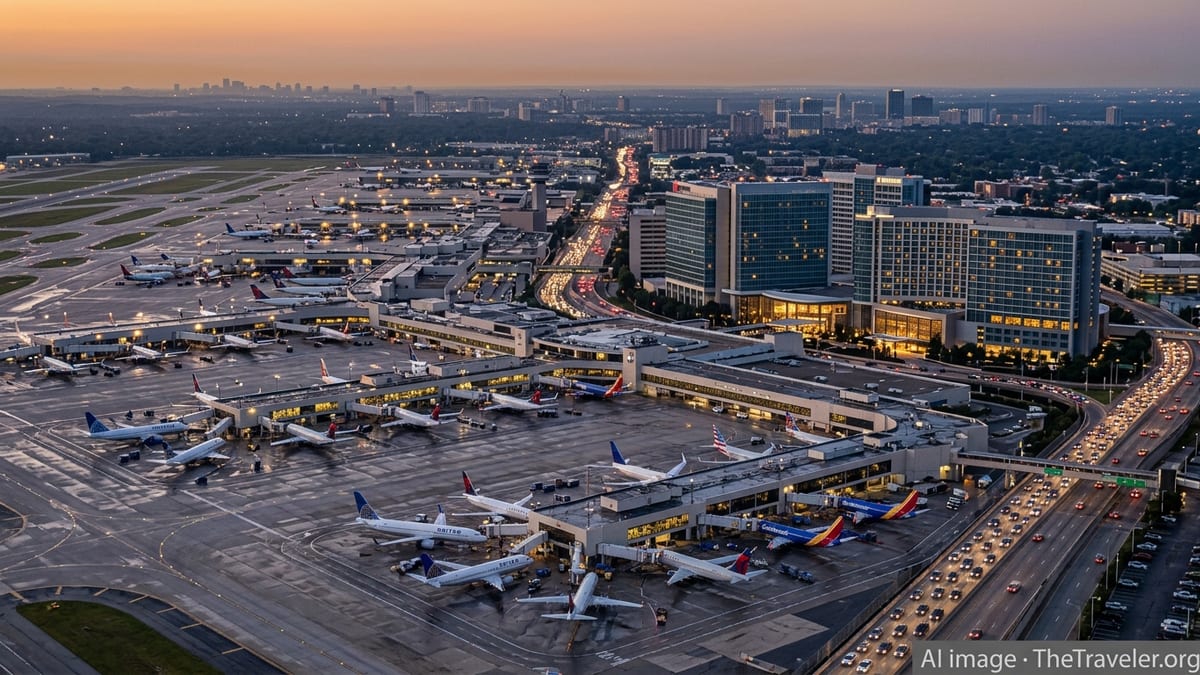
Fuel Shock Meets Record Demand on Mediterranean Routes
European aviation is heading into the 2026 summer with an unusual combination of record demand and severe fuel-market uncertainty. International travel to Spain and Greece is forecast to exceed last year’s levels, with airlines loading their schedules with extra capacity on leisure routes to the Balearic Islands, the Greek islands and major coastal hubs. Publicly available booking and capacity data indicate that Spain, in particular, has more seats scheduled for July through September than in 2025, despite mounting cost pressures.
At the same time, the war in Iran and the partial closure of the Strait of Hormuz have disrupted global supplies of jet fuel, a refined product that many European countries import. Industry analysis and policy papers describe a market where inventories are tightening and prices have surged, prompting carriers across the continent to trim flying programmes or consolidate lightly booked services to conserve fuel.
Aviation consultancies and financial institutions tracking the crisis suggest that the overall reduction in flights so far represents only a small share of global capacity, but warn that the pattern could broaden if the supply squeeze persists into late summer. That warning is particularly relevant for popular holiday destinations that depend heavily on inbound short haul and charter flights from northern Europe.
In this environment, analysts say Spain and Greece sit in a mixed position. Both are among Europe’s top tourism markets, which gives airlines strong incentives to prioritise their routes, but their reliance on imported fuel and complex supply chains into island airports leaves pockets of vulnerability if the crisis deepens.
Spain’s Strong Refining Base Reduces, But Does Not Remove, Risk
Spain currently appears better insulated from outright shortages than many of its neighbours. Business press coverage notes that the country has significant refining capacity dedicated to aviation fuels, giving it scope to cover a substantial share of domestic jet demand. Spanish carriers and airport operators have pointed to this industrial base when reassuring customers that there is, for now, no immediate threat to core summer operations.
Several major Spanish airlines have publicly committed to maintaining their summer flight programmes and avoiding last-minute fuel surcharges, framing the current challenge primarily as a cost issue rather than a supply emergency. Reports indicate that, behind the scenes, these carriers are hedging fuel purchases where possible, securing longer-term contracts and adjusting aircraft deployment in order to protect high-demand routes to destinations such as the Canary Islands, the Costa del Sol and Barcelona.
However, economic and aviation reporting in Spain also underscores that the country is not immune to wider market stress. Spanish airlines compete with carriers in Italy, France, Germany, the United Kingdom and elsewhere for a finite pool of jet fuel that can be moved around Europe as shortages flare. Industry sources cited in local coverage have warned that if the current disruption extends deeper into the third quarter, specific airports or time periods could face temporary supply constraints.
In that scenario, analysts expect airlines to respond first by trimming less profitable services, overnight rotations and off-peak frequencies, rather than by grounding large numbers of flights to major Spanish hubs. Late-summer leisure passengers heading to smaller airports or relying on tight connections within Spain could nonetheless face schedule changes, rebookings or isolated cancellations triggered by fuel-management decisions rather than weak demand.
Greek Islands Particularly Exposed to Targeted Cuts
Greece has also moved to calm fears about an imminent disruption. According to recent national coverage, aviation fuel reserves at Greek airports, including in Crete, are considered sufficient through at least early June, and airlines with a large footprint in the country have stated that their summer programmes remain intact. Tour operators from key source markets such as the United Kingdom continue to advertise millions of seats to more than a dozen Greek islands.
Yet Greece’s highly fragmented airport network makes it especially sensitive to localised supply issues. Many islands depend on fuel deliveries that arrive by sea at irregular intervals, which can become more complicated when global markets are tight and prices volatile. Policy documents from European institutions outline contingency plans for reallocating fuel between member states and prioritising certain airports in the event of acute shortages, an approach that could see some smaller tourist gateways temporarily deprioritised.
Aviation analysts note that, if inventories weaken later in the summer, airlines are likely to protect large hubs such as Athens and Thessaloniki and the busiest island airports, while reviewing marginal routes with lower year-round traffic. Flights operating at odd hours or with lower load factors toward the end of the season could be candidates for consolidation, with passengers moved onto fewer, fuller services using larger aircraft.
For travellers, that pattern would be felt not as a blanket shutdown of air links to Greece, but as a growing number of timetable tweaks affecting specific days, routes or airlines. Late-August and September trips combining multiple islands, or relying on tight same-day transfers between foreign long haul flights and domestic Greek sectors, may carry heightened exposure to disruption if fuel rationing becomes more stringent.
Airlines Across Europe Quietly Reshape Summer Schedules
The jet fuel crunch is already reshaping summer schedules across Europe, even before the peak school holiday period. Reporting from international outlets shows that several major airline groups have removed thousands of flights from their timetables from spring through autumn, largely to reduce fuel consumption and limit exposure to high spot-market prices. In many cases, the cuts focus on high-frequency business routes where travellers can be re-accommodated on remaining services.
Guidance documents from European regulators indicate that governments are granting airlines additional flexibility to consolidate departures on busy routes, allowing carriers to roll passengers from multiple lightly filled flights onto a single larger aircraft. This strategy aims to conserve fuel while avoiding scenes of widespread last-minute cancellations at airports. However, it also means that schedules for late summer remain more provisional than they appear in booking systems today.
Industry commentary suggests that, if jet fuel prices stay elevated or physical shortages emerge at particular airports, airlines will escalate these capacity adjustments. That could involve trimming shoulder-season frequencies to Mediterranean destinations in September and October, shifting aircraft from weaker routes to those with higher yields, and pulling back from smaller secondary airports in favour of large hubs where fuel supplies are perceived as more secure.
Analysts stress that the likelihood of a complete collapse in air connectivity to Spain or Greece remains low. Instead, they anticipate a rolling pattern of incremental changes that will require travellers to pay closer attention to predeparture emails, app notifications and rebooking options as airlines continue to fine tune their fuel exposure week by week.
What Late-Summer Travellers Should Expect Now
With the situation evolving, travel specialists and aviation experts recommend that passengers treat late-summer flights to Spain and Greece as broadly viable but subject to above-normal schedule risk. Most forecasts still point to a busy season, supported by strong demand and the determination of airlines, airports and tourism authorities to keep key holiday corridors open.
At the same time, recent experience with fuel-driven schedule cuts elsewhere suggests that some degree of disruption is increasingly likely if global supply constraints persist. The most exposed itineraries are expected to be those involving smaller regional airports, thinly served island destinations, or tight connections that leave little margin for rebookings.
Consumers are being advised, in published guidance, to book flights with adequate connection times, favour larger carriers with multiple daily services on their chosen route where possible, and monitor bookings closely in the weeks before departure. Flexible hotel and car rental reservations may also help mitigate the impact of a last-minute flight change tied to fuel availability or cost.
For Spain and Greece, the coming months will test whether contingency plans, refining capacity and regional cooperation can offset the pressure created by a volatile jet fuel market. If they succeed, late-summer travellers may experience little more than higher fares and occasional timetable changes. If they fall short, isolated cancellations and consolidations on Mediterranean routes could become a defining feature of the 2026 holiday season.