


More news on this day
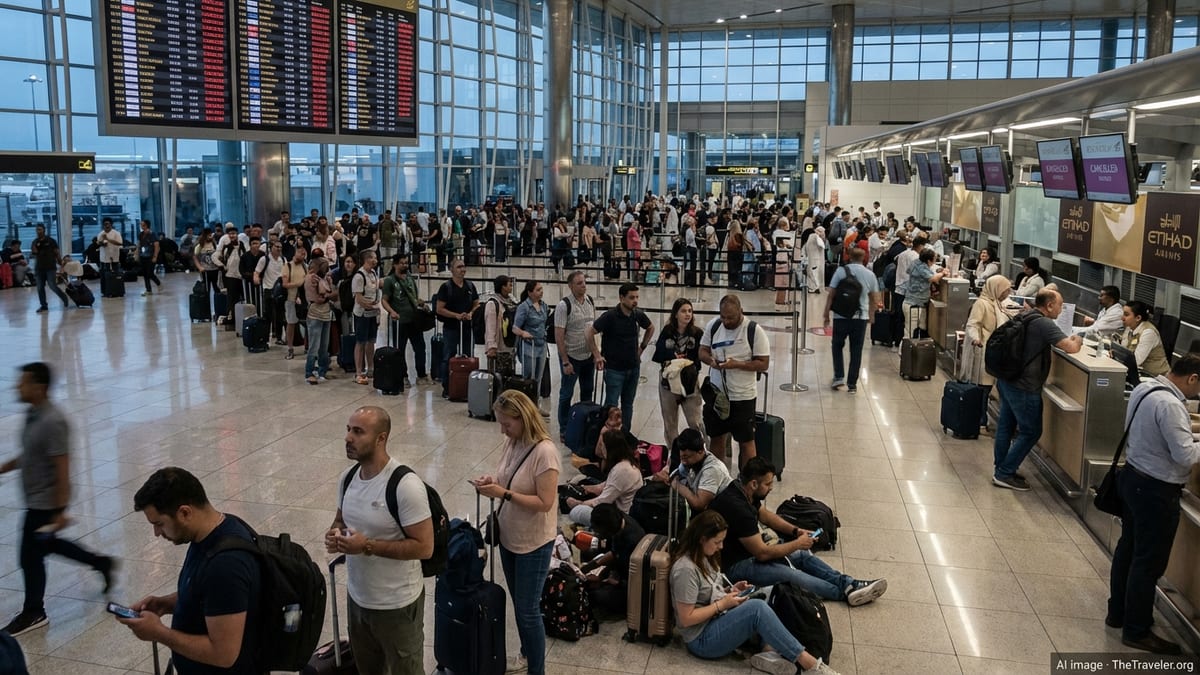
Passengers across the United Arab Emirates are grappling with long queues, missed connections and unexpected layovers as more than 100 delayed and at least four cancelled flights involving Gulf Air, Emirates, Etihad Airways, Air Arabia, Flydubai and other carriers ripple through major aviation hubs in Dubai, Abu Dhabi, Sharjah and Ras Al Khaimah.
Get the latest news straight to your inbox!
Delays and Cancellations Hit Key UAE Gateways
Recent flight status data and regional aviation coverage show that disruption remains a defining feature of travel across the Gulf’s busiest corridors. While full airspace closures earlier in the year have eased, airlines are still working through a complex mix of rescheduled services, crew and aircraft imbalances, and ongoing route adjustments. Against that backdrop, more than 100 delayed flights and several outright cancellations have been recorded across UAE airports over the latest 24 hour cycle, affecting both outbound and inbound traffic.
Dubai International and Abu Dhabi’s Zayed International remain the focal points, but Sharjah and Ras Al Khaimah have also reported extended delays and trimmed schedules. Low cost and full service operators alike are affected, with Flydubai and Air Arabia reporting rolling delays on high demand regional routes, while Emirates, Etihad and Gulf Air continue to operate reduced or re-timed services on select long haul sectors.
Publicly available information indicates that a portion of affected flights have been consolidated, with passengers reprotected on later departures or re-routed via alternative hubs. This has eased pressure on departure boards yet kept terminals busy, as travelers on disrupted itineraries face multi hour waits for new options.
Operational data compiled by aviation trackers suggests that the latest wave of disruption remains smaller than the full suspensions seen during the height of regional airspace closures, but the concentration of delays within a short period has nonetheless left many travelers stranded or significantly off schedule.
Legacy of Regional Airspace Closures
The current pattern of delays cannot be fully separated from the recent history of airspace restrictions that swept across parts of the Middle East earlier in 2026. Temporary closures and conflict related risk advisories forced carriers including Emirates, Etihad, Flydubai, Gulf Air and others to suspend or sharply curtail services for several days, creating a substantial backlog of passengers seeking rebooking options.
As airspace gradually reopened and limited corridors were restored, UAE airports shifted from shutdown conditions to carefully managed recovery schedules. Reports from March and April described sharply reduced timetables, with some airlines prioritizing repatriation flights, while others focused on restoring trunk routes to Europe, Asia and key regional destinations.
Although the UAE’s airspace has now formally reopened and airlines have expanded operations compared with the peak of the disruption, industry analyses note that schedules remain below pre crisis levels on a number of routes. Aircraft and crew rotations continue to be adjusted, and some services are operating with limited frequencies or at non standard times, leaving little slack when weather, congestion or technical issues arise.
The result is a fragile operating environment in which even a modest uptick in delays can quickly cascade across multiple hubs, as aircraft arrive late, connections are missed and subsequent departures depart out of slot or are combined with other services.
Impact on Passengers in Dubai, Abu Dhabi, Sharjah and Ras Al Khaimah
For travelers on the ground, the statistics translate into long queues at transfer desks, crowded waiting areas and complicated onward journeys. Published coverage from regional outlets and passenger testimonies on social platforms describe families sleeping in terminal seating, business travelers scrambling to rebook missed meetings, and tourists juggling hotel checkouts amid repeated schedule changes.
Dubai International, a major connection point for Emirates and Flydubai, has seen particularly acute pressure whenever waves of delays cluster around peak bank times. Travelers transiting via Dubai report being moved to next day departures or re-routed through alternative cities in Europe or Asia, in some cases adding an extra stop to itineraries that were initially non stop or single connection journeys.
In Abu Dhabi, Etihad’s reduced but rebuilding schedule has helped restore some connectivity, yet passengers still report short notice changes, especially on services connecting to South Asian and European destinations. Sharjah and Ras Al Khaimah, important bases for Air Arabia and a growing number of regional services, have faced their own bottlenecks as low cost routes absorb demand from cancelled or rerouted flights elsewhere in the network.
Reports also indicate that knock on effects are being felt beyond the UAE, with passengers originating in South Asia, North Africa and parts of Europe encountering disruptions on both the inbound leg to Gulf hubs and their onward connections, stretching trips that would normally take hours into journeys lasting a full day or more.
How Airlines Are Responding
Major Gulf carriers have outlined a range of measures intended to stabilize operations while providing options to affected customers. Travel advisories and customer guidance on airline websites emphasize the importance of checking flight status repeatedly before departing for the airport, using mobile apps and online tools to track last minute schedule changes.
Information published by Emirates and Etihad in recent weeks highlights flexible rebooking and refund policies for passengers on cancelled or significantly delayed flights within designated travel windows. These policies typically allow customers to move to alternative dates without change fees or to request refunds when travel is no longer possible, though exact conditions vary by fare type and route.
Low cost carriers such as Flydubai and Air Arabia have also communicated schedule changes and limited capacity via online channels, urging travelers not to proceed to airports without a confirmed, operating flight. In some cases, flights have been consolidated, with passengers shifted to later departures or to nearby airports when operationally feasible.
Gulf Air and other regional airlines are adjusting routings and frequencies on affected sectors, with some services diverted via alternative corridors or intermediate stops to avoid congested or restricted airspace. Industry commentary suggests that these workarounds help maintain essential connectivity but introduce additional complexity and potential for further delay.
What Travelers Should Do Next
Consumer groups and travel advisers responding to the latest disruption across the UAE reiterate several practical steps for passengers. The consistent message is to treat flight status as fluid rather than fixed, particularly for trips involving connections in Dubai, Abu Dhabi, Sharjah or Ras Al Khaimah over the coming days.
Travelers are being encouraged to monitor airline apps and airport departure boards closely from at least 24 hours before departure, to enable faster responses to any change notices. Where possible, passengers with flexible plans are advised to accept earlier flights or alternative routings offered by carriers, as these can reduce the risk of becoming stranded if conditions worsen later in the day.
Guidance shared by aviation rights organizations also stresses the importance of understanding refund and rebooking rules attached to each ticket. In many cases, passengers whose flights are cancelled or subject to major delays may be entitled to refunds, vouchers or free date changes under carrier specific policies, and in some jurisdictions may benefit from additional protections under regional passenger rights regulations.
With airlines still rebuilding stable schedules after months of turbulence in regional airspace, observers expect intermittent disruption to continue, even as overall capacity improves. For now, passengers traveling through the UAE’s key hubs are likely to face a landscape defined by careful planning, extra buffer time and a degree of patience as Gulf carriers work to restore more predictable operations.