


For most international visitors, Johannesburg’s OR Tambo International Airport is the gateway to South Africa’s legendary Kruger National Park. What happens between clearing immigration at OR Tambo and arriving at your safari lodge can make or break the first days of your trip. This guide explains the main ways to connect from Johannesburg to Kruger, compares the key safari airports, looks at road transfer options, and highlights the risks of tight same day connections so you can choose a plan that fits your style, budget and appetite for risk.
Get the latest updates straight to your inbox!
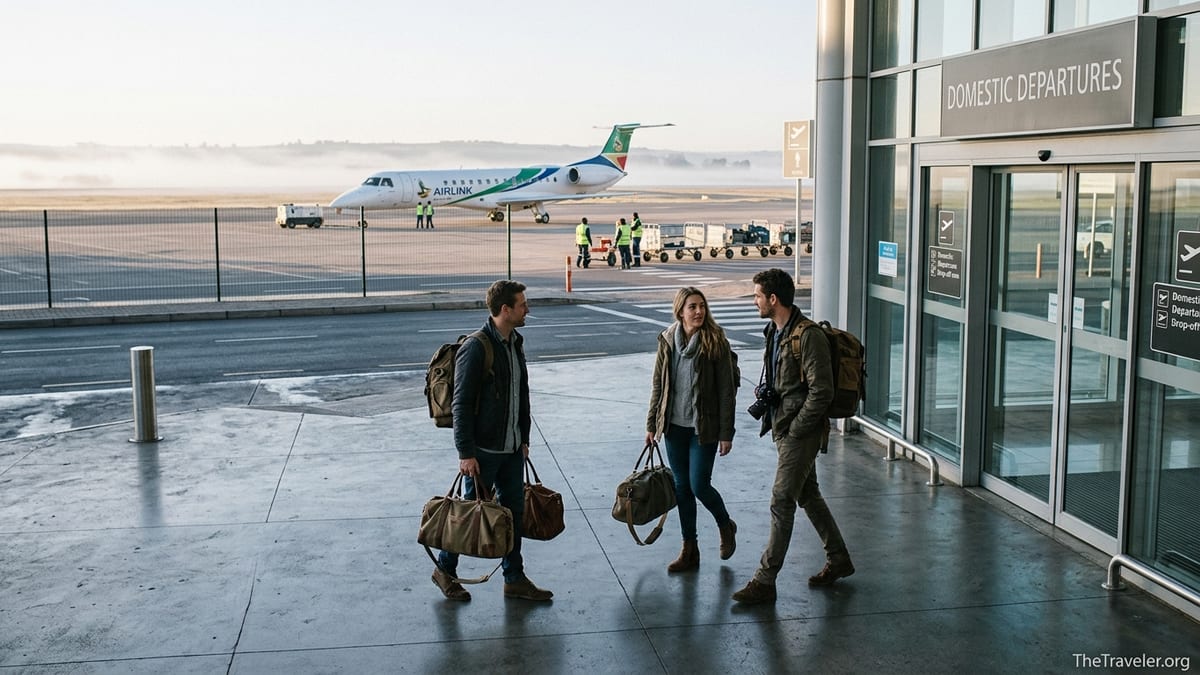
Understanding Your Safari Gateway: OR Tambo and the Kruger Region
Johannesburg’s OR Tambo International Airport is South Africa’s busiest hub and the main arrival point for long haul flights from Europe, North America and the Middle East. Most safari goers land here in the morning after an overnight flight and then need to connect to a smaller plane or road transfer to reach the Kruger area. Unlike some destinations where you can step from an intercontinental flight straight onto a bush airstrip, getting to Kruger usually involves at least one domestic hop or several hours on the road.
Kruger itself is vast, roughly the size of a small country, so there is no single “Kruger Airport.” Instead, several regional airports ring the park and surrounding private reserves. The three most important for safari travelers are Hoedspruit (HDS), Skukuza (SZK) and Kruger Mpumalanga International (MQP), sometimes still called Nelspruit. Each serves a different part of the park and different lodge clusters, and the best choice depends very much on where you are staying.
As a rule of thumb, Hoedspruit works best for the northern and central private reserves such as Klaserie, Timbavati and Manyeleti. Skukuza is inside the park itself and is ideal for lodges in the southern Sabi Sand and Kruger concession areas. Kruger Mpumalanga International, near the town of Mbombela, is a practical option for lodges that combine Kruger with the Panorama Route or that sit in the southern and south western parts of the park.
Almost all scheduled flights from Johannesburg to these safari airports are operated in partnership with regional carriers using smaller jets or turboprops. They are reliable by African standards, but weather, air traffic control restrictions and congested immigration queues in Johannesburg can all create delays, which is why building sensible buffers into your plan is so important.
Flying to Hoedspruit: Gateway to Timbavati, Klaserie and the Central Reserves
Hoedspruit’s Eastgate Airport is the most important air gateway for the central private reserves that border Kruger’s western side. Enjoying morning coffee on the deck at a lodge like Simbavati, Kambaku or Ngala Tented Camp, you are likely to hear the mid morning Airlink jet climbing away from the nearby runway. From OR Tambo, flight time is usually about one hour, and on a typical day there are one or two non stop services in each direction.
For many international travelers, the appeal of Hoedspruit is that transfers from the airport to nearby lodges are often under 90 minutes, sometimes as little as 30 to 45 minutes for properties close to the main road. A couple arriving from London, for example, might land in Johannesburg around 07:00, clear immigration and baggage by 09:00, and comfortably make a late morning Hoedspruit flight. By early afternoon they can be on a game drive, gin and tonic in hand, scanning for elephants in the dry riverbeds.
That convenience comes with a few trade offs. Aircraft are smaller and luggage restrictions are typically tighter than on intercontinental flights. Soft sided bags are strongly preferred and checked luggage is often limited to around 20 kilograms per person, sometimes including hand luggage. Many lodges near Hoedspruit will happily store hard suitcases with their transfer partners in town or in Johannesburg, but this needs to be arranged in advance, especially if you are carrying camera gear or special equipment.
Weather related issues are less frequent here than on some more mountainous routes, but late afternoon thunderstorms in the South African summer can still cause delays. For that reason, many safari specialists suggest planning a morning flight up to Hoedspruit where possible, rather than the last departure of the day that leaves you with little fallback if your inbound long haul runs late.
Skukuza: Landing Inside Kruger for Southern Lodges
Skukuza Airport is unique because it lies inside Kruger National Park itself. The thatched terminal with its open sided walkways feels more like a game lodge than an airport, and you are almost guaranteed to see impala, baboons or warthogs grazing near the runway fence as you land. From Johannesburg, flying time is usually about 60 minutes, and there are generally two Airlink services per day linking Skukuza with OR Tambo on a seasonal schedule.
Skukuza is particularly useful for lodges in the southern Sabi Sand private reserve, such as Lion Sands, Sabi Sabi, MalaMala and Londolozi, as well as for guests staying at the park’s own Skukuza Rest Camp. Many of these lodges offer direct road transfers from the airport that take between 30 minutes and 90 minutes depending on the location. Some even use open safari vehicles to collect guests, so your transfer can double as an informal game drive.
Because Skukuza is inside a national park, there are a few quirks. Airport opening hours tie closely to park gate times, and landing rights are carefully controlled to limit noise and traffic. Flights cannot arrive late at night, and if your plane is significantly delayed in Johannesburg there may not be a later service to fall back on the same day. For that reason, if your international flight is due into OR Tambo after mid morning, you should think carefully before booking a same day connection to Skukuza.
A typical pattern that works well is to arrive in Johannesburg early in the morning, connect to a late morning Skukuza flight, enjoy a lodge transfer and still join the afternoon game drive. Travelers arriving later in the day often sensibly choose to overnight at an airport hotel and then take the first Skukuza departure the following morning, arriving at their lodge rested and with minimal stress.
Kruger Mpumalanga International: Flexible Connections and the Panorama Route
Kruger Mpumalanga International Airport, known by its code MQP and still often called Nelspruit, sits to the south west of Kruger near the town of Mbombela. The terminal is styled like a large thatched lodge, and most flights in from Johannesburg take about 45 to 60 minutes. Because MQP also carries some regional and occasional charter traffic, it can offer a little more flexibility on timing than Skukuza and sometimes Hoedspruit.
MQP is the most practical choice if you are combining Kruger with sightseeing along the Panorama Route, which includes God’s Window, the Three Rondavels and the Blyde River Canyon. Many rental car companies operate desks at MQP, and several well known transfer companies use it as a base. Self drivers can leave the airport in a compact SUV and be in the highveld town of Graskop within two to three hours, stopping en route at viewpoints before dropping down towards Kruger’s Phabeni or Numbi gates.
For lodge based safaris, MQP works especially well for properties in the southern and south western parts of greater Kruger, including some private reserves around Hazyview and certain Sabi Sand lodges that offer scheduled road transfers. Drive times from MQP to these areas typically range from 60 to 150 minutes. As an example, a couple staying at a lodge near Shaws Gate in Sabi Sand might land at MQP before lunch and reach the lodge in time for a relaxed check in, a late lunch and the afternoon activity.
The main downside of MQP compared with Skukuza or Hoedspruit is that you are still outside the park boundary when you land, which adds at least an hour of road travel, and sometimes more, before the wildlife experience begins. If your time is extremely limited and your budget allows, it may be more efficient to use one of the smaller airstrips served by lodge charter flights. For most travelers, though, MQP offers an appealing balance of reliability, choice of flight times and manageable transfer distances.
Road Transfers and Driving from Johannesburg to Kruger
Flying is usually the fastest and most comfortable way to reach Kruger, but it is not the only option. Some travelers prefer to go overland, either because they enjoy road trips, want to save on internal flights, or are visiting areas where small airstrips do not make financial sense. The drive from Johannesburg to Kruger’s southern gates is usually between four and a half and six and a half hours without major stops, depending on the gate and traffic.
For example, driving from OR Tambo to Kruger’s Paul Kruger Gate near Skukuza via Nelspruit and Hazyview is typically a six hour journey in good conditions. Reaching the Orpen Gate, which is handy for the central reserves and some Timbavati lodges, can take a similar amount of time via the town of Hoedspruit. These are proper highway journeys that mix modern motorways with single carriageway sections where trucks, pedestrians and livestock all share the road.
Many safari operators partner with reputable transfer companies that run air conditioned minibuses or SUVs on these routes. A private transfer from OR Tambo to a lodge near Sabi Sand, for example, might cost a few hundred US dollars for two to four guests, while a shared shuttle service could be cheaper but take longer due to multiple stops. The advantage of a booked transfer is that your driver is used to these roads, knows the fuel stops and can time the journey to reach the park gates before closing.
Self driving is also perfectly viable if you are comfortable with long distances after an overnight flight and with driving on the left. Several major rental car brands have desks at OR Tambo’s arrivals hall, and everyday sedans or compact SUVs are usually sufficient for the paved roads to Kruger’s main gates. What catches many visitors out are the time implications. A couple landing at 08:00, clearing the airport by 10:00 and then setting out immediately can realistically reach a southern gate by mid to late afternoon, but fatigue, traffic and unforeseen delays can turn that into a stressful race against gate closing times, especially in the shorter winter days.
Overnighting at OR Tambo: Airport Hotels for Safari Connections
Because of the distances involved and the risk of delays, many experienced safari travelers choose to overnight near OR Tambo at the start or end of their trip. Fortunately, the airport is well supplied with hotels ranging from simple transit options to full service properties that feel like a soft landing in Africa after a long flight. Staying overnight is particularly sensible if your international flight is scheduled to land after mid morning and you are aiming for one of the midday safari flights, or if you have children and want to avoid a long same day connection.
Directly across the road from the international terminal is the InterContinental Johannesburg OR Tambo Airport Hotel, which is connected to the terminal by a short covered walkway. Guests can collect luggage, stroll across under cover and be in a soundproofed room within minutes. The hotel’s 24 hour restaurant and spa appeal to travelers arriving after a late flight or leaving on an early one, and many safari tour operators use it routinely in their itineraries because it almost eliminates transfer risk in Johannesburg.
Also within the airport complex, the City Lodge OR Tambo sits above the parking structure, accessed via indoor walkways from the terminal. It offers comfortable rooms, a small pool and restaurant and has become a favorite of travelers who want to remain on airport property without paying top tier prices. Nearby, several chain hotels such as Protea, Holiday Inn and various Marriott group properties cluster in Kempton Park and around the Emperor’s Palace casino complex, all running frequent shuttle buses to and from the airport.
For those who like to begin the safari atmosphere immediately, small guesthouses like Safari Club SA in Kempton Park deliberately style themselves with African art, thatched roofs and garden spaces, offering a gentle transition between city and bush. The key when choosing any of these options is to factor in shuttle schedules and rush hour traffic. Even hotels that are physically close to the airport can require 15 to 30 minutes of transit time once you add in waiting for the shuttle and loading luggage.
Luggage, Weight Limits and Packing for Small Safari Flights
Luggage rules on regional and safari flights out of Johannesburg routinely surprise international travelers. On a transatlantic or Middle Eastern flight into OR Tambo, economy passengers may be allowed one or even two checked bags weighing 23 kilograms each. On the connecting flight to Hoedspruit, Skukuza or MQP, however, the allowance is often closer to 20 kilograms in total, including hand luggage, with strict penalties for overweight items. Some lodge hopper flights and charter services impose even tighter limits.
Beyond pure weight, the type of bag matters. Smaller aircraft have limited hold doors and baggage compartments, so many airlines strongly recommend soft sided duffel style bags that can be squeezed into tight spaces. A tall, rigid suitcase that fits neatly in a wide body aircraft might simply not fit through the cargo hatch of a regional jet or turboprop. Travelers carrying large camera lenses or drones need to be especially careful, as these often need to travel in hand luggage that still fits overhead or under seat dimensions.
This is where practical planning can make a big difference. A common pattern is to pack a smaller soft bag with everything needed for the safari portion and place overflow or city clothes in a larger case. On arrival in Johannesburg, the larger suitcase can be left in left luggage storage at OR Tambo or with an airport hotel for the duration of the safari, while the duffel travels onward to Kruger. Families on multi stop itineraries, for example combining Cape Town, wine country and Kruger, often use this strategy to avoid dragging formal clothes or shopping bags into the bush.
Another factor is security. Johannesburg has improved baggage handling significantly in recent years but it is still wise to use TSA approved locks, avoid checking valuables such as electronics and jewelry, and pack a small daypack with medicine, chargers and one change of clothes in case a bag is delayed between flights. If you are planning to buy bulky souvenirs or wine in South Africa, consider leaving spare weight in your checked allowance on the return leg rather than on the inbound journey when safari flights are most restrictive.
Same Day Connections: How Much Time Do You Really Need?
The most important planning decision for many Kruger bound travelers is whether to connect onward to the bush on the same day they land in Johannesburg, or to schedule an overnight stop. Same day connections save a hotel night and can be logistically clean, but they also import a lot of risk. A long immigration queue, a late arriving intercontinental flight or a bag stuck at a security check can easily eat up a two or even three hour buffer.
As a conservative rule, many safari specialists recommend allowing at least three hours between your scheduled landing time in Johannesburg and a domestic departure to Hoedspruit, Skukuza or MQP. That means if you are scheduled to touch down at 07:00, the earliest prudent onward flight is around 10:00, and 11:00 is more comfortable. In peak holiday seasons or when arriving on weekend mornings, queues can be longer than average, so an extra hour is reassuring, especially for families or older travelers.
If your international flight is scheduled to land after about 10:00, the calculus changes. A 10:30 arrival with a planned 12:30 Kruger connection leaves very little margin for disruption. In this scenario, many travelers choose to overnight at an airport hotel and take the first flight out the next morning, effectively trading one night in transit for near certainty of making the safari connection. The cost of the hotel often feels minor compared with the sunk cost of a missed first night at a high end lodge, where rates can easily run to several hundred dollars per person per night.
On the return journey, the risks are similar. Afternoon storms, runway congestion and operational delays can all cause late departures from safari airports, which then cascade into tight international connections in Johannesburg. Here too, an overnight at OR Tambo in between the bush and a long haul flight can de stress the itinerary. For example, guests might leave a lodge after a final morning game drive, fly from Skukuza to Johannesburg around midday, spend a relaxed afternoon by the pool at the City Lodge or InterContinental, and then depart on an evening or next day flight with few worries about missed connections.
The Takeaway
Linking Johannesburg’s OR Tambo International Airport with Kruger National Park is one of the key logistical steps in building a South African safari, and there is no single right answer for every traveler. Hoedspruit, Skukuza and Kruger Mpumalanga International each serve different corners of the park and its private reserves, and the ideal choice depends primarily on where your lodge lies on the map. Road transfers and self drives offer flexibility and savings but add time and require comfort with long distances.
For many visitors, the most balanced approach is to arrive in Johannesburg, overnight at a convenient airport hotel, then fly onward the next morning to the closest safari airport with generous buffers built into both directions of travel. Keeping luggage within small aircraft limits, using soft sided bags and separating safari essentials from city extras will make the domestic legs smoother and reduce stress on travel days.
Most importantly, be honest about your tolerance for risk. If missing the first game drive or losing a night at a once in a lifetime lodge would feel devastating, err on the side of more connection time and a simple overnight in Johannesburg. If you are returning to Kruger for a second or third visit and know the systems well, a tighter same day transfer might feel acceptable. With realistic expectations and a bit of planning, the journey from OR Tambo to the bush can become a seamless and even enjoyable part of the safari story rather than an obstacle to overcome.
FAQ
Q1. Can I fly from Johannesburg directly into Kruger National Park?
Yes. Regular scheduled flights operate from OR Tambo to Skukuza Airport, which is inside Kruger, as well as to nearby gateways like Hoedspruit and Kruger Mpumalanga International that serve different parts of the park.
Q2. How much time should I leave between my international arrival and a safari flight?
A buffer of at least three hours is advisable, and four hours is more comfortable in busy seasons. This allows for immigration, baggage claim, customs and the short walk to domestic check in counters.
Q3. Is it safe to do a same day transfer by road from Johannesburg to Kruger?
It can be done, but it is a long drive of five to six hours, and fatigue after an overnight flight is a serious consideration. Many travelers prefer to overnight in Johannesburg or break the journey to avoid driving tired or arriving near park gate closing times.
Q4. Which airport should I choose if I am staying in the Sabi Sand private reserve?
For most southern Sabi Sand lodges, Skukuza is the most convenient, with lodge transfers typically under 90 minutes. Some properties also use MQP or Hoedspruit depending on their exact location and preferred transfer company.
Q5. What are the luggage limits on flights from Johannesburg to the Kruger region?
Luggage allowances on regional flights are often around 20 kilograms per person including hand luggage, with strong preferences for soft sided bags. Some lodge shuttle flights have lower limits, so always confirm with your airline or safari operator.
Q6. Can I store extra luggage in Johannesburg while I go on safari?
Yes. OR Tambo has left luggage facilities, and many airport hotels and safari operators can arrange secure storage for large suitcases or non safari items while you are in the bush, usually for a modest fee.
Q7. Are there hotels inside OR Tambo Airport?
There are hotels directly connected to the terminal complex, including a full service property across the road and a mid range hotel within the airport building, as well as several options a short shuttle ride away in Kempton Park.
Q8. Is it better to fly or drive from Johannesburg to Kruger with children?
Most families find that flying is easier on children because it shortens travel time and avoids a long day on the road. Overnighting at an airport hotel and taking a morning flight to a nearby safari airport is often the least stressful option.
Q9. What happens if my international flight is delayed and I miss my safari connection?
If you booked both flights on one ticket, the airline may rebook you on the next available service, but you may still lose part of a lodge night. If tickets are separate, you are usually responsible for buying a new domestic ticket and arranging any extra accommodation, which is why generous buffers and travel insurance are important.
Q10. Do I need a transit visa in Johannesburg when connecting to Kruger?
Visa rules depend on your nationality and itinerary. Many travelers connecting from an international flight to a domestic one need to clear immigration and technically enter South Africa, so you must check current visa requirements with official government sources or your airline before travel.