


Landing at Nairobi’s Jomo Kenyatta International Airport (JKIA) can feel intense if it is your first time in Kenya: long overnight flights, new procedures, and an unfamiliar terminal layout. With a little preparation, however, you can move smoothly from the aircraft door to your taxi with your eTA checked, cash in your wallet, data on your phone, and your rideshare app ready to go. This guide walks you step by step through what to expect on arrival, based on current procedures and on-the-ground information as of mid 2026.
Get the latest updates straight to your inbox!
Understanding Kenya’s eTA Before You Land
Kenya now uses an electronic Travel Authorization system instead of traditional visas for most visitors, including many travelers from Europe and North America. You apply online through the official Kenyan eTA portal, upload your passport details, basic itinerary, and pay the fee by card. In most cases, approvals arrive by email within a few days, though it can take longer in peak seasons, so it is wise to apply at least one to two weeks before your flight rather than leaving it to the last minute.
The approval document is usually sent as a PDF with a QR code and basic identity details. Print at least one hard copy and also keep a copy saved offline on your phone or tablet, as airport Wi-Fi can be patchy during busy periods. Airlines at departure airports such as London Heathrow, Amsterdam, Dubai or Doha often check that you have an approved eTA before they allow you to board a Nairobi bound flight. At JKIA the QR code helps immigration officers quickly retrieve your application, but they may still ask routine questions about where you are staying and for how long.
Your passport must be valid for at least six months beyond the date you arrive in Kenya and should have at least one blank page for entry stamps. The details on your eTA must exactly match the passport you are using. If you renew your passport after applying, plan on reapplying so that the information is consistent on arrival. Families should be aware that each traveler, including children, needs their own eTA approval rather than relying on a single family document.
While the eTA significantly speeds up processing compared with paper forms, it is not a guarantee of entry. Immigration officers can still refuse entry or ask for additional documentation such as proof of onward travel or hotel bookings. Having a printed copy of your first night’s hotel reservation in Nairobi, safari lodge confirmation, or tour voucher in your hand luggage can prevent delays at the desk if any questions come up.
Arriving at JKIA: From Aircraft Door to Immigration
Most international flights into Nairobi arrive at Terminal 1E for arrivals, which is part of the main Terminal 1 complex. After disembarking, passengers follow signs for “Arrivals” and “Immigration” along enclosed corridors. During peak times, such as early morning banks of flights from Europe and the Middle East, there can be a noticeable queue at immigration, but the process is structured and signposted, with separate lanes for Kenyan citizens, East African Community residents, and visitors with eTA approvals.
As you reach the immigration hall, staff often ask to see your eTA approval printout and passport before directing you into the correct line. There is no option to obtain a visa on arrival in the traditional sense for most nationalities, so arriving without an eTA usually means long delays and, in some cases, denied boarding from your original departure airport. Expect to be asked basic questions about the purpose of your visit, length of stay, and where you will be sleeping that first night, especially if you are planning to connect straight on to safari regions like the Maasai Mara or Amboseli.
Passengers connecting to domestic flights with carriers such as Kenya Airways, Jambojet, or Safarilink still need to clear immigration, collect bags, and pass customs before rechecking in at the relevant domestic terminal. If you are continuing on the same ticket, allow at least three hours between your international arrival and domestic departure to give yourself room for a busy immigration hall, baggage delays, or a slow customs line.
Once your passport is stamped, you move on to the baggage reclaim area. Screens list flight numbers and carousel assignments, and baggage trolleys are usually available free of charge. It is common for at least one flight’s bags to arrive later than expected, so keep your baggage tag stubs accessible in case you need to file a delayed bag report with your airline desk in the reclaim hall.
Customs, Cash and ATMs in the Arrivals Hall
After reclaiming luggage, you will pass through customs, where you choose between a green channel if you have nothing to declare and a red lane if you are carrying goods above the duty free allowance. Most leisure visitors simply walk through the green channel. Random inspections do occur, particularly for travelers with large numbers of bags or bulky electronics, so keep receipts handy for high value items such as camera gear or drones. Restrictions on drones and some professional filming equipment are stricter, and bringing them may require prior permits.
As you exit customs into the public arrivals hall on the landside of Terminal 1, you enter the main zone for money exchange and cash machines. Several Kenyan banks operate ATMs here, including large names such as KCB, Equity, Co-operative Bank, and sometimes Standard Chartered. These machines generally accept international Visa and Mastercard debit and credit cards. Many travelers report that withdrawing Kenyan shillings from an ATM delivers a more favorable rate than exchanging cash at a bureau de change, though your home bank’s foreign transaction fees can change the equation.
Typical ATMs allow daily withdrawals in the range of approximately 30,000 to 40,000 Kenyan shillings per transaction, which is usually enough to pay for an airport taxi and have some cash for small expenses in town. For example, withdrawing the equivalent of about 100 to 150 US dollars on arrival can comfortably cover your first day or two of incidental spending. Always use ATMs inside the terminal rather than outside on the curbside, as they are better lit, monitored and generally regarded as more secure.
If you prefer to exchange physical cash, you will find several forex bureaus in the arrivals area, with rates posted on boards in both Kenyan shillings and major currencies like US dollars, euros and British pounds. While rates at the airport are slightly less competitive than in downtown Nairobi, the convenience is worth it for most new arrivals. You can change a modest amount, such as the equivalent of 100 to 200 dollars, to cover your initial needs, and then shop for a better rate in the city if you are staying longer.
Buying a Local SIM or eSIM at JKIA
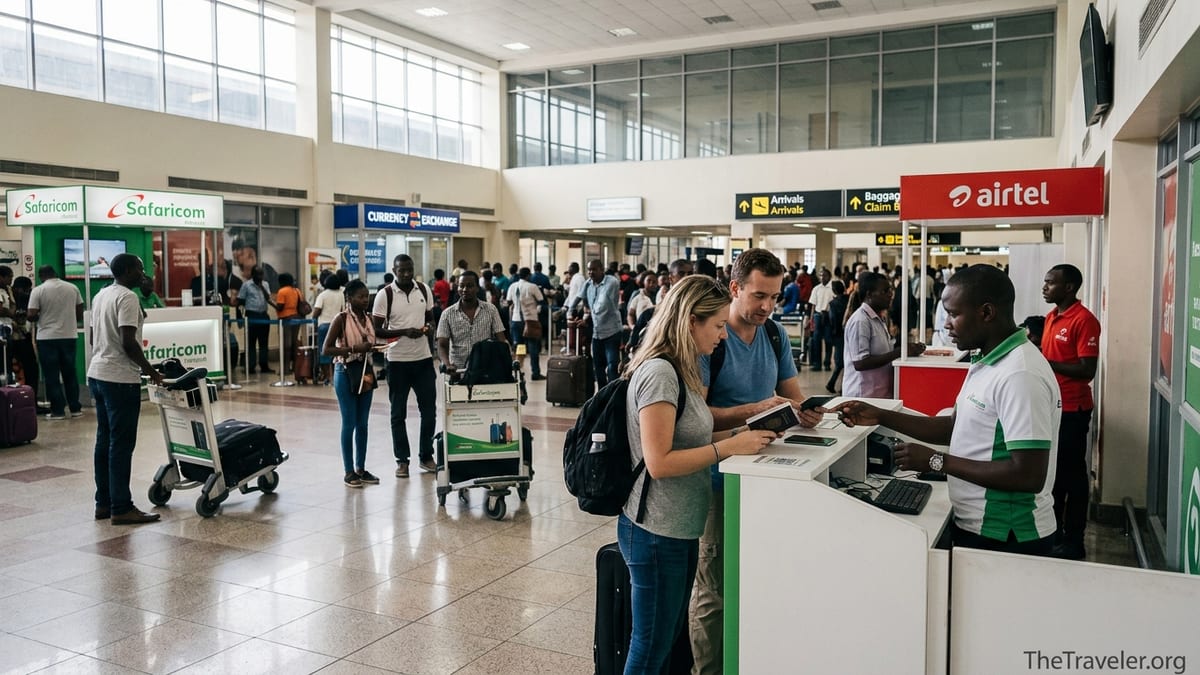
Reliable mobile data is one of the most important things you can set up before leaving the arrivals area. In Kenya the three main operators are Safaricom, Airtel Kenya and Telkom Kenya, and all are present at or near Terminal 1’s international arrivals hall with branded counters or small shops. Safaricom, which has the widest coverage including in rural safari areas, is usually the first choice for most visitors who plan road trips or national park visits.
Immediately after exiting customs, you will see operator kiosks grouped along one side of the arrivals hall, often before you reach the main taxi and hotel desk area. Staff at these kiosks are used to handling foreign passports and can set up prepaid tourist SIM packages in just a few minutes. For example, a Safaricom or Airtel tourist bundle might cost in the region of 1,000 to 2,000 Kenyan shillings for several gigabytes of data valid for 30 days, with some plans including local minutes or free messaging through popular apps. Prices change periodically but remain low compared with many Western countries.
By law, Kenyan SIM cards must be registered to an individual using a valid ID document, which for visitors is typically your passport. Staff will scan your passport and may take a quick photo of you to match with the SIM registration. While informal sellers on the street sometimes offer pre-registered or “spare” SIMs, using those can expose you to serious security risks, so sticking to official operator counters at the airport or in city malls is strongly recommended.
If your phone supports eSIM, ask specifically whether the operator can provide one. In recent years both Safaricom and Airtel have been gradually rolling out eSIM support, and some airport shops can issue an eSIM QR code instead of a plastic SIM. This saves you from swapping tiny cards and is helpful if you want to keep your home number active on a physical SIM for banking codes or two factor authentication. Keep in mind that not every staff member is trained on eSIM activations, so if the first counter says no, you can ask at the neighboring operator desk.
Data, Rideshare Apps and Staying Connected
Once you have your SIM or eSIM, staff will usually help you insert or activate it, configure APN settings if needed, and confirm that data is working. It is a good idea to open a browser page or map app while you are still standing at the counter to check that you can get online. Many travelers choose a data heavy package for the first week so that they can navigate Nairobi using apps like Google Maps, communicate on messaging apps, and request rides without worrying about limits.
Taxi and rideshare options from JKIA include app based services such as Uber, Bolt and Little, as well as traditional airport taxis booked at fixed price desks just outside the arrivals door. To use app based rides, you will need mobile data from your new Kenyan SIM or roaming plan and a way to receive SMS verification codes if your account requires them. A typical Uber or Bolt ride from JKIA to central Nairobi might cost the equivalent of around 10 to 25 US dollars depending on traffic, vehicle category and time of day, often less expensive than the fixed price quoted at many hotel desks.
Some travelers prefer to rely on international roaming instead of buying a local SIM. Major carriers in North America and Europe increasingly offer day passes that allow you to use your home plan in Kenya for a fixed daily fee, which can be practical for short business trips of two or three days. However, for stays longer than a few days, a local prepaid data plan usually works out significantly cheaper, especially if you plan to upload many photos, use navigation extensively, or work remotely.
Kenya’s mobile money system, M-Pesa, is deeply integrated into everyday life, and you will see QR codes and mobile payment options almost everywhere. At the airport you can ask Safaricom staff to activate an M-Pesa wallet linked to your new SIM. This may require providing extra information and sometimes a local contact address, and the rules can change over time. If you are staying longer or working with local tour operators, having M-Pesa makes it much easier to pay for small expenses, tip local guides, or split group taxi fares without handling a lot of cash.
Money Exchange Strategy: How Much Cash to Carry
Kenyan shillings are still important for small purchases like snacks, tips, and local markets, but increasingly you can use cards and mobile money in larger businesses such as hotels, safari camps and restaurant chains. A balanced approach for many first time visitors is to withdraw or exchange a relatively modest amount of local currency in the arrivals hall enough to pay for your first taxi, a meal, and a buffer for unexpected needs and then rely more on card payments and additional ATM withdrawals in the city.
For instance, a traveler arriving for a week in Nairobi might take out the equivalent of around 150 US dollars in shillings on arrival, then check whether major expenses like hotel bills and organized tours can be settled by card. Another visitor heading straight out on safari might carry a slightly larger amount of cash for tipping camp staff and paying for drinks or optional activities in more remote areas, where card machines can sometimes fail due to weak signal.
Airport forex bureaus accept a range of currencies, typically including US dollars, euros and British pounds, and many will also work with other major currencies at slightly wider spreads. You do not need US dollars specifically if your home currency is widely traded, though they remain widely recognized in the tourism sector. When you exchange cash, count the shillings you receive at the counter and keep the receipt until you are sure the transaction looks correct. If you have leftover shillings when you leave Kenya, you can often change them back at the airport, though buy back rates are less favorable.
One important rule is that exporting significant amounts of Kenyan cash is restricted. While a handful of small denomination notes as souvenirs is not a problem for most visitors, it is not advisable to leave with large stacks of local currency. To avoid this, aim to run down your shilling balance in the last few days of your trip by paying for meals or airport purchases in cash, then paying any remaining larger hotel bills by card.
Practical Steps Before You Leave the Arrivals Area
With immigration, customs, money and connectivity sorted, take a final few minutes in the arrivals hall to prepare for the drive into Nairobi. First, confirm your exact accommodation address, including suburb and any local landmarks, since Nairobi’s traffic and road network can confuse even experienced drivers. Having the hotel name and location pinned in your maps app makes life easier whether you are meeting a prearranged driver with a name board or ordering an Uber or Bolt.
If your hotel or safari operator has arranged a pickup, look for a representative holding a sign with your name in the public meeting area just beyond the arrivals doors. This area can be crowded, particularly in the evenings, so agree in advance on a backup plan such as calling a specific number if you do not immediately see your driver. If your international SIM is not yet active, your new Kenyan number and data connection will allow you to make contact or share your live location if necessary.
Use airport restroom facilities and fill your water bottle before heading out, as traffic between JKIA and central Nairobi can be heavy, particularly during weekday rush hours in the morning and late afternoon. The drive into popular hotel districts like Westlands or Karen can take anywhere from 30 minutes in light traffic to well over an hour during peak times. Having snacks handy and your phone charged makes a big difference if you find yourself stuck behind a line of trucks or in a sudden rainstorm.
Finally, take basic security precautions in the arrivals hall and outside at the pickup area. Keep your passport, phone and wallet in a zipped pocket or money belt, close your bag securely, and avoid flashing large amounts of cash when paying for a taxi or changing money. Nairobi is a busy, generally welcoming city, but like many large urban areas, opportunistic petty theft can happen in crowded places. Staying aware without being anxious will help you start your visit on a confident note.
FAQ
Q1. Do I still need to apply for a Kenya eTA before flying to Nairobi?
Yes. For most nationalities, the electronic Travel Authorization is required before boarding a flight to Nairobi and there is no traditional visa on arrival option for tourists.
Q2. How long does Kenya eTA approval usually take?
Processing times vary, but many travelers receive approval within a few days. Applying at least one to two weeks before your trip gives a safe buffer for delays.
Q3. Can I buy a SIM card directly in the arrivals hall at JKIA?
Yes. Safaricom, Airtel and sometimes Telkom Kenya have counters in or just outside the international arrivals hall where staff can register and activate a prepaid SIM on the spot.
Q4. Is eSIM available at Nairobi’s Jomo Kenyatta Airport?
Some operator shops at JKIA can now issue eSIM profiles for compatible phones, although availability and staff training vary, so it is best to ask specifically at the counter.
Q5. Are ATMs in the airport safe to use?
ATMs located inside the secure terminal and arrivals hall are generally considered safe. Use well lit machines from major banks and shield your PIN when entering it.
Q6. Should I bring US dollars or can I use other currencies?
Airport forex bureaus commonly exchange US dollars, euros and British pounds into Kenyan shillings. You do not need US dollars specifically if your own currency is widely traded.
Q7. How much cash should I withdraw on arrival?
Many visitors withdraw the equivalent of 100 to 200 US dollars in shillings to cover an airport taxi, meals and first day expenses, then use cards and later ATM withdrawals as needed.
Q8. Can I use Uber or Bolt from JKIA without a local SIM?
You can, if your international roaming plan includes data in Kenya, but a local SIM or eSIM usually provides cheaper and more reliable mobile data for using rideshare apps.
Q9. Is it possible to get M-Pesa mobile money at the airport?
Yes. Safaricom staff at airport counters can often help visitors register for an M-Pesa wallet linked to their new SIM, though requirements and processes can change over time.
Q10. What should I do in the arrivals hall before heading to my hotel?
Before leaving, confirm your eTA stamp, collect bags, withdraw or exchange some shillings, buy a SIM or eSIM, check that data works, use restrooms and verify your hotel address and pickup arrangements.