


More news on this day
JR Kyushu has taken a prominent step toward low carbon high speed rail by introducing solar generated electricity for a portion of Kyushu Shinkansen operations, aligning its flagship bullet train services with Japan’s broader decarbonization goals.
Get the latest news straight to your inbox!
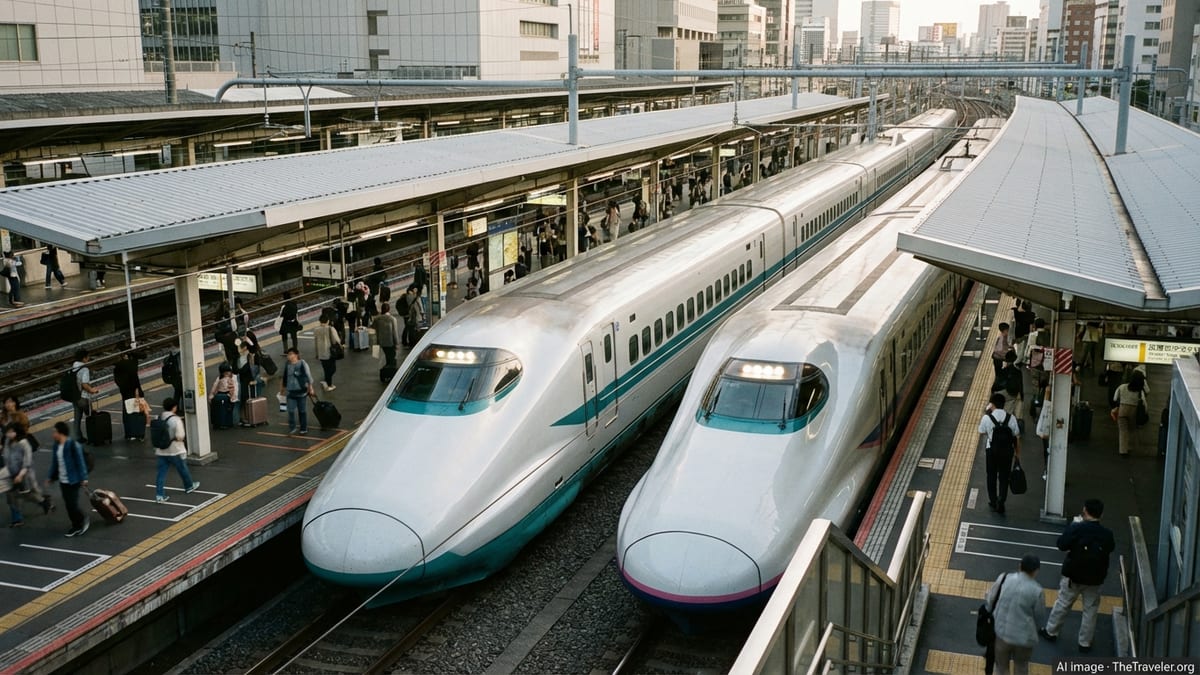
New Solar Supply Framework for Shinkansen Operations
Publicly available information from regional utility Kyushu Electric Power indicates that a new solar power framework has been introduced to provide a share of the electricity used to operate JR Kyushu’s Shinkansen services. The scheme uses an off site power purchase agreement, in which dedicated solar facilities feed power into the grid and the railway procures that output as part of its traction power supply portfolio.
According to the Kyushu Electric Power press materials, the initiative is designed so that electricity generated by newly developed large scale solar installations is allocated to JR Kyushu as operational power for the Kyushu Shinkansen. The approach allows the railway to expand its use of renewable energy without needing to construct solar arrays directly along the entire route of the high speed line, while still being able to track the environmental attributes of the power it consumes. ([kyuden.co.jp](https://www.kyuden.co.jp/press/2026/h260820-1.html?_previewDate_=null&revision=0&viewForce=1&utm_source=openai))
Initial documentation on the project outlines target annual generation volumes and associated carbon reductions. The solar supply is expected to cut JR Kyushu’s carbon dioxide emissions by several thousand tonnes per year, based on standard emission factors for conventional grid electricity in Japan. Kyushu Electric Power’s figures frame the reduction in terms of the equivalent emissions of a substantial number of typical households in the region. ([kyuden.co.jp](https://www.kyuden.co.jp/press/2026/h260820-1.html?_previewDate_=null&revision=0&viewForce=1&utm_source=openai))
The arrangement builds on a growing trend in Japan’s rail sector, in which railway companies contract directly for renewable electricity tied to specific facilities. While the new supply will account for only part of the total power required to run the Kyushu Shinkansen, it represents a notable shift toward sourcing traction energy from clearly identifiable low carbon assets.
Positioning Within JR Kyushu’s Wider Decarbonization Strategy
JR Kyushu has been outlining a broader climate and energy strategy in recent integrated reports and medium term plans. These documents describe the company’s intention to contribute to Japan’s 2050 carbon neutrality objective by expanding renewable energy use, improving efficiency in train operations, and exploring new technologies such as storage batteries along railway corridors. ([jrkyushu.co.jp](https://www.jrkyushu.co.jp/company/ir_eng/library/integrated_report/pdf/2023_ir_En.pdf?utm_source=openai))
The group’s environmental disclosures highlight Kyushu’s comparatively strong penetration of renewable generation, particularly solar power, and note the associated challenges of balancing variable output with demand. JR Kyushu’s plans call for battery systems to be installed near railway lines to absorb surplus solar energy and release it when needed, helping to stabilize the regional grid and make more effective use of renewables. Operation of some of these storage installations has been scheduled from the mid 2020s. ([jrkyushu.co.jp](https://www.jrkyushu.co.jp/company/ir_eng/library/integrated_report/pdf/2023_ir_En.pdf?utm_source=openai))
In parallel, JR Kyushu has been piloting solar related projects on its network. Industry coverage has pointed to experimental installation of photovoltaic modules in railway environments, including the use of underutilized spaces near tracks. These efforts feed into a longer term vision in which railway infrastructure can support both mobility and power generation, increasing the value of land and structures already controlled by the company. ([youtube.com](https://www.youtube.com/watch?v=B5iG7jprnx0&utm_source=openai))
The decision to route solar generated electricity into Shinkansen traction demand fits this broader framework. By focusing on its high profile high speed services, JR Kyushu can quantify and communicate emissions reductions on a route that already carries a significant share of long distance travel in Kyushu, potentially shifting more passengers from higher emitting transport modes.
Integration With National Shinkansen Sustainability Moves
JR Kyushu’s introduction of solar power for the Kyushu Shinkansen is occurring alongside related sustainability initiatives by other Shinkansen operators. JR Central, JR West and JR Kyushu have jointly worked on disclosing carbon dioxide emissions for travel across the Tokaido, Sanyo and Kyushu Shinkansen segments, with information made available through the shared online reservation platform used by corporate customers. ([global.jr-central.co.jp](https://global.jr-central.co.jp/en/company/ir/investor-meeting/2024/_pdf/im_2024_05.pdf?utm_source=openai))
Investor materials from JR Central describe preparations for solar power generation on Shinkansen trackside slopes, framed as a first of its kind initiative in Japan. The same documents reference plans to provide options for effectively carbon free travel on certain Shinkansen services by combining renewable energy procurement with emissions accounting. In this context, JR Kyushu’s solar supply for its own high speed lines can be seen as part of a coordinated shift among the major rail groups toward cleaner traction energy. ([global.jr-central.co.jp](https://global.jr-central.co.jp/en/company/ir/investor-meeting/2024/_pdf/im_2024_05.pdf?utm_source=openai))
Elsewhere on the network, JR West has announced additional use of renewable energy derived power for the Sanyo Shinkansen, including solar generated electricity supplied by facilities developed specifically for railway traction demand. Information released by the company and partner energy firms indicates that dedicated solar plants are being deployed to cover part of the high speed line’s operational consumption between key stations, reinforcing the pattern of railways contracting for bespoke renewable capacity. ([westjr.co.jp](https://www.westjr.co.jp/press/article/2024/05/page_25250.html?utm_source=openai))
Taken together, these developments demonstrate how Japan’s Shinkansen operators are beginning to pair the inherent efficiency advantages of high speed rail with targeted decarbonization of the electricity that powers trains. JR Kyushu’s move to bring solar power into its Kyushu Shinkansen operations places the company among the early adopters of this approach.
Passenger Impact and Regional Benefits
For passengers on the Kyushu Shinkansen, the early stages of the solar integration are expected to be largely invisible in day to day travel. Trains continue to operate on existing timetables between Fukuoka’s Hakata Station and Kagoshima Chuo, as well as on the Nishi Kyushu Shinkansen serving western Kyushu. However, published information from the Shinkansen operators shows that emissions per passenger are being quantified and gradually made more transparent through online booking platforms and corporate reporting, giving travelers clearer insight into the environmental profile of their trip. ([global.jr-central.co.jp](https://global.jr-central.co.jp/en/company/ir/investor-meeting/2024/_pdf/im_2024_08.pdf?utm_source=openai))
From a regional perspective, the solar supply arrangement strengthens links between Kyushu’s transport network and its renewable energy resources. Kyushu is known for high levels of installed solar capacity, supported by strong sunlight conditions, and faces recurring challenges from surplus daytime generation. By connecting new solar plants to stable traction demand from the Shinkansen, the initiative can help absorb renewable output that might otherwise be curtailed, while at the same time lowering lifecycle emissions from rail operations. ([jrkyushu.co.jp](https://www.jrkyushu.co.jp/company/ir_eng/library/integrated_report/pdf/2023_ir_En.pdf?utm_source=openai))
Local economic effects are also part of the picture. Construction and operation of large scale solar facilities under the off site PPA model bring investment, maintenance activity and potential land use benefits to host communities. For JR Kyushu, the move supports its positioning as a company contributing to regional sustainability and resilience, an emphasis that features prominently in its integrated reports and ESG related communications. ([gpssgroup.jp](https://gpssgroup.jp/jr-kyushus-first-off-site-corporate-ppa-for-stations/?utm_source=openai))
As details of the Kyushu Shinkansen solar program continue to emerge through corporate sustainability disclosures, investor materials and energy sector releases, observers of Japan’s rail industry are watching how the model might scale, both along additional sections of JR Kyushu’s network and across other high speed and conventional lines throughout the country.
Kyushu Electric Power press release on solar power for JR Kyushu Shinkansen
GPSS coverage of JR Kyushu off site corporate PPA initiatives
JR Central investor presentation on Shinkansen decarbonization measures
JR Central Integrated Report discussion of Shinkansen renewable energy use
JR West announcement on renewable power for Sanyo Shinkansen