


More news on this day
Hundreds of passengers were left sleeping on terminal floors and benches at Kenya’s main airports after an aviation workers’ strike brought overnight disruption to flights and onward connections across East Africa.
Get the latest news straight to your inbox!
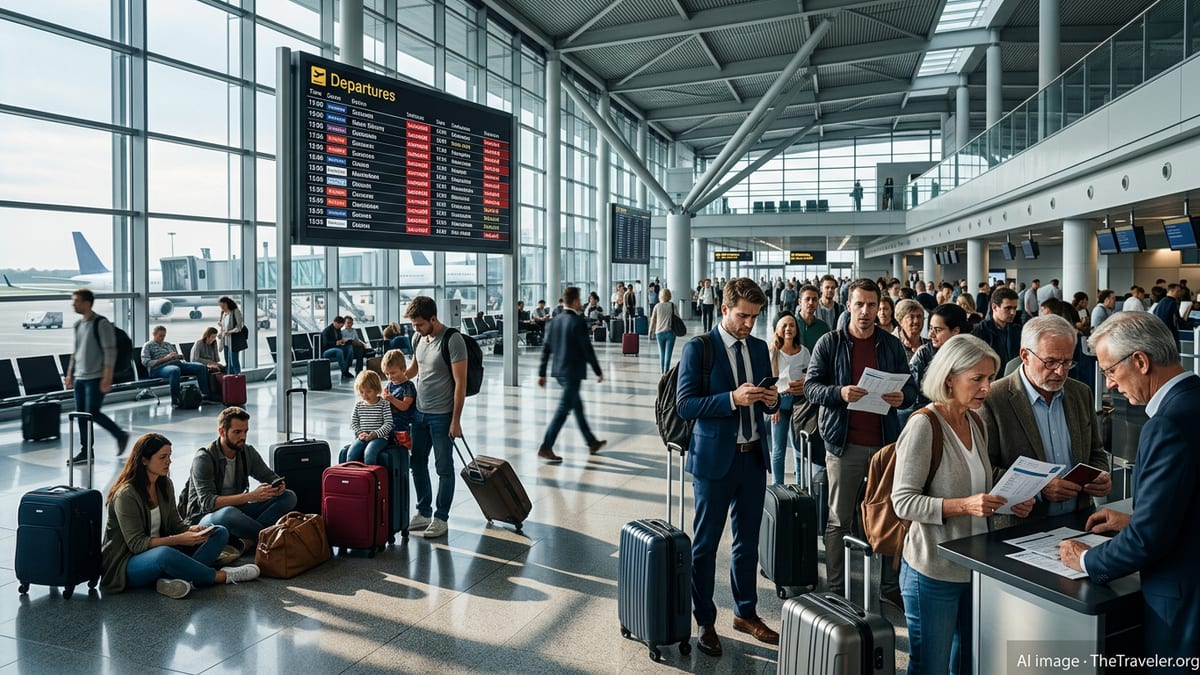
Overnight disruption at Jomo Kenyatta International Airport
Publicly available reports indicate that the walkout by members of the Kenya Aviation Workers Union (KAWU) began on Sunday, August 30, 2026, as staff at Jomo Kenyatta International Airport (JKIA) in Nairobi and other major hubs slowed operations or downed tools over pay and working conditions. By Sunday night and into Monday, August 31, hundreds of travelers were stranded amid long queues, shuttered check-in counters and repeated announcements of delays and cancellations.
Coverage from local and international outlets shows that some passengers at JKIA spent the night inside the terminal, lying on luggage or airport seating, while others sought space in nearby cafes and airport hotels when rooms were available. Those unable to afford last-minute accommodation reportedly sheltered wherever they could within the complex as rain fell outside. The scene contrasted sharply with JKIA’s role as one of Africa’s busiest transit hubs, where overnight stays are usually planned layovers rather than an unexpected necessity.
The slow-down and subsequent strike action disrupted both domestic departures and long-haul flights linking Nairobi with Europe, the Middle East and North America. Travelers on multi-leg itineraries found themselves stuck mid-journey, with missed connections rippling through regional networks that depend on Nairobi as a primary gateway.
Similar scenes were reported at Moi International Airport in Mombasa and at Eldoret and Kisumu, where services were sharply reduced as aviation and airport authority employees joined the action. Images from these airports showed crowded halls and passengers sleeping beside their bags as schedules unraveled.
Causes of the strike and airports affected
According to published coverage, the strike followed long-running disputes over salary arrears, staffing levels and the absence of a new collective bargaining agreement between aviation workers and state aviation bodies. Airport and air traffic staff had previously issued notices warning of potential industrial action in 2026, arguing that promised improvements to pay and working conditions had not materialized.
The walkout hit four key facilities: JKIA in Nairobi, Moi International Airport in Mombasa, Eldoret International Airport in western Kenya and Kisumu International Airport on Lake Victoria. JKIA, which handles the bulk of Kenya’s international passenger traffic as well as a significant share of regional connections, experienced the most severe disruption, with reports of aircraft parked on the apron waiting for clearance or crew and of entire banks of flights grounded.
Analyses of the disruption highlight that even a partial withdrawal of services at JKIA can have an outsized impact on travel across East and Central Africa. Nairobi functions as a transfer point for safari tourism to Kenya’s national parks, beach holidays along the Indian Ocean coast and business travel connecting African capitals with Europe, the Gulf and North America. As the strike entered its second day, tour operators and airlines faced mounting pressure to reroute travelers or postpone trips.
Industry-focused reporting also notes that the August 30 action followed similar unrest earlier in the year, raising questions about structural strains within Kenya’s aviation sector. While previous incidents were shorter in duration, the latest strike underlined the vulnerability of the country’s air transport system to labor disputes.
Impact on airlines, tourism and connecting passengers
Flag carrier Kenya Airways and other airlines using JKIA as a hub reported significant schedule disruptions as aircraft and crews were left out of position. Business press coverage indicates that Kenya Airways alone faces losses estimated in the hundreds of millions of shillings from the two to three days of irregular operations, including fuel, crew and passenger-care costs and the knock-on effect of reorganizing its network once the strike ended.
For individual travelers, the immediate consequences ranged from missed safaris and cruise departures to lost business meetings and visa complications due to overstays while waiting for replacement flights. Accounts from regional media and travel forums describe passengers sleeping at JKIA from Sunday night into Monday morning as they awaited word on whether their flights would depart. Some international visitors arriving in Nairobi were unable to clear onward domestic legs to safari airstrips or coastal resorts, forcing last-minute itinerary changes.
Kenya’s tourism sector, which relies heavily on seamless international air access, faces potential reputational damage among tour operators and repeat visitors who value reliability. Analysts quoted in local reports warn that even short-lived disruptions can influence how travelers and foreign partners perceive a destination’s infrastructure, especially when alternative hubs exist elsewhere in the region.
At the same time, travel industry commentary suggests that airlines and ground handlers moved to mitigate the immediate fallout where possible, arranging rebookings, limited accommodation and meals for some stranded passengers. However, uneven implementation of these measures reportedly left many travelers frustrated and unsure of their rights, particularly those flying on separate tickets or low-cost carriers.
Resolution of the strike and backlog recovery
By Tuesday, September 1, 2026, public statements from union and government representatives indicated that a return-to-work agreement had been reached, prompting KAWU to call off the strike and instruct members to resume duties. The deal, according to news reports, included commitments to address pay and staffing concerns within specified time frames, though full details have not yet been widely disclosed.
Even after normal staffing levels returned, airlines warned that clearing the backlog of stranded passengers and repositioning aircraft would take additional days. Carriers announced waivers allowing affected travelers to rebook at no extra cost on available services, but high load factors during the busy season meant that many customers still faced waits before securing a new seat.
Travel advisories issued in the aftermath of the strike encouraged passengers with upcoming itineraries through JKIA and other Kenyan airports to monitor their bookings closely, confirm flight status before heading to the airport and allow extra time for check-in and security. Industry observers noted that while operations were gradually stabilizing, residual delays and occasional schedule changes would likely persist as networks normalized.
Longer term, analysts argue that the episode could accelerate discussions about contingency planning and labor relations in Kenya’s aviation sector. Proposals mentioned in policy and industry commentary include clearer minimum service guarantees at key national infrastructure sites, more robust communication channels with passengers during disruptions and renewed investment in staffing and training to reduce the risk of future stoppages.
What travelers should know for upcoming trips
For travelers planning to pass through Nairobi or Kenya’s coastal and regional airports in the coming weeks, current reporting suggests that flights are operating but that some residual disruption may continue as airlines work through rebookings. Passengers with tight connections or time-sensitive plans may wish to build in longer layovers or consider flexible ticket options that allow last-minute changes.
Travel experts speaking to local media outlets recommend that visitors keep documentation of any strike-related disruption, such as cancellation notices or boarding passes, in case they wish to pursue claims through travel insurance. Policy terms vary, but many insurers treat organized labor action as a covered event, particularly when it leads to extended delays or additional accommodation costs.
Those already in Kenya or the wider region are advised to stay in close contact with their airlines or travel agents and to check airport and carrier websites for operational updates. Some carriers have created dedicated information pages and social media updates to guide passengers through rebooking processes and clarify eligibility for vouchers or refunds.
Despite the recent turmoil, tourism bodies and airlines continue to promote Kenya as a key gateway for East African travel. With the strike formally suspended and a framework for negotiations in place, attention is now turning to how quickly confidence in the country’s aviation infrastructure can be restored among both domestic and international travelers.
DW: Kenya passengers stranded amid airport staff strike
The Standard: Passengers stranded overnight by Kenya airport strike
Citizen Digital: Passengers spend night at JKIA as aviation workers strike persists
AP News: Workers’ strike disrupts flights at Nairobi’s main airport