


More news on this day
Kenya’s celebrated safari heartland, including the Maasai Mara and a string of popular parks across the south and central highlands, is bracing for fallout after the United States raised its travel advisory for the country to Level 3 on October 19, 2026, urging American travelers to reconsider trips because of heightened health and security risks.
Get the latest news straight to your inbox!
Advisory Raised to Level 3 With New Health Concerns
According to the latest U.S. State Department advisory, Kenya is now classified as Level 3, a category that urges travelers to reconsider travel due to a combination of health, crime, terrorism, kidnapping, unrest and traffic safety risks. Publicly available information shows that the advisory was upgraded from Level 2 on October 19, 2026, replacing guidance issued in late July.
Published coverage in international and Kenyan media links the change in part to concerns over Ebola cases associated with the Bundibugyo virus, in addition to long standing warnings about crime and terrorism in specific regions. Reports indicate that the advisory also references pressure on Kenya’s health system, underscoring that travelers should review health information carefully before departure.
The State Department’s country page highlights a patchwork risk map, with some regions of Kenya listed as Level 4, or “do not travel,” including parts of the border counties with Somalia, segments of the northern frontier, and selected coastal areas. While most international safari destinations sit far from these zones, the national headline rating of Level 3 is the figure that often shapes insurance policies, tour-operator risk assessments and traveler confidence.
U.S. government personnel in Kenya are reported to face additional movement restrictions, including limitations on nighttime road travel and the use of certain rail and road corridors. Although such rules apply only to official staff, industry observers note that they are closely watched by corporate travel managers and can influence how private travelers perceive risk across the country as a whole.
Maasai Mara and the Southern Parks Under the Spotlight
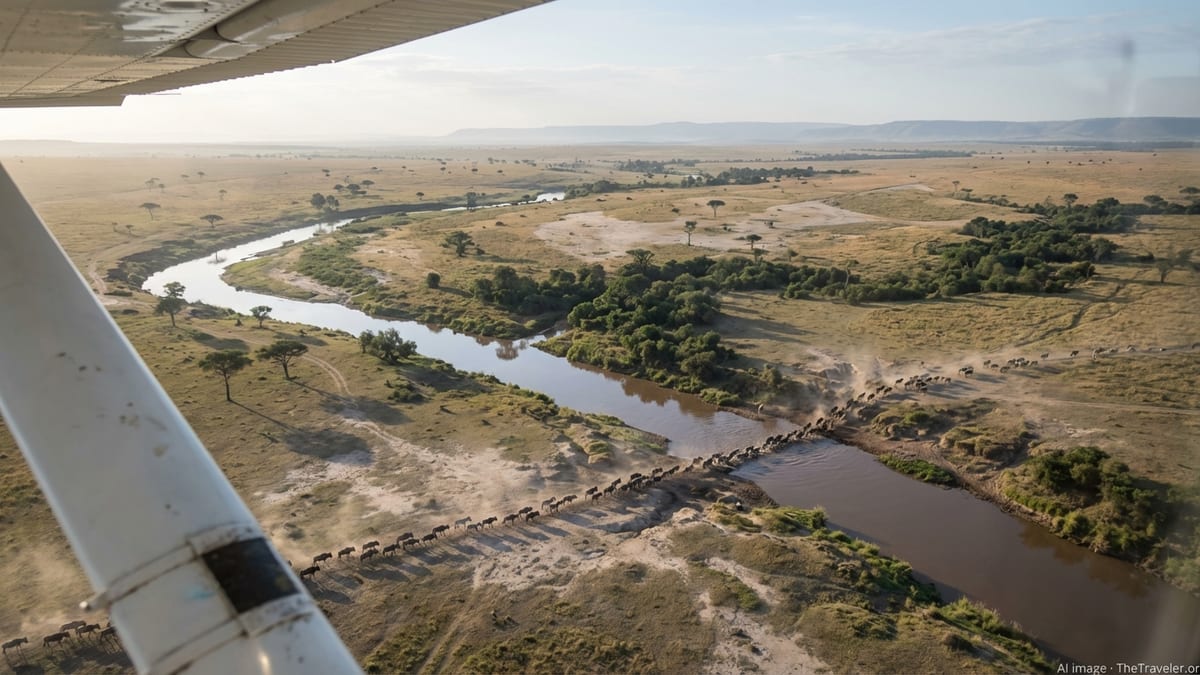
The tougher advisory lands just as Kenya’s signature safari circuit transitions from the peak months of the Great Migration in the Maasai Mara into the shorter rain season, a period when many North American visitors still travel to combine the Mara with Amboseli, Lake Nakuru, Laikipia conservancies and central highlands reserves. These areas are not singled out as no go zones in the U.S. advisory, but operators worry they could be impacted by broader risk perceptions.
Tourism trade outlets in East Africa report that Kenyan safari companies are fielding a surge of questions from U.S. clients about how close the Maasai Mara and other key reserves are to the areas flagged for higher security concern. On widely used safari itineraries, travelers typically fly by light aircraft from Nairobi’s Wilson Airport directly into airstrips inside the Mara or adjoining conservancies, bypassing many of the highways that are most mentioned in security advisories.
Publicly available route guidance for U.S. personnel continues to favor the Nairobi to Mombasa standard gauge railway over long distance driving, reflecting caution about intercity roads rather than conditions within the main wildlife conservancies. Industry analysts note that most of the core safari region from the Mara to Amboseli and the central highlands sits hundreds of kilometers from the border zones and coastal districts that have carried higher warnings for years.
Despite that geographic buffer, the new nationwide Level 3 rating means that travelers may face additional questions from their insurers and employers about discretionary trips, including holidays focused on wildlife viewing. Some U.S. based policy documents treat Level 3 destinations differently from Level 2, potentially affecting coverage for trip cancellation or evacuation, even when an itinerary is limited to well established safari routes.
Tourism Industry Braces for Booking Slowdown
Kenya’s tourism authorities and private sector had been reporting a strong recovery through 2025 and early 2026, supported by pent up demand for wildlife travel and rising interest in sustainable, community based tourism models. North America is a key long haul source market, supplying a significant share of high value safari visitors who tend to book longer itineraries and stay in mid to upper range camps and lodges.
According to coverage in regional travel trade publications, tour operators now fear that the advisory change could lead to a wave of postponements or itinerary shifts, particularly among first time safari travelers and multi generational families who are more sensitive to official warnings. Some operators quoted in that reporting describe clients asking to delay Kenya components while continuing with neighboring country segments that currently hold lower advisory levels.
Air connectivity is another concern. Nairobi’s Jomo Kenyatta International Airport functions as a major hub for East Africa, and a large share of visitors from the United States reach the Maasai Mara and other reserves through connecting flights via European, Gulf or African hubs. If bookings soften on key U.S. and European routes, airlines may adjust frequencies or equipment, which can in turn influence airfare levels and connection options for safari goers.
Hotel groups and independent camp owners operating in the Mara and other flagship parks are closely watching inquiry patterns for the 2026 to 2027 high seasons. While most report that existing bookings for the next few weeks remain intact, there is increased scrutiny of new inquiries from U.S. travelers for mid 2027 and beyond, a period when the full impact of the advisory change on consumer confidence is likely to become clearer.
What the Advisory Means for Current and Future Travelers
Travel advisories do not prohibit U.S. citizens from visiting Kenya, and the Level 3 designation does not automatically cancel flights or safaris already on the books. Instead, it functions as a strong recommendation to reconsider travel, prompting travelers to re evaluate their individual risk tolerance and preparation. Publicly available U.S. government guidance encourages those who decide to proceed to enroll in consular notification systems, share detailed itineraries with family and maintain flexible travel plans.
For visitors already booked on classic Kenyan safaris that focus on the Maasai Mara, Amboseli and similar parks, the key practical questions involve airline policies, insurance coverage and operator terms. Many safari specialists have, since the pandemic, revised their conditions to allow date changes if official advisories tighten further, though the exact triggers vary by company and by the traveler’s country of residence. Travelers are being urged in media reports to review their policy wording carefully, particularly on clauses tied to government advisories.
Health preparation also moves higher up the checklist in light of the advisory’s emphasis on disease risk. Current public information recommends that travelers consult health professionals well in advance of departure about vaccinations, malaria prevention and any additional guidance related to viral hemorrhagic fevers. Travelers transiting or combining Kenya with other countries in the region are advised in open source guidance to pay special attention to any screening rules their airlines or home countries might apply on return.
Security conscious safari travelers are also revisiting routing choices. Some are choosing to fly directly into key reserves rather than travel long distances by road, while others are opting to spend more nights inside private or community conservancies that offer controlled access and hosted activities. Kenyan and international operators highlight, through their own public communications, long established safety protocols, radio and satellite tracking and partnerships with medical evacuation providers serving remote wildlife areas.
Regional and Competitive Implications for East African Safaris
The advisory change in Kenya is being closely watched across East Africa, a region where cross border itineraries that combine multiple countries are standard practice in the safari industry. Tanzania, Rwanda and other neighbors may see a short term uplift in inquiries from North American travelers looking to pivot away from Kenya while retaining a wildlife focused journey, according to commentary in regional travel news coverage.
Some multi country tour programs that previously started or ended in Nairobi are now being re evaluated, with planners considering shifting arrival points to airports in neighboring states that currently carry lower advisory levels. This rebalancing could influence not only where travelers sleep, but also which parks and reserves receive conservation focused tourism revenue, at least in the short term.
At the same time, Kenya remains one of the continent’s most established safari destinations, with a deep network of guides, camps and community conservancies that depend heavily on long haul tourism. Travel analysts note in public reports that the country has weathered previous advisory shifts, terrorist incidents and health scares, often seeing demand return after periods of uncertainty, particularly when wildlife conditions in the Mara and other flagship reserves are strong.
How quickly the latest Level 3 designation affects bookings for Kenya’s top safari circuit will depend on several moving parts, including the trajectory of current health concerns, any changes in security conditions and the responses of airlines, insurers and major tour operators. For now, the advisory is prompting travelers and the industry alike to reassess risk, refine itineraries and watch closely for further updates that could reshape East Africa’s safari landscape in the months ahead.