


More news on this day
The United States has renewed its strongest warning against travel to Lebanon, updating its Level 4 "Do Not Travel" advisory to underscore the growing risk of drone and missile strikes across the country, including densely populated areas of Beirut.
Get the latest news straight to your inbox!
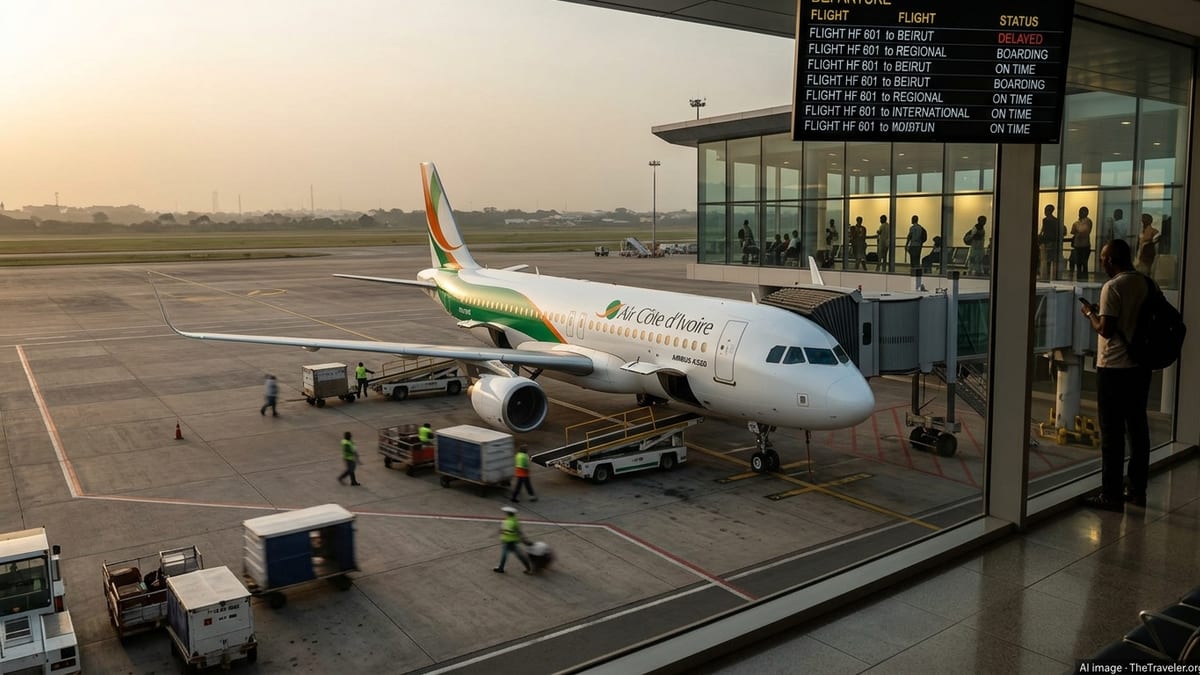
Fresh Advisory Highlights Escalating Strike Threats
The latest update to the U.S. State Department’s Lebanon travel advisory, issued on October 23, 2026, keeps the country at Level 4, the highest warning level, but sharpens the focus on the danger of armed attacks. Publicly available information on the advisory notes that drone and missile strikes may occur throughout Lebanon, including the capital, and that security conditions can deteriorate with little warning.
According to recent coverage from regional outlets, the renewed warning reiterates that parts of Beirut, particularly the southern suburbs, remain at heightened risk due to ongoing Israeli military activity and the presence of armed groups. Reports describe recent airstrikes in these districts in 2026, reinforcing official concerns that urban neighborhoods are vulnerable to targeted attacks and collateral damage.
The advisory states that U.S. citizens should not travel to Lebanon for any reason and that those already in the country should carefully consider departure options while commercial routes remain available. The update stresses that the U.S. government has limited capacity to provide emergency services amid active conflict and disrupted infrastructure.
Beirut in the Crosshairs of a Wider Regional Confrontation
Beirut’s southern suburbs and areas in southern Lebanon have been repeatedly cited in international risk assessments as likely flashpoints if regional tensions escalate further. Conflict tracking by humanitarian and security organizations shows that the 2026 Lebanon war has involved extensive Israeli strikes on Hezbollah-linked targets and infrastructure, including in and around the capital.
Analyses produced by international aid groups and academic risk centers describe a pattern in which localized clashes along the Lebanon–Israel border quickly spill over into wider confrontations. In this scenario, Beirut’s role as both a political hub and a logistical base for armed factions raises the prospect that residential neighborhoods, commercial districts and major roadways could be exposed to additional strikes.
Commentary in regional media links the renewed U.S. travel warning to broader concerns about Iranian influence and the activities of allied groups such as Hezbollah and Yemen’s Houthi movement. Public reporting on the updated advisory notes that it explicitly references Iranian-supported actors and warns of potential attempts to target U.S. interests and officials across the Middle East, including in Lebanon.
Airport Access and Airspace Safety Remain Fragile
For travelers, one of the most immediate practical concerns is the reliability of Beirut–Rafic Hariri International Airport and the safety of the surrounding airspace. Aviation risk bulletins compiled by specialist organizations describe Lebanese airspace as a high-risk environment, with warnings from European regulators advising airlines to avoid overflying the country except for tightly managed approaches and departures over the sea.
Recent notices to air missions referenced by these trackers highlight the possibility of GPS jamming and spoofing in the Beirut flight information region, adding another layer of complexity for commercial flights. While airlines continue to operate limited services to and from Beirut, international guidance urges operators to conduct thorough risk assessments and remain ready to alter routes or suspend services if strikes intensify.
Parallel travel advisories issued by governments such as the United Kingdom and Australia also caution that Lebanon’s airspace may open or close at short notice. Public information from these advisories explains that hostilities could disrupt commercial flights or damage critical airport infrastructure, making it difficult for visitors to leave the country in an emergency.
Global Travel Advice Converges on ‘Do Not Travel’
The U.S. warning is part of a broader pattern of restrictive guidance on Lebanon from multiple governments. Advisory trackers that aggregate notices from the United States, United Kingdom, Canada and Australia show that all four currently urge citizens to avoid travel to Lebanon, citing overlapping concerns about terrorism, armed conflict, civil unrest, crime and kidnapping.
The UK’s travel advice for Lebanon identifies the southern suburbs of Beirut, the southern border region and areas near Syria as particular hotspots. It notes the presence of armed groups, previous Israeli airstrikes during 2026 and an elevated risk of organized crime and kidnapping in these zones. Australian guidance echoes these assessments and adds that foreign nationals may face increased risk if tensions involving U.S. interests escalate.
These converging advisories are designed to inform risk calculations by tourists, business travelers, humanitarian staff and study abroad programs. Universities and corporate security departments often reference such government warnings in their own internal country risk ratings, many of which now list Lebanon as an excluded or high-threat destination for nonessential travel.
What the Renewed Warning Means for Prospective Travelers
For individuals contemplating a trip to Beirut or other parts of Lebanon, the renewed U.S. advisory has several concrete implications. First, Level 4 status signals that standard consular assistance, including emergency evacuations, may not be available or may be severely constrained if conflict intensifies or airport access is lost. This significantly increases personal risk for those who choose to travel despite the warning.
Second, the explicit mention of drone and missile strike risks in Beirut underscores that danger is not limited to border regions or remote conflict zones. Residential districts, commercial centers and major transport corridors could be affected with little or no notice, complicating efforts to rely on local risk assessments or to limit movement to seemingly safer neighborhoods.
Third, travelers must take into account the possibility that airlines could suspend flights with minimal lead time in response to deteriorating security conditions or new aviation advisories. Publicly available information from aviation safety trackers shows that regulators and carriers have already adjusted routes and overflight permissions several times during 2026 in reaction to strike activity.
Finally, travel insurance coverage may be restricted or voided in a country under a Level 4 “Do Not Travel” designation, particularly when armed conflict and terrorism are cited as primary risks. Insurance industry guidance typically classifies such destinations as war-risk locations, and policies may exclude claims related to hostilities or evacuations. Prospective visitors who cannot confirm comprehensive coverage and a reliable exit plan are being advised by many governments to postpone nonessential trips to Beirut and the rest of Lebanon.