


More news on this day
The United States has reissued its highest Level 4 “Do Not Travel” advisory for Iraq, renewing warnings on October 24, 2026 that American citizens should avoid the country entirely due to persistent security threats and limited capacity for emergency assistance.
Get the latest news straight to your inbox!
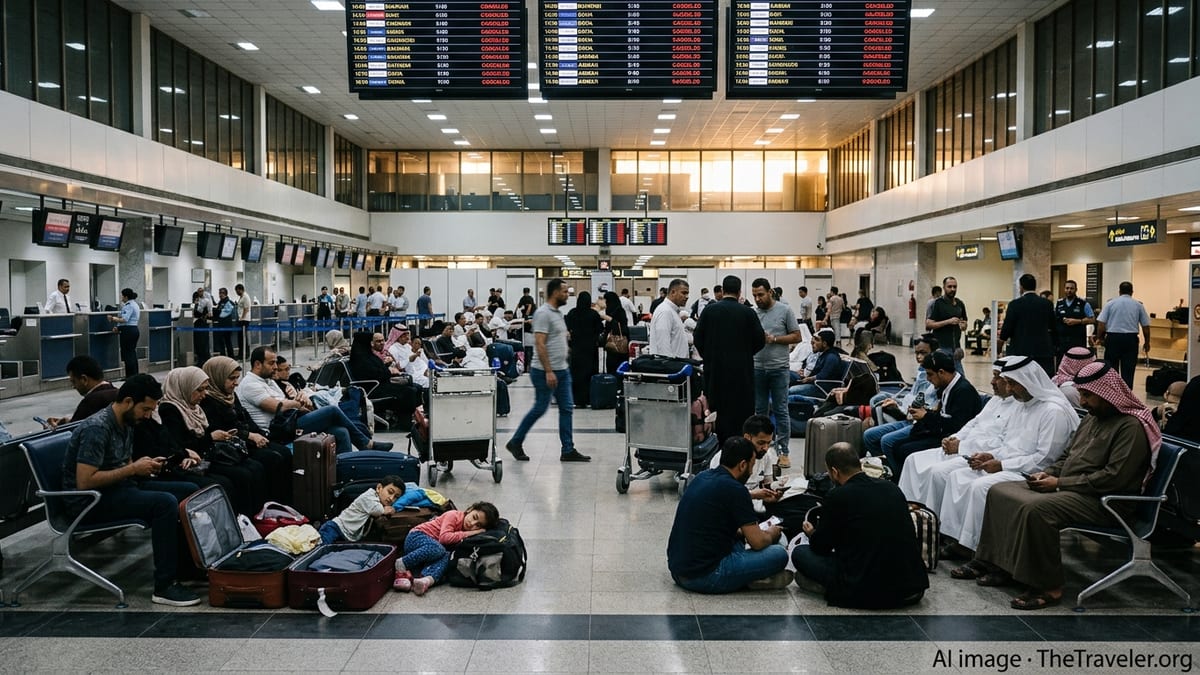
Advisory Maintains Highest Alert Level for Iraq
Publicly available information from the U.S. Department of State shows that Iraq remains under a Level 4 “Do Not Travel” advisory, the strictest category in the department’s four-tier system. The latest update reiterates that U.S. citizens are advised not to travel to Iraq for any reason and to depart if they are already in the country and can leave safely.
The advisory, dated August 29, 2026 on the Iraq country page, remains in force as of October 24 following renewed messaging highlighting the risks. The notice cites a combination of terrorism, kidnapping and hostage taking, armed conflict, crime, health risks, unrest and other factors, along with the U.S. government’s limited ability to provide emergency services to citizens in Iraq.
According to publicly accessible State Department material describing the advisory system, a Level 4 designation is used when there is a higher likelihood of life-threatening risks and when U.S. government assistance may be severely constrained during a crisis. The guidance stresses that conditions can change quickly, and that travelers in Level 4 locations should have plans to leave that do not rely on government-organized evacuations.
Background material and expert commentary note that Iraq has remained at or near this highest risk category for several years, reflecting long-standing concerns about militant activity, targeted attacks and the fragility of security conditions even in areas that may appear relatively calm to visitors.
Security Risks Cited: Terrorism, Kidnapping and Armed Conflict
Recent coverage from regional and international outlets reports that the renewed advisory again highlights terrorism and kidnapping as primary security concerns across Iraq, including in and around major cities. Armed groups and extremist organizations continue to operate in multiple provinces, with periodic attacks against security forces, government facilities and other targets.
Travel risk assessments compiled by insurance and security-monitoring services align with the official U.S. posture, describing Iraq as subject to a volatile security environment that can deteriorate with little warning. These assessments indicate that roadside bombs, indirect fire, improvised explosive devices and small-arms attacks remain possible in different parts of the country.
Open-source reporting also points to the ongoing risk of kidnapping or hostage-taking involving foreign nationals, particularly individuals perceived as Western or affiliated with international organizations. Analysts note that such incidents may be driven by political motives, ransom demands or efforts by armed groups to exert pressure in wider regional disputes.
In addition, the advisory reflects concerns about sporadic clashes between security forces and non-state armed groups, as well as the potential for spillover from broader regional tensions. Observers say that even areas with heavy security presence, such as parts of Baghdad or the Kurdistan Region, have experienced security incidents in recent years, underscoring the difficulty of identifying genuinely safe zones for independent travel.
Limited Consular Support and Movement Restrictions
Information published by the U.S. government indicates that embassy and consulate operations in Iraq are subject to strict security measures and staffing limitations. U.S. personnel are reported to live and work under tight movement controls, and their travel within the country is often heavily restricted or subject to advance security approvals.
The advisory and related public guidance state that the U.S. government’s ability to provide emergency services to its citizens in Iraq is restricted by these security constraints. In practical terms, this can affect the speed and scope of assistance for issues such as medical emergencies, victim support following a crime, or help in departing the country during a rapidly evolving security incident.
The Baghdad embassy and the U.S. Consulate General in Erbil continue to publish contact details and emergency numbers, but travelers are advised in public materials not to rely on the availability of rapid consular intervention during crises. External risk briefings note that road movements between cities and to border crossings can be particularly challenging to support due to checkpoints, route insecurity and unpredictable closures.
Specialist travel-security firms emphasize that the advisory effectively signals that routine tourism and independent business travel to Iraq are not considered viable without significant, professional risk mitigation and contingency planning, which is beyond the means of most leisure travelers.
Implications for Travelers, Airlines and Insurance
The continuation of a Level 4 “Do Not Travel” warning has practical consequences for would-be visitors and for companies operating in Iraq. Industry briefings on travel insurance show that many standard leisure policies either exclude coverage for countries under the highest advisory level or require specialized high-risk policies that carry higher premiums and more limited benefits.
Some airlines and tour operators use the U.S. and allied government advisories as part of their own risk assessments when deciding whether to maintain or adjust services. Aviation and route-planning data tracked by independent analysts indicate that scheduled international passenger traffic to Iraq is significantly lower than to neighboring states with lower advisory levels, although flights serving business, diaspora and humanitarian travelers continue to operate on key routes.
For individuals who nonetheless have compelling reasons to travel, such as essential business, humanitarian work or family emergencies, publicly available security guidance recommends carefully reviewing employer or organizational security protocols, enrolling in available traveler enrollment programs and confirming that insurance specifically covers travel to Iraq under a Level 4 designation. Analysts advise having detailed personal evacuation plans and maintaining access to funds, communications tools and secure transportation options.
Travel-policy documents from universities and other institutions in the United States frequently reference Level 4 destinations as locations where institution-sponsored travel is restricted or requires high-level approval. Iraq’s inclusion in this category means that academic exchanges, study programs and non-essential research travel may be delayed, rerouted or subject to additional scrutiny.
Regional Context and Outlook
The renewed advisory for Iraq comes against a wider backdrop of elevated travel warnings across parts of the Middle East, where several countries remain at Level 3 “Reconsider Travel” or Level 4 “Do Not Travel” because of regional tensions and security incidents. Comparative risk dashboards maintained by governments and private-sector analysts describe a cluster of high-alert states spanning conflict-affected areas and locations exposed to cross-border attacks.
Regional reporting in recent months has highlighted missile and drone incidents, political unrest and shifting security relationships that can alter risk calculations on short notice. Iraq’s position, hosting a range of domestic and foreign armed actors as well as critical energy and transport infrastructure, means that developments in neighboring countries can have rapid consequences for its internal security picture.
Despite these challenges, some governments and organizations continue to operate diplomatic missions and aid projects in Iraq under enhanced security arrangements. Commentaries from policy institutes note that improvements in local governance and security capacity in parts of the country have been uneven, leaving certain areas comparatively more stable than others but not yet meeting the threshold for a broad easing of international travel warnings.
Observers following travel-advisory trends suggest that the Level 4 rating is likely to remain in place in the near term unless there is a sustained reduction in attacks, kidnappings and broader regional tensions. For travelers, the message remains clear: discretionary trips to Iraq are strongly discouraged, and anyone already in the country is urged by publicly available guidance to regularly reassess their security situation and exit options.