


More news on this day
The United Kingdom has revised its travel advice for France after a new wave of mass protests, local curfews and heightened security measures in Paris and several other cities raised concerns about disruption for visitors during the busy autumn travel period.
Get the latest news straight to your inbox!
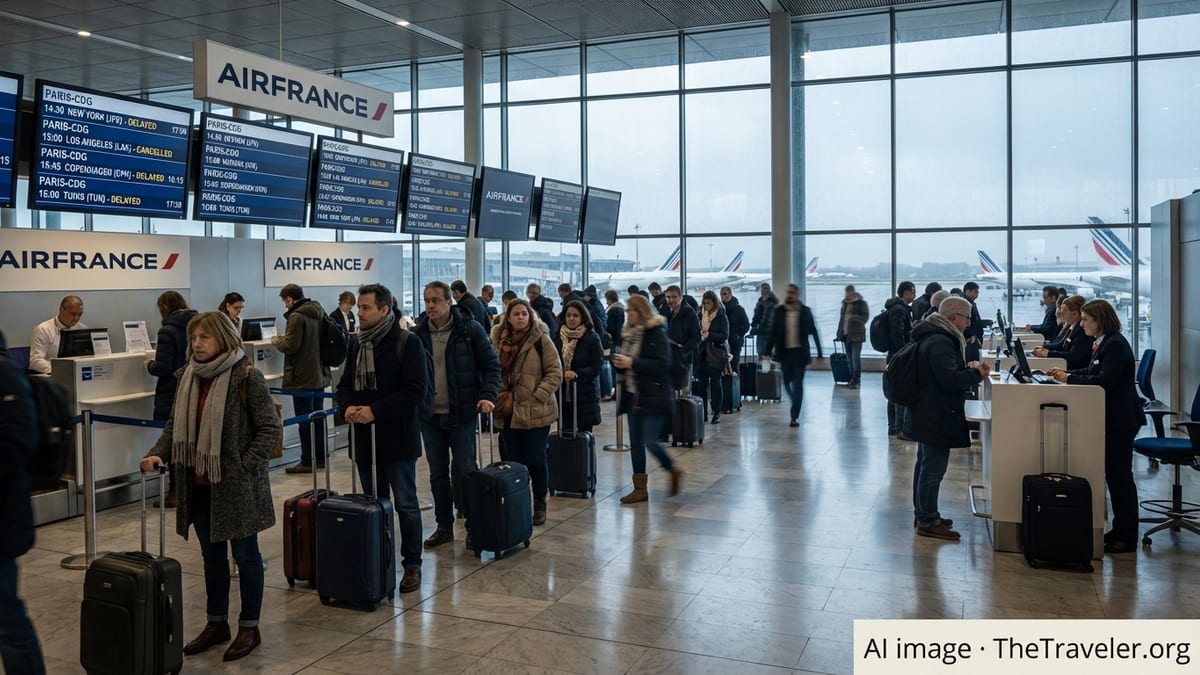
Revised UK guidance highlights risk of sudden disruption
According to publicly available travel advice from the UK government, the latest update for France, published this week, stresses an increased likelihood of demonstrations, political gatherings and marches across the country, sometimes announced at very short notice. The guidance notes that protests can lead to significant disruption around key transport hubs and central districts in major cities, particularly Paris, Lyon and Marseille.
The updated advice reiterates that the overall level for France remains one of exercising increased caution rather than advising against travel. However, it underlines that protests in recent days have been accompanied in some areas by vandalism, arson and clashes with police, which can pose incidental risks to bystanders and can rapidly change local conditions.
Travellers from the UK are urged to check the France travel advice page before departure and to stay in close contact with airlines, rail operators and tour companies for any changes to services. The guidance also points to the importance of retaining flexible plans where possible, including allowing extra time for journeys within large cities and to airports or long distance train stations.
Night curfews and security zones in Paris and other cities
French authorities have responded to the recent unrest by introducing a series of targeted, time-limited curfews and security zones in parts of Paris and several regional cities. Publicly available information indicates that Paris police have imposed overnight curfews in certain central districts following destructive rioting, with restrictions typically running from late evening to early morning.
Separate coverage of local measures indicates that some municipalities in northern France, including around Lille, have also placed temporary night-time curfews on minors after incidents of disorder linked to protests. These measures are framed as local public safety steps and do not amount to a nationwide curfew, but they can affect evening movement in affected neighbourhoods.
Travel advisories from a number of governments, including the United Kingdom, Canada, Ireland and Australia, all note that local curfews may be introduced or extended with limited notice. Visitors are therefore advised to follow local announcements, respect any movement restrictions that apply where they are staying, and be prepared for closures of particular streets or squares even if wider areas of the city remain open.
Protests impact major attractions, museums and events
The protests have also begun to affect some of France’s best known cultural sites. Recent media coverage describes how the Louvre Museum and several other major Paris institutions are closing for at least one protest day as part of precautionary measures taken by authorities, who have also deployed tens of thousands of security personnel nationwide for the weekend.
These closures come on top of rolling restrictions around popular gathering points such as Place de la République, Bastille and Nation in Paris, where marches frequently begin or end. Access to these squares and surrounding streets can be limited for several hours, affecting not only demonstrations but also local businesses, cafés and metro stations at peak times.
For visitors, this means that pre-booked timed entry to museums or scheduled events may be cancelled or rescheduled at short notice on days of major demonstrations. Publicly available information from tourism operators and recent traveller reports suggests that, away from the immediate protest routes and during daytime hours, many other attractions and neighbourhoods continue to operate close to normal, but travellers are encouraged to have alternative plans in case their preferred site is temporarily closed.
International advisories urge vigilance but stop short of bans
France remains at an advisory level that broadly equates to “exercise increased caution” in guidance from several Western governments, including the United States and Canada. These notices highlight civil unrest and the risk of terrorism as ongoing security considerations, along with the recent spike in protest-related violence and looting in some urban centres.
Other countries’ advisories referenced in public sources, such as those from Ireland, Australia and New Zealand, similarly draw attention to the possibility of partial or localised curfews, road closures and sudden changes to public transport availability. None of these governments have, at the time of the latest updates, introduced a general recommendation against travel to France, but all emphasise the need for situational awareness and careful route planning in larger cities.
The convergence of these advisories with the UK’s updated warning underscores a shared assessment that the main risks for visitors are indirect: getting caught up in crowds, encountering blocked streets or facing late-notice changes to booked services rather than being directly targeted.
Practical steps for UK travellers heading to France
Publicly available official guidance and on-the-ground reporting point to several practical measures for travellers seeking to minimise disruption. Visitors are encouraged to monitor local news and municipal announcements daily, particularly for Paris, Lyon, Marseille and other large cities where protests are concentrated, and to pay attention to any reference to curfews or traffic restrictions in specific districts.
Many operators advise building extra time into journeys to and from airports such as Paris Charles de Gaulle and Orly, as well as major rail hubs like Gare du Nord and Gare de Lyon, on known protest days. Travellers may wish to favour the metro or regional trains rather than buses, taxis or ride hailing services when demonstrations are planned at street level, as underground services are often less affected by surface road closures.
The UK government’s advice also points out that travellers should carry identification, keep accommodation details easily accessible, and remain alert near large gatherings even if they appear peaceful. In the current context, choosing accommodation away from the immediate vicinity of major protest starting points or government buildings can further reduce the likelihood of disruption to a short city break.
While the updated UK warning reflects genuine concerns about recent unrest and curfews, it also makes clear that many parts of France remain calm and fully open to visitors. Travellers who stay informed, avoid protest hotspots and allow for flexibility in their itineraries are, according to publicly available information, still able to enjoy most cultural sites, restaurants and regional destinations with only limited adjustments.