


More news on this day
A travel disruption involving Kenyan politician Irungu Nyakera at a Saudi Arabian airport is drawing attention to the vulnerabilities Kenyan travelers can face when flight cancellations, labour actions and complex immigration rules collide far from home.
Get the latest news straight to your inbox!
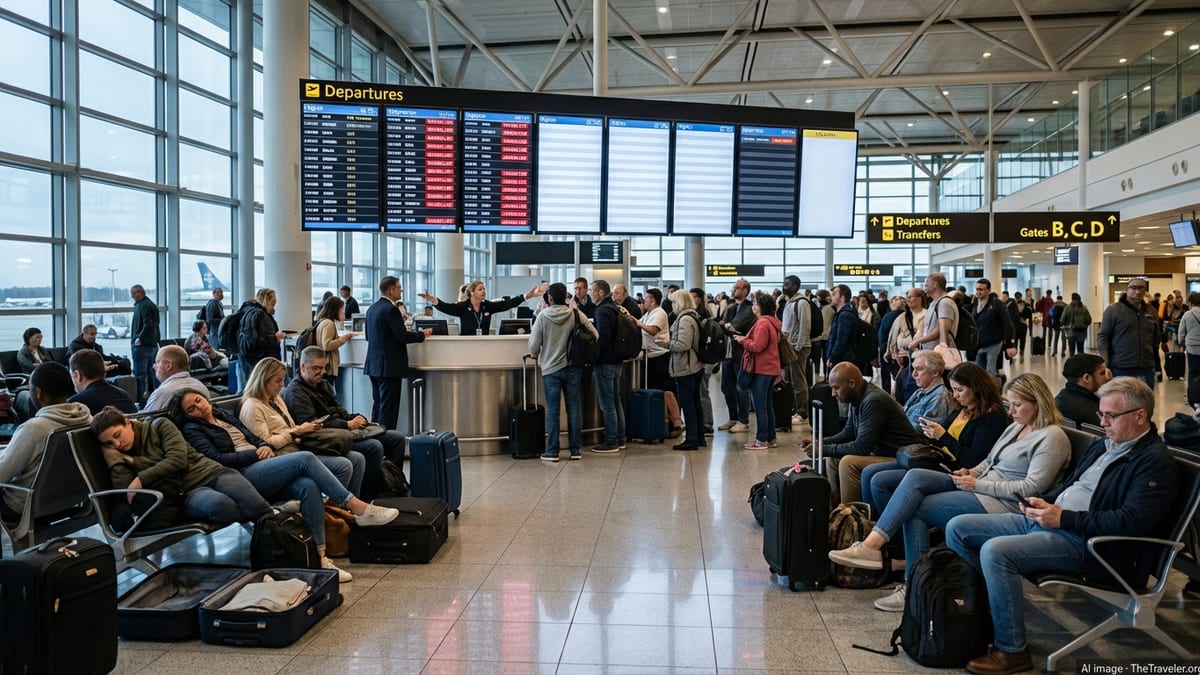
Airport Standoff Puts a Public Figure in Travel Limbo
Recent coverage from Kenyan media indicates that politician Irungu Nyakera, a leader in the Democratic Congress Party, was among hundreds of passengers left stranded at a Saudi Arabian airport after a wave of flight cancellations. Reports link the disruption to industrial action affecting air travel, leaving many travelers in extended limbo as they waited for alternative arrangements and clear information on their status.
Nyakera’s situation, widely shared on social platforms and in online news reports, transformed what is often a private travel headache into a highly visible incident. Images and descriptions circulating in Kenyan outlets show the politician in crowded airport waiting areas, underscoring the uncertainty facing passengers whose itineraries suddenly collapse in a foreign country.
Although flight disruptions are common worldwide, the public nature of this case has quickly turned it into a cautionary tale for Kenyan travelers. The incident has prompted broader discussion on what protections exist for passengers caught between airline decisions, airport operations and local labour disputes.
Reports also suggest that Nyakera’s experience mirrored that of many ordinary travelers caught in the same disruption, with limited clarity on when flights would resume. This has fueled questions about how quickly airlines, airports and diplomatic missions can coordinate assistance when large numbers of passengers are stranded at once.
Saudi Arabia’s Strict Immigration Rules Raise the Stakes
The incident has unfolded against a backdrop of increasingly strict immigration enforcement in Saudi Arabia. Publicly available guidance from Kenyan and regional media highlights that foreign nationals who overstay visas or fall out of lawful status in the Kingdom can face steep fines, detention and deportation. In some cases, penalties can include financial sanctions and bans on reentry, raising significant risks for those whose travel plans suddenly change.
Kenyan-focused diaspora publications and embassy advisories have repeatedly urged citizens in Saudi Arabia to monitor the validity of their visas and residency permits and to regularize their status promptly. Information shared in recent months emphasizes that even unintentional overstays can attract penalties, especially during intensified immigration crackdowns or workplace inspections.
While Nyakera’s case revolves around aviation disruption rather than residency status, the broader environment in Saudi Arabia means any extended airport stay or missed onward connection carries heightened consequences. Travelers who miss a departure, overstay a short-term visa, or get stuck during system outages may quickly move from a routine travel problem into a potential immigration violation if documentation is not in order.
For Kenyan citizens, this has become a recurring theme in public debate. Parliamentary proceedings and local reporting have documented multiple cases in which Kenyans in Saudi Arabia, particularly migrant workers, found themselves unable to exit the country because of visa irregularities, debts or documentation disputes, turning travel delays into long-term confinement.
From Politicians to Migrant Workers, Consular Gaps Persist
Nyakera’s experience also intersects with longstanding concerns about how effectively Kenyans abroad can access consular assistance during crises. Recent commentary from Kenyan lawmakers and advocacy groups has spotlighted the plight of citizens in the Gulf, describing cases of stranded workers, confiscated passports and limited responsiveness when emergencies arise.
Official Kenyan documents and parliamentary reports on migrant labour show that Saudi Arabia has been a focal point for distress cases for several years. A systemic review by Kenyan oversight institutions and debates in the National Assembly have noted recurring complaints about delays in case handling, challenges tracing distressed citizens and coordination gaps between labour agencies, foreign affairs officials and host-country systems.
Publicly available information from the Kenyan embassy in Riyadh indicates that consular services now include emergency assistance and diaspora support, with channels for citizens in distress to seek help. However, the scale of Kenyan migration to Saudi Arabia, coupled with the volume of labour and travel disputes, continues to stretch those services. High-profile cases involving public figures tend to attract swift attention, but published coverage suggests that many lower-profile travelers and workers still struggle to get timely intervention.
The visibility of a politician stranded at an airport has therefore sharpened questions about equity and capacity. Commentators are asking whether protections that appear for well-known individuals can be extended consistently to the wider diaspora, especially to domestic workers and low-income migrants who may lack documentation or financial resources.
Travel Preparedness and Documentation Under Scrutiny
The Saudi incident is also prompting renewed focus on travel preparedness for Kenyans heading abroad. Kenyan immigration guidance stresses that citizens should travel with valid passports, clear itinerary details and copies of key documents, as well as contact information for nearby embassies or consulates. Globally, best practice for international travel includes maintaining digital and physical copies of tickets, hotel bookings and identification, in case airlines or border agencies need verification during disruptions.
Kenyan government portals and missions abroad highlight that embassies can, in defined circumstances, issue emergency travel documents or emergency certificates to help citizens return home if passports are lost, stolen or expired. These documents are typically limited to direct travel back to Kenya and do not replace a standard passport, but they can be a lifeline when travelers are otherwise stuck in transit with invalid papers.
In the Saudi context, travelers must also be prepared for the particularities of local rules, including requirements for exit permits in some situations and the possibility of intensified checks during national campaigns against irregular migration. Travel advocates note that passengers should pay close attention to ticket changes, ensure that visa validity comfortably covers any unplanned layovers, and keep embassy emergency contacts close at hand.
Nyakera’s experience highlights how quickly these issues can become real for even the most seasoned travelers. What begins as a labour-related flight cancellation can, in a tightly regulated immigration environment, evolve into a complex risk scenario if documentation, status and contingency plans are not carefully aligned.
Growing Pressure for Stronger Protections for Kenyans Abroad
Beyond the immediate disruption, the Saudi airport incident is feeding into a broader national conversation about the protection of Kenyans overseas. Parliament has repeatedly examined the conditions facing migrant workers in Gulf countries, while oversight bodies in Nairobi have conducted investigations into recruitment agencies and consular responses. These efforts point to structural gaps in how information, support and accountability are delivered to citizens abroad.
Recent diaspora-focused reports note that remittances from Kenyan workers in Saudi Arabia have grown substantially, reinforcing the economic importance of this migration corridor. At the same time, documented cases of abuse, contract violations and travel restrictions have pushed policymakers to consider tighter regulation of recruitment agencies and more robust monitoring of labour agreements.
Events involving high-profile figures such as Nyakera bring additional urgency to these debates. Observers argue that if a well-connected politician can find himself stuck in an airport with limited immediate recourse, ordinary travelers face even greater exposure when things go wrong. Calls are mounting in public forums for clearer guidelines on airline responsibilities, stronger crisis protocols at Kenyan missions abroad and more accessible channels for stranded citizens to request assistance.
As travel between Kenya and Saudi Arabia continues to grow for business, pilgrimage, tourism and work, the stakes are rising. The recent ordeal in a Saudi airport serves as a vivid reminder that cross-border journeys are shaped not only by airline schedules, but also by immigration policies, labour relations and the strength of consular safety nets that many travelers assume they will never need.
Tuko.co.ke coverage of Irungu Nyakera’s airport ordeal
Sahifa Media: Kenyan embassy advisory on residency status in Saudi Arabia
Embassy of the Republic of Kenya in Riyadh: consular and emergency services
Kenyan Parliament: briefing on Kenyan migrant workers in Gulf states