


More news on this day
Fresh rounds of flight cancellations by Gulf Air, Qatar Airways and other carriers are disrupting key routes between Singapore, Bahrain, Doha and Manila, creating longer journeys, missed connections and renewed uncertainty for travelers using Singapore Changi Airport as a regional hub.
Get the latest news straight to your inbox!
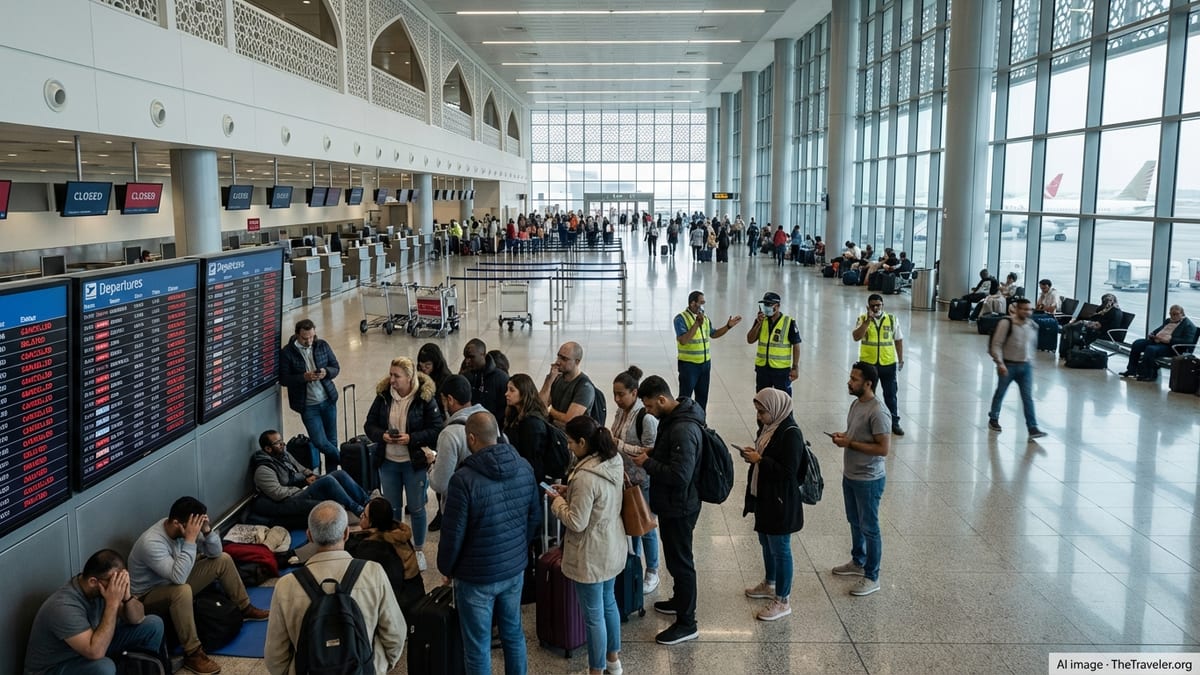
Seven Singapore Flights Pulled as Gulf Networks Reshaped
Publicly available schedules and flight-tracking data show that a cluster of seven Singapore-linked services operated by Gulf and regional airlines have recently been withdrawn or suspended, affecting direct and one-stop links to Bahrain, Doha and Manila. The changes come as carriers continue to rebuild and reconfigure their networks following weeks of turbulence in Gulf airspace and shifting demand across Asia.
Among the most visible changes are on Gulf Air’s Singapore to Bahrain corridor, where services that previously provided a nonstop bridge between Changi Airport and Bahrain International Airport have been repeatedly disrupted and, in several instances, cancelled outright. Schedule summaries indicate that the airline’s GF165 and GF166 rotations, in particular, have seen irregular operations and gaps, limiting options for passengers connecting onward to Europe and the Middle East.
Qatar Airways has also adjusted its Singapore operations as part of a broader recalibration of flights to and from Doha. Travel alerts and revised timetables point to a more limited schedule on some days, with selective cancellations on the Singapore to Doha pairing as the airline balances constrained capacity with continued demand for its global network.
On the Manila side, disruptions are emerging across a mix of Gulf and regional carriers that rely on Singapore as a transit point. Reduced frequencies and targeted cancellations on Singapore to Manila and onward Gulf-bound legs are pushing more traffic onto remaining departures, heightening the risk of crowding and last-minute seat shortages on peak travel days.
Bahrain Airspace Fallout Continues to Hit Gulf Air
The current pattern of cancellations cannot be separated from the lingering effects of restrictions and instability around Bahraini airspace earlier this year. Advisory notices circulated in March outlined a closure of Bahrain’s airspace and detailed special ticketing rules for affected Gulf Air passengers, including options for rebooking and refunds within defined windows. That move forced the airline to re-time or suspend various services, including those connecting through Singapore.
Subsequent analysis of flight history for Gulf Air’s Singapore routes shows an uneven resumption. While some Bahrain to Singapore flights have returned to operation, gaps in the record point to ongoing cancellations or temporary suspensions on specific days, especially where services feed long-haul connections onward to Europe. Passengers with multi-leg itineraries have reported repeated changes to their return journeys, underlining how fragile the schedule remains.
Bahrain’s role as a transfer hub adds further complexity. When services between Singapore and Bahrain are pulled, travelers lose access not just to point-to-point travel, but also to onward links across the Gulf, North Africa and Europe that are timed around those flights. The result is a ripple effect in which a cancellation on one sector can unravel entire itineraries, forcing rebookings via other Gulf or Asian hubs.
Industry observers note that Gulf Air is not alone in grappling with these constraints. Network planners across the region are juggling aircraft availability, airspace considerations and fluctuating demand, prompting tactical cancellations on thinner routes such as Singapore to Bahrain, even as they protect higher-volume city pairs elsewhere in their networks.
Doha and Manila Connections Squeezed as Qatar Airways Adjusts
Doha’s Hamad International Airport, usually one of the Gulf’s most reliable transfer points, has itself experienced notable disruption since late February, when airspace closures and regional tensions led to widespread schedule cuts. Published travel alerts from Qatar Airways describe a “limited schedule” to and from Doha over parts of March, April and May, with capacity gradually rebuilt but still below normal levels on some corridors.
Within that context, the Singapore to Doha link has been subject to selective cancellations and retiming. Flight information for the QR947 service, a key overnight connection between Singapore and Doha, shows operating days interspersed with cancellations in recent months as the airline adjusts its rotations and aircraft assignments. While most days now see at least one Qatar Airways departure on the route, passengers report receiving short-notice schedule changes, particularly on itineraries involving onward long-haul legs to Europe and North America.
The squeeze is also being felt on Manila-related services. Doha to Manila is one of Qatar Airways’ high-demand routes, and when aircraft are redeployed to support that trunk sector, connecting options via Singapore can narrow. In some cases, travelers who would traditionally route Manila to Singapore to Doha are being rebooked to fly via alternative hubs such as Kuala Lumpur, Bangkok or direct Manila to Doha services where seats are available.
These adjustments underscore how interconnected the regional network has become. A relatively small reduction in available Doha to Singapore capacity can quickly cascade into fewer options for travelers bound for the Philippines, the Gulf or Europe, especially when other carriers are simultaneously trimming or reshaping their schedules.
Knock-on Impacts for Travelers Using Singapore as a Hub
The cancellation of seven key flights touching Singapore is being felt most acutely by travelers who depend on Changi Airport as a flexible transfer point between Southeast Asia and the Gulf. Reports on travel forums and social media describe passengers facing longer layovers, forced overnights, or complete rerouting via alternative hubs when their original Singapore to Bahrain or Singapore to Doha flight disappears from the timetable.
Itineraries that once required a single connection are, in some cases, turning into multi-stop journeys. For example, passengers originally booked Singapore to Bahrain to European destinations on Gulf Air have described being shifted to combinations involving other Gulf hubs or Asian gateways such as Istanbul, New Delhi or Kuala Lumpur, often with significantly extended travel times and new visa or transit requirements to consider.
Manila-bound traffic is experiencing its own set of challenges. With some Singapore to Manila legs trimmed or retimed as airlines rebalance capacity, travelers returning to the Philippines from Europe or the Middle East are finding that their preferred Singapore connections no longer align with late evening or early morning departures. This misalignment can trigger overnight stays in Singapore or, alternatively, a change of routing altogether.
Despite these headwinds, core operations at Singapore Changi remain robust. The airport continues to be served by a wide range of Asian and Middle Eastern carriers, and many long-haul routes are operating normally. However, the targeted nature of the current cancellations means that affected passengers often have to move quickly to secure workable alternatives before remaining seats on unaffected flights are snapped up.
What Passengers Should Check Now
With schedules still in flux, travelers holding upcoming tickets involving Singapore, Bahrain, Doha or Manila are being urged by consumer advocates and travel advisers to verify their flight status frequently. Airline travel-alert pages, online booking tools and independent flight-tracking platforms are providing near real-time updates on cancellations, delays and equipment changes, which can shift even within 24 hours of departure.
Publicly available Gulf Air advisories linked to the Bahrain airspace situation outline options for rebooking and refunds in the event of cancellations, including the possibility of changing travel dates without penalty during specified windows. Passengers are encouraged to review the conditions attached to their tickets, paying close attention to fare rules and any special provisions linked to disruption events.
Qatar Airways’ guidance similarly highlights that routes with ongoing operational constraints may run on a reduced or altered schedule, and that travelers should not proceed to the airport until their booking shows as confirmed and on time. For multi-leg itineraries, checking every sector separately is especially important, as a cancellation on a feeder leg from Singapore or Manila can affect the validity of onward boarding passes.
Travel experts also recommend considering alternative routings where reasonable, particularly for time-sensitive trips. With Istanbul, Bangkok, Kuala Lumpur and other regional hubs currently absorbing some displaced traffic from the Gulf, travelers who are flexible on airlines and transit points may find more stable schedules outside the most heavily affected Singapore to Bahrain and Singapore to Doha pairings.