


More news on this day
The October 2023 edition of Railway Gazette International captured a rail sector in transition, highlighting a wave of new high speed routes, fresh investment strategies and renewed policy debates around how passenger and freight services should grow over the next decade.
Get the latest news straight to your inbox!
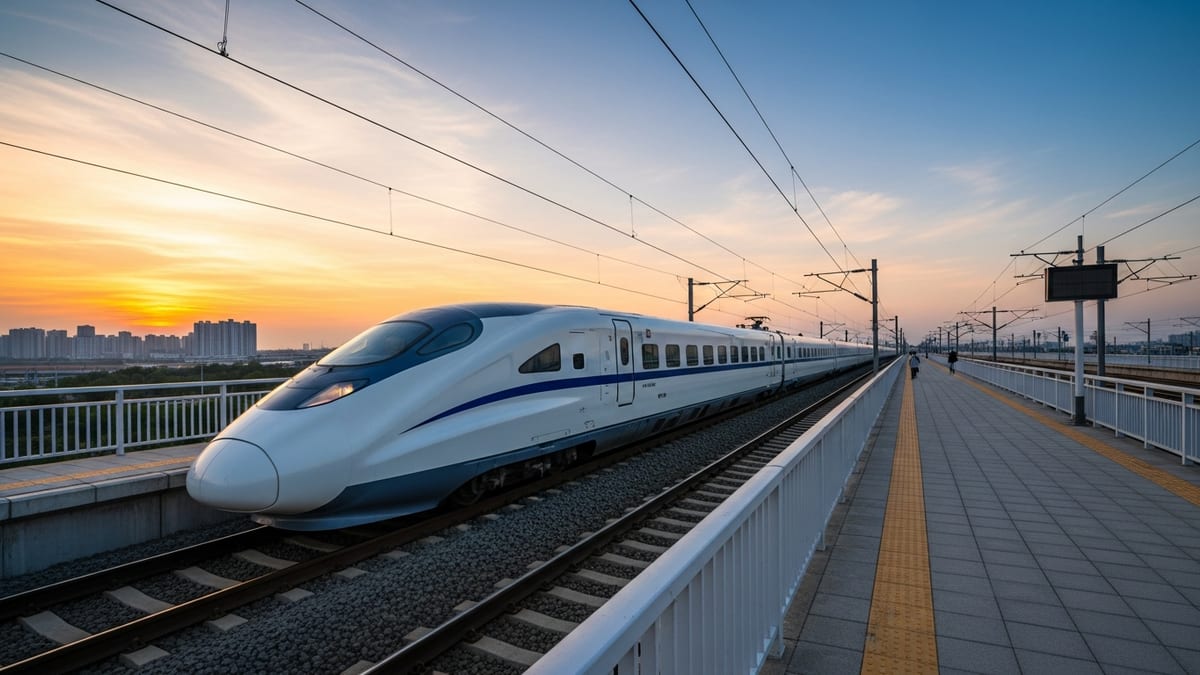
High Speed Rail Milestones Shape the Global Map
Coverage in the October 2023 Railway Gazette International issue reflected how high speed rail openings that month were reshaping national transport networks. The Jakarta–Bandung high speed line in Indonesia, widely reported as Southeast Asia’s first operational high speed corridor, entered service on October 2 after a lengthy construction and testing period. Publicly available information shows that the line cut journey times between the two cities from several hours to under one hour, positioning rail as a competitive alternative to road and domestic air travel.
The issue also tracked the wider global context of 2023 as a landmark year for new high speed links. Reference was made in contemporary rail sector reporting to other schemes approaching completion or opening elsewhere in Asia and Europe, underlining how governments were combining infrastructure spending with industrial strategy, rolling stock procurement and export ambitions for their rail supply industries.
Industry analysis reproduced in the October coverage indicated that high speed projects were increasingly expected to deliver not only faster journeys but also measurable climate benefits, by diverting passengers from short haul flights and congested highways. Commentators noted that these expectations were feeding into project appraisal criteria, funding decisions and the design of accompanying public transport and land use policies around new stations.
European Investment and Capacity Debates Come to the Fore
Railway Gazette International’s October 2023 content devoted significant attention to debates under way in Europe over how to expand rail capacity and fund major corridors. Reports on long term visions for passengers, prepared in cooperation with European industry bodies, described how infrastructure managers and operators were seeking regulatory frameworks that would support higher utilisation of existing lines alongside new construction.
Parallel coverage from other specialist outlets cited by the magazine showed how individual European Union member states were turning these strategic goals into project pipelines. Examples included preliminary design and planning work for high speed links such as the Warsaw–Centralny Port Komunikacyjny–Lodz axis in Poland, which secured Connecting Europe Facility funding to progress development. These schemes were being positioned as both domestic capacity enhancements and future building blocks of cross border freight and passenger corridors.
At the same time, policy analysis referenced in the October material highlighted tensions between rail expansion and continued road building in several European countries. Think-tank and advocacy reports pointed to instances where highway projects were still receiving a larger share of investment, prompting calls from rail proponents for more consistent alignment between climate objectives, European Green Deal commitments and national transport budgets.
Cross Border Services and the Revival of Night Trains
The October 2023 issue also reflected the renewed interest in cross border and overnight passenger services across Europe. Published coverage from that period chronicled the gradual comeback of night trains, often using refurbished rolling stock and new marketing approaches to target leisure and climate conscious travellers. Routes linking central European cities and tourist destinations were particularly prominent, with operators experimenting with new fare structures and comfort levels.
Railway Gazette International drew on data and commentary indicating that demand for international rail had recovered strongly after the pandemic. However, reports also underlined the constraints posed by infrastructure bottlenecks, complex access charges and the need to coordinate timetables across several national networks. Analysts suggested that regulatory reforms, including ongoing discussions around capacity allocation rules, would be critical to sustaining the renaissance of long distance and night services.
Elsewhere in the issue, reference was made to cross Channel developments where potential new entrants and existing operators were assessing opportunities to expand services through the Channel Tunnel. Sector coverage at the time described how rolling stock approvals, border controls and station capacity at hubs such as London St Pancras remained key practical hurdles to adding destinations and frequencies, even as passenger numbers on existing high speed links continued to grow.
Freight, Decarbonisation and the Changing Economics of Rail
Alongside its focus on passenger services, the October 2023 edition carried extensive reporting on the economics of rail freight and the wider decarbonisation agenda. Publicly available material cited in the magazine showed that rail’s share of inland freight transport in many European markets remained below long term policy targets, despite high level commitments to shift cargo from road to rail.
Railway Gazette International highlighted case studies where new terminals, upgraded port connections and intermodal services were beginning to change this picture. In several regions, logistics operators were investing in longer trains, digital capacity management and last mile solutions to make rail more attractive for shippers. Analysts quoted across the trade press suggested that a combination of carbon pricing, rising fuel costs and urban air quality regulations could gradually strengthen the business case for rail freight over the second half of the decade.
The edition also examined how passenger and freight priorities were interacting on mixed traffic lines. Commentaries reproduced from European and international sources discussed whether certain strategic corridors should be upgraded primarily for fast intercity and high speed trains or configured to handle heavier freight flows. The magazine noted that the outcome of these debates would influence not only infrastructure design but also timetable planning and the long term competitiveness of both segments.
Technology, Digitalisation and Infrastructure Innovation
Finally, Railway Gazette International’s October 2023 coverage underscored how digital tools and engineering innovation were becoming central to rail investment strategies. Contemporary research papers and technical articles highlighted work on improving the design of track transition zones, with novel energy based criteria proposed to reduce maintenance needs and enhance ride quality. Such studies were presented as examples of how advances in modelling and data analysis could translate into more resilient infrastructure.
The issue also surveyed emerging digital platforms intended to improve collaboration during the planning and construction of large railway projects. Industry surveys conducted around this period pointed to a desire among infrastructure managers, contractors and consultants for integrated systems that could manage design data, stakeholder inputs and project phasing in a single environment, reducing delays and cost overruns.
Alongside these technical themes, the magazine reported on operational digitalisation in areas such as traffic management, condition based maintenance and passenger information. Publicly available information suggested that railways investing in predictive analytics and remote monitoring were beginning to see gains in reliability and asset availability, reinforcing the case for continued modernisation.