


More news on this day
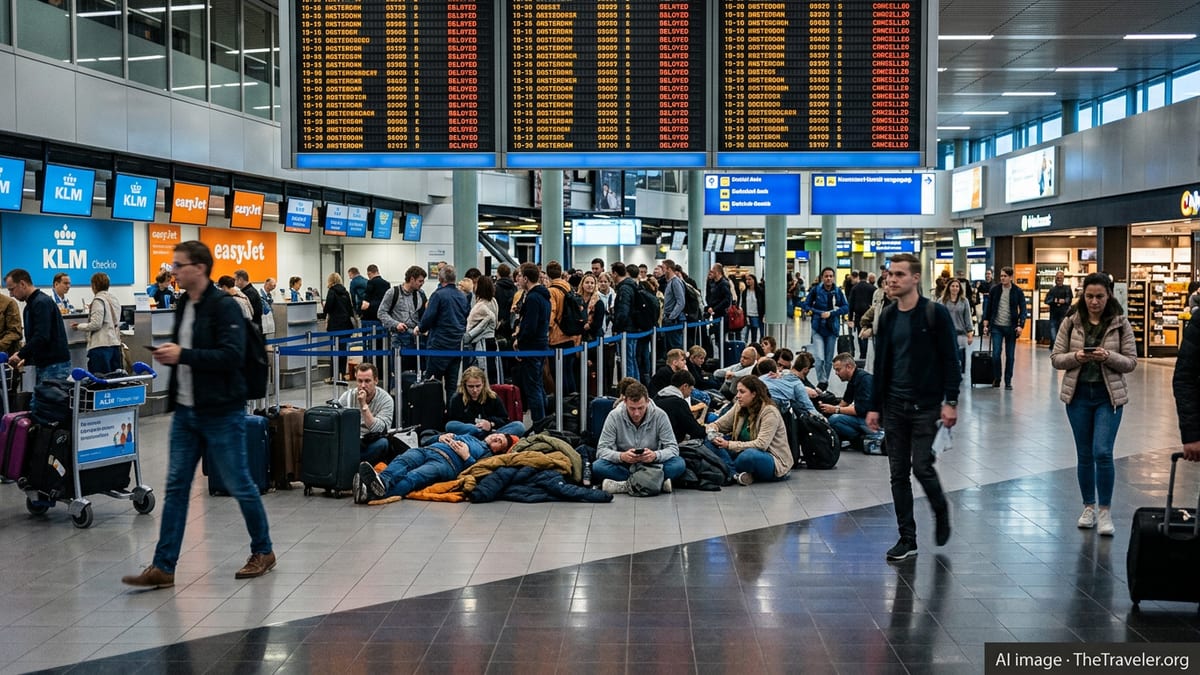
Travelers transiting Amsterdam Schiphol Airport have faced another day of severe disruption, as KLM’s cancellation of 13 flights and widespread delays ripple across key European and long haul routes, leaving passengers stranded on the concourse and scrambling for alternatives.
Get the latest news straight to your inbox!
Targeted Cancellations Hit Key European and U.S. Routes
According to recent coverage tracking KLM’s operations, the carrier has withdrawn 13 scheduled services at Amsterdam Schiphol over the past 24 hours, alongside a larger wave of delays affecting dozens more flights. The pattern has hit high demand routes to Switzerland, Germany, France and Portugal especially hard, while also disrupting transatlantic links between Amsterdam and major hubs in the United States.
Reports indicate that flights to cities such as Zurich and Geneva in Switzerland, Berlin and other German destinations, as well as Paris and regional French airports, are among those most affected. Services to Lisbon and other Portuguese gateways have also seen cancellations or extended delays, complicating summer travel plans for both leisure and business passengers using Schiphol as a transfer hub.
On long haul sectors, disruptions have been noted on several key U.S. routes operated or codeshared by KLM out of Amsterdam. Publicly available flight tracking data shows a mix of outright cancellations and multi hour delays on services linking Schiphol with major American cities, feeding uncertainty into already busy June traffic patterns.
Travel analysis platforms describe the impact as concentrated but significant, with the cancellation of 13 flights triggering missed onward connections and leaving aircraft rotations out of sequence for the rest of the day. Because Amsterdam serves as KLM’s primary hub, even a limited number of cancellations can cascade quickly across the network.
Knock On Chaos at Amsterdam’s Crowded Hub
Amsterdam Schiphol, one of Europe’s busiest transfer airports, has repeatedly struggled with operational pressure during peak travel periods. Publicly available accounts from passengers and aviation watchers on social media and travel forums describe crowded departure halls, long queues at service desks and packed customer service phone lines as travelers attempt to rebook disrupted itineraries.
Travelers connecting from regional European flights into long haul sectors, or vice versa, appear to be among the hardest hit. Missed connections triggered by early morning cancellations have left some passengers facing overnight stays in Amsterdam, while others have opted to abandon air connections altogether in favor of high speed rail to destinations in neighboring Germany, France or Switzerland.
Schiphol’s role as a central hub for the broader Air France KLM group magnifies the effect of even a relatively small number of scrapped flights. Once aircraft and crews fall out of position, subsequent departures can face rolling delays, compounding frustration for travelers who arrived early and found their services repeatedly pushed back on departure boards.
While the current disruption is modest compared with previous large scale events at the airport, travelers report a familiar pattern of uncertainty: repeated schedule changes, limited real time communication and a rush to secure scarce seats on alternative routes through Paris, London or other European hubs.
Operational and Supply Pressures Behind the Disruptions
Recent analytical pieces on European aviation suggest that KLM’s latest cancellations form part of a wider pattern of strain on airline operations this year. Industry commentary has highlighted a combination of tight aircraft availability, crew scheduling constraints and higher than expected demand, all layered on top of intermittent external pressures such as air traffic control restrictions and weather related capacity limits at major hubs.
Reporting on broader 2026 disruption trends points to a challenging operating environment for carriers across Europe, including KLM and several competitors. A series of jet fuel supply bottlenecks, along with periodic industrial actions at airports in countries such as Germany and Spain, have contributed to a fragile schedule in which even local issues at Schiphol can trigger outsized consequences.
KLM’s publicly accessible travel alerts emphasize that passengers should regularly check their flight status through official digital channels, and note that the airline may adjust schedules at short notice when operational conditions deteriorate. Although the current wave of 13 cancellations is limited compared with past episodes involving more than 100 flights, analysts note that it lands at the start of the busy summer season, when spare capacity to absorb disrupted travelers is particularly thin.
Independent passenger rights organizations have also underlined that repeated, rolling cancellations can stem from structural capacity issues rather than isolated events. They advise travelers to expect occasional late adjustments as airlines juggle aircraft rotations, crew availability and regulatory requirements on working hours, especially on complex networks built around a single dominant hub.
Stranded Passengers Confront Long Waits and Limited Options
For travelers caught in the disruption, the most immediate challenge has been the scarcity of seats on replacement flights. With popular routes between Amsterdam and major European centers already close to capacity, reports from passenger forums describe long waiting lists, rerouting via multiple connections and, in some cases, overnight or multi day delays in reaching final destinations.
Travelers bound for Switzerland, Germany, France and Portugal describe being offered reroutes via alternative hubs or different alliance partners where available. For U.S. bound passengers, some itineraries have reportedly been shifted through Paris or other transatlantic gateways when non stop options from Amsterdam were no longer viable the same day.
Accounts circulating on social media suggest that some passengers are turning to rail as an improvised alternative for shorter hops, especially between Amsterdam and nearby cities such as Brussels, Cologne or Paris. Others have reportedly booked last minute tickets on competing carriers at their own expense, in the hope of reclaiming costs later under European passenger protection rules.
Consumer advocates caution that, during peak periods, it can take considerable persistence to secure an acceptable rerouting, particularly for travelers with tight onward commitments such as cruises, events or tour departures. Many recommend documenting all interactions and keeping detailed records of additional expenses in case reimbursement or compensation is pursued after the journey.
What Affected Travelers Can Do Next
Passenger rights specialists note that those affected by cancellations and long delays on flights departing from or transiting the European Union may have protections under EU legislation. In practical terms, this can translate into potential eligibility for meals, accommodation and in some cases financial compensation, depending on the cause of the disruption and the length of the delay.
Publicly available guidance from KLM indicates that travelers with cancelled flights are typically rebooked on the next available service, with options in some cases to request refunds or travel vouchers instead. The airline’s digital tools, including its mobile app, are emphasized as primary channels for confirming revised itineraries, although many passengers still seek assistance at airport desks when connection windows are tight.
Independent travel advisors encourage affected passengers to act quickly once a cancellation is posted, checking alternative routings through partner airlines and nearby hubs and, where necessary, proactively requesting changes rather than waiting for automatic rebooking. In fast moving disruption scenarios at hubs such as Schiphol, available seats on alternative flights can disappear within minutes as multiple planeloads of passengers compete for limited capacity.
With summer travel ramping up across Europe and North America, analysts expect that further pockets of disruption are likely in the weeks ahead. For travelers planning to connect through Amsterdam, monitoring flight status closely before departure, allowing extra time for connections and familiarizing themselves with airline and regulatory protections may offer the best chance of mitigating the impact of any future cancellations or delays.