


Korčula is one of the Adriatic’s most rewarding islands for first-time visitors to Croatia: big enough to offer varied landscapes and real local life, yet compact and easy to explore in a few days. With its fortified Old Town, sandy coves in Lumbarda, working ports like Vela Luka and vineyards producing distinctive Grk and Pošip wines, Korčula combines history, beaches and gastronomy in a way few Croatian islands can match. This guide focuses on what first-time Croatia visitors need to know, from how to get there and where to stay to the best beaches, wine experiences and on-the-ground transport tips.
Get the latest updates straight to your inbox!
Where Korčula Is and Why It Belongs on a First-Time Croatia Itinerary
Korčula lies in southern Dalmatia, off Croatia’s Adriatic coast, roughly midway between Split and Dubrovnik. On a map, you will see a long, narrow island running east to west, sheltered by the Pelješac Peninsula on the mainland side. This location makes Korčula a natural stop on a classic first-time Croatia route that might run from Zagreb or Plitvice Lakes down through Split and the islands, then on to Dubrovnik.
The island is about 47 kilometers long, with a main road running along its spine between Korčula Town in the east and Vela Luka in the west. Ferries connect it to Split, Dubrovnik and nearby Orebić on the Pelješac Peninsula. For a first-time visitor, that means you can usually plan Korčula as a two to four night stay without needing a car, using catamarans, local buses and taxis to move around.
Korčula stands out among Croatian islands for its combination of a true medieval walled town, family-friendly sandy beaches in nearby Lumbarda and serious wine culture in villages like Lumbarda, Čara and Smokvica. Many first-time visitors who might be torn between Hvar’s nightlife and Brač’s famous Zlatni Rat beach find Korčula a more relaxed alternative, with a strong local feel and fewer large tour groups once you step beyond the Old Town walls.
If you are planning Croatia in high season, typically late June through early September, Korčula’s location also makes logistics easier. There are usually daily summer catamarans connecting Split, Hvar, Korčula and Dubrovnik on a north–south axis, so you can move in a straight line rather than constantly backtracking to the mainland.
Korčula Old Town: Fortified Lanes, City Walls and Everyday Details
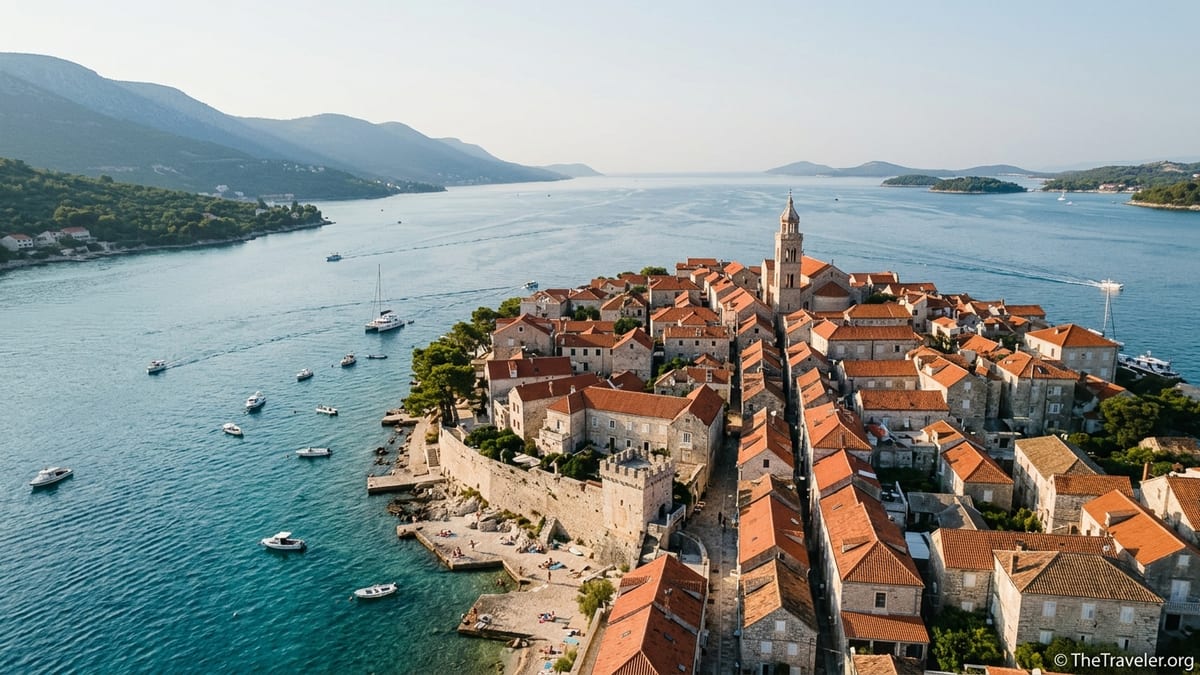
Korčula Town sits on the island’s eastern tip, its Old Town perched on a small oval peninsula encircled by medieval walls. The Old Town itself is pedestrian only, connected to the newer part of town by a causeway and a flight of stone steps that lead under a gate tower. Inside, a grid of narrow limestone lanes is laid out in a herringbone pattern designed centuries ago to channel sea breezes and block cold winter winds.
A typical first-time visit starts with walking the perimeter of the Old Town along the seafront, then cutting inward to landmarks like St. Mark’s Cathedral and its bell tower. Climbing the tower, for a modest fee paid in cash at the entrance, rewards you with views over red rooftops to the Pelješac mountains and the smaller islets of Badija and Vrnik. Many first-timers enjoy timing this for late afternoon when the heat drops and the light softens over the bay.
Korčula Old Town is not a museum set-piece. Locals still live above the restaurants and wine bars, laundry hangs from stone balconies and schoolchildren walk home under carved coats of arms. In the evening, you might hear the clatter of dishes and snippets of conversation as you wander. For a tangible sense of history, keep an eye out for the stone reliefs above doorways, often showing lions of St. Mark or ship motifs that hint at the island’s Venetian and maritime heritage.
On a practical level, first-time visitors should know that surfaces are polished stone and can be slippery, especially after a brief rain or when people come back from the beach. Flat sandals with some grip are more comfortable than flip-flops for climbing the short, steep lanes. Cars cannot enter the Old Town, so if your accommodation is inside the walls you will carry your luggage a short distance from the taxi stand or bus stop on the waterfront.
Ferries, Catamarans and Getting to Korčula
Getting to Korčula has become steadily easier as Croatia’s island ferry network has expanded. In summer, high-speed catamarans usually run daily from Split via islands like Brač or Hvar to Korčula Town, continuing on to Mljet and Dubrovnik. These fast boats take roughly two and a half to three and a half hours between Split and Korčula, depending on intermediate stops, and are popular with backpackers and independent travelers doing a linear route along the coast.
There are also year-round car ferries. One major route connects Vela Luka at the western end of Korčula with Split on the mainland, suitable if you are driving down the coast. Another essential link for both locals and visitors is the short car ferry between Orebić on the Pelješac Peninsula and Dominče, the ferry port about a 5 to 10 minute drive from Korčula Town. This crossing typically takes around 15 to 20 minutes and runs frequently in summer, which makes Korčula accessible even if catamarans are sold out or cancelled due to weather.
For first-time visitors, the main point is that catamarans are passenger only and require you to book tickets in advance during the busy months of July and August, while car ferries allow you to bring a vehicle but still benefit from reserving or arriving early. It is common for travelers to book a morning catamaran from Split to Korčula, spend two or three nights on the island and then take an onward catamaran to Dubrovnik, avoiding backtracking and long bus rides along the coast.
Because schedules can change slightly from year to year and operators adjust departure times by season, it is wise to check timetables again a few weeks before your trip. Note that on strong wind days, especially with the summer afternoon “maestral” or occasional storms, catamarans can be delayed or rerouted. In that case, the short Orebić to Dominče ferry can be a practical backup, with buses and taxis running between the ferry port and Korčula Town.
Beaches on Korčula: From Rocky Coves to Sandy Lumbarda
Compared with some Croatian islands, Korčula offers a wide range of beach types, from pebbly coves close to Korčula Town to rare sandy stretches in Lumbarda. Near the Old Town, you will find small swimming spots along the promenade towards Sveti Nikola and Sveti Antun, often just stone platforms with ladders into the water. These are ideal for a quick morning dip or an evening swim when you do not want to leave town, and they are popular with locals heading out before or after work.
For a more traditional beach day, most first-time visitors head to Lumbarda, about 6 kilometers from Korčula Town. Here the coastline opens into shallow bays where families paddle in clear water backed by vineyards. The best-known beach is Vela Pržina, a south-facing sandy bay with fine, light-colored sand, a gentle slope into the sea and open views towards the island of Lastovo. In summer you will usually find a beach bar selling coffee, drinks and simple snacks like sandwiches or grilled dishes, plus rental loungers and umbrellas lined up near the high tide mark.
On the other side of the Lumbarda headland is Bilin Žal, a smaller sandy and pebbly beach facing north-east with views towards the Pelješac Peninsula and the islet of Vrnik. The water here is typically shallow and calm, making it well suited to younger children or anyone who prefers quieter surroundings than Vela Pržina’s main stretch. Locals often walk between the two beaches through vineyards, turning the short stroll into a scenic loop through rows of Grk vines.
Elsewhere on the island, you will come across pebbly bays and rocky shelves such as those near Račišće on the northern coast or quiet coves reachable by dirt track from the main road. Facilities in these more remote spots are minimal, so bring water, shade and snacks. For a first-time visit without a car, focusing on Korčula Town’s swimming spots and using the local bus or taxi boat to reach Lumbarda’s sandy beaches is often the most straightforward plan.
Lumbarda: Sandy Beaches, Village Life and Grk Wine
Lumbarda is a small village at the eastern end of the island, reached in about 10 to 15 minutes by car or local bus from Korčula Town. It is surrounded by vineyards planted in sandy soil and framed by small bays, some sandy, some rocky. For many families and beach-focused travelers, staying in Lumbarda rather than Korčula Town makes sense because you can walk from your accommodation to the sea in just a few minutes.
The village has a compact waterfront with a few cafes and konobas, along with a small harbor where water taxis and excursion boats come and go. In high season it is common to see taxis dropping visitors near the central square, from where they walk out to beaches like Tatinja or the sandy stretches further along the coast. Evening life here is mellow, revolving around casual dinners, gelato and children playing along the promenade rather than loud bars or clubs.
Lumbarda is also the home of Grk, a rare white grape that thrives in the area’s sandy vineyards. Several family-run wineries in and around the village offer tastings, often in simple courtyard settings overlooking vines and the sea. A typical experience might involve trying a flight of Grk wines, occasionally alongside a rosé or red blend, with snacks such as local cheese, olives and anchovies. Many visitors book tastings in advance for late afternoon or early evening, pairing an hour or two of wine tasting with an earlier swim at Vela Pržina or Bilin Žal.
If you are staying in Korčula Town without a car, you can still enjoy Lumbarda’s beaches and wineries using a mix of public bus, taxi and taxi boat. Some small operators run hop-on, hop-off boat services in peak season that link Korčula Town, Badija, Vrnik and Lumbarda, allowing you to combine island-hopping with beach time and a wine stop before returning to town at sunset.
Vela Luka and the Western Side of the Island
Vela Luka, at the western tip of Korčula, is more of a working port and local town than a polished resort, which makes it interesting for travelers who want a glimpse of everyday island life. The car ferry from Split arrives here, and you will see fishing boats, shipyard activity and a waterfront promenade lined with cafes that cater more to residents than visitors. Accommodation options include small hotels, apartments and guesthouses perched on hillsides around the bay.
For first-time visitors, Vela Luka can work well as a base if you are arriving by car ferry from Split and prefer a quieter setting than Korčula Town. The surrounding area offers swimming spots on both sides of the bay, as well as excursions by taxi boat to nearby islands and coves. In summer, water taxis commonly shuttle between Vela Luka and beaches on the opposite side of the bay, where you can spend the day swimming and sunbathing before returning for dinner along the promenade.
The western part of Korčula is also a good jumping-off point for exploring inland villages and vineyards by car or scooter. From Vela Luka you can follow the island’s main road east through Blato, a traditional inland settlement famous for its long central alley lined with linden trees, and onwards to the wine villages of Smokvica and Čara. Many travelers combine a half-day drive with stops for Pošip tastings and a swim on one of the quieter northern coves.
Because Vela Luka is farther from the main tourist flows between Split, Hvar, Korčula Town and Dubrovnik, it tends to feel more rooted in local routines. Expect fewer souvenir shops and more practical services such as bakeries, fishmongers and hardware stores. For some first-timers, a night or two in Vela Luka after time in busier destinations can offer a welcome change of pace.
Korčula Wine: Grk, Pošip and How Tastings Work
Korčula is one of Croatia’s most interesting wine islands, and even first-time visitors who are not wine specialists can enjoy a few tastings that fit naturally into a beach-focused stay. Two white varieties dominate: Grk, grown primarily in sandy vineyards around Lumbarda, and Pošip, centered around the inland villages of Čara and Smokvica. You will see both names on wine lists across the island, often by the glass in waterfront restaurants and konobas.
Grk generally produces dry whites with pronounced freshness, saline notes and citrus or stone-fruit aromas. Tasting it at a Lumbarda winery, with sandy vines and the sea in view, connects the wine directly to its landscape. Pošip, by contrast, tends to be fuller-bodied and more structured, with ripe fruit and herbal notes that pair well with grilled fish or richer seafood dishes. Many visitors enjoy comparing a glass of Grk as an aperitif with Pošip alongside dinner to understand the difference.
In practice, most small wineries around Lumbarda, Čara and Smokvica expect you to book tastings in advance, especially in July and August. A typical tasting might involve trying several wines for a set fee that may include light snacks. At some family-run spots, you might instead order wines and a plate of local produce from a simple menu, with no formal tour but the chance to chat with the owners about their vines. Prices vary, but many travelers find that bottles purchased at the winery cost noticeably less than in island shops or restaurants.
If you do not have a car, ask your accommodation host or a local tourist office to recommend taxi services familiar with winery visits. Some drivers offer informal wine-tasting circuits, dropping you at one or two Lumbarda wineries and waiting or returning later, so you do not have to worry about driving after tasting. For a first-time visit, one focused afternoon in Lumbarda’s vineyards and another day stopping at a Pošip winery while touring the island can give you a good sense of Korčula’s wine culture.
Transport on the Island and Where to Stay
Korčula’s main road, marked as D118 on maps, runs from Vela Luka in the west to Korčula Town in the east, passing through Blato, Smokvica, Čara and other villages along the way. This road is the backbone of the island’s bus network, with services connecting Korčula Town and Vela Luka, plus branches to coastal settlements like Lumbarda and Račišće. For first-time visitors without a car, these buses make it feasible to explore beyond your base, though frequencies are more generous in summer than shoulder seasons.
Taxis operate from stands near Korčula Town’s bus station and ferry port, as well as in Lumbarda and Vela Luka. Fares are usually fixed or at least fairly standard for common routes such as Korčula Town to Lumbarda or to nearby villages. In busy months, it can be worth asking your accommodation to pre-arrange early-morning or late-night transfers, especially on days when catamarans or ferries arrive and depart.
Water taxis and small excursion boats are another practical way to move around, particularly near Korčula Town. In peak season it is common to find small boats offering regular shuttles to nearby islets such as Badija, Vrnik and Stupe, as well as to Lumbarda. Prices are usually posted at the waterfront, with return tickets typically covering a ride out in the morning and a choice of return times later in the day. For example, a couple might pay in the low tens of euros for a return hop-on, hop-off ticket that includes several island stops, compared with a slightly lower fare for a single-island return ride.
When deciding where to stay, first-timers usually choose between Korčula Town, Lumbarda and Vela Luka. Korčula Town is best if you value charm, restaurants and easy boat connections, with options ranging from boutique hotels inside or just outside the Old Town walls to apartments in the newer neighborhoods. Lumbarda suits beach-focused stays, families and travelers who dream of walking from apartment to sandy bay and evening wine tastings among vines. Vela Luka appeals to those arriving by car ferry from Split or seeking a quieter, more local base with straightforward access to inland villages.
First-Time Croatia Tips Using Korčula as Your Island Base
Visiting Korčula as part of a first trip to Croatia is easier if you adapt to a few local habits. Cash is still useful, especially for small purchases like bus tickets bought directly from the driver, coffees in family-run bars or entrance to church towers and smaller museums. Most restaurants and accommodation take cards, but having a mix of card and cash avoids awkward moments in smaller villages.
In high season, the heat in southern Dalmatia can be intense in the early afternoon, which shapes the rhythm of local life. Plan sightseeing in Korčula Old Town, wine tastings and inland drives for the morning or late afternoon, and reserve the middle of the day for the beach or shaded cafes. For example, you might climb the cathedral tower at 9:30 a.m., take a taxi boat to a nearby islet by 11 a.m., swim and eat a light lunch at a simple konoba, then return to town for a nap before a 6 p.m. tasting in Lumbarda and dinner back in Korčula.
Booking ahead is important for anything limited by capacity: catamaran tickets in July and August, sought-after restaurants in the Old Town, and winery visits. At the same time, leave some flexibility for weather, especially if you are planning boat trips. On a windy day when seas are choppy and boat excursions are canceled or uncomfortable, you can switch to inland activities such as visiting Smokvica and Čara or exploring Blato’s shaded streets instead.
Finally, remember that Korčula rewards slowing down. It can be tempting on a first trip to string together Korčula, Hvar, Brač and Mljet within a week. Many travelers later say they wish they had stayed longer in one place. Two or three full days on Korčula, structured around Korčula Town, Lumbarda’s beaches and a drive or bus ride to the western side of the island, is often enough to feel you have genuinely experienced the island rather than just passing through.
FAQ
Q1. How many days should a first-time visitor spend on Korčula?
Most first-time visitors are happy with two to four nights on Korčula. Two nights allow you to see Korčula Old Town and enjoy a beach day in Lumbarda, while three or four nights give you time for a wine-tasting afternoon, an inland drive or a boat trip to nearby islets without feeling rushed.
Q2. Is Korčula a good choice for a first trip to Croatia compared with Hvar or Brač?
Korčula is a strong choice for first-timers who prioritize history, swimming and food over nightlife. It offers a real medieval Old Town, family-friendly sandy beaches in Lumbarda and quality local wines. Hvar is better if you want nightlife and trendy beach clubs, while Brač suits those focused on iconic beaches like Zlatni Rat. Many travelers feel Korčula offers a more relaxed, local atmosphere.
Q3. Do I need a car to explore Korčula properly?
You do not need a car for a first visit focused on Korčula Town, Lumbarda and basic sightseeing. Catamarans bring you directly to Korčula Town, and local buses, taxis and water taxis cover most common routes. A car or scooter is helpful if you want to reach more remote coves, tour multiple inland villages in one day or stay on the quieter western side of the island.
Q4. What is the easiest way to get to Korčula from Split?
In summer, the easiest option for most visitors is a high-speed catamaran from Split to Korčula Town, sometimes via islands like Hvar or Brač. The journey typically takes around three hours, and advance booking is recommended in July and August. If you are driving, the car ferry from Split to Vela Luka on the western end of Korčula is the main route.
Q5. Are there sandy beaches on Korčula suitable for children?
Yes, Lumbarda has several sandy and shallow beaches that are ideal for children, including Vela Pržina and Bilin Žal. The water at these beaches usually stays shallow for some distance, and the sandy seabed is easier on small feet than pebbles. Facilities such as simple beach bars and rental loungers are often available in high season.
Q6. When is the best time of year to visit Korčula?
The most popular period is from late June to early September, when the sea is warm and ferry connections are most frequent. For slightly cooler temperatures and fewer crowds, late May, June and September can be excellent, though some seasonal services may run less often. Outside this window, the island is much quieter, with more limited boat schedules and some tourist-oriented businesses closed.
Q7. Can I visit wineries on Korčula without joining a tour?
Yes, many wineries around Lumbarda, Čara and Smokvica welcome individual visitors, but most appreciate or require advance booking, especially in summer. You can arrange a taxi to take you to one or two wineries for a tasting and either wait or pick you up later. Tastings typically involve several wines and sometimes light snacks, with bottles available to buy at cellar-door prices.
Q8. Is Korčula expensive compared with the Croatian mainland?
Prices on Korčula are generally a bit higher than in mainland cities for items like restaurant meals and accommodation, reflecting transport costs and seasonal demand. However, many visitors find that by choosing apartments with kitchenettes, eating some meals at konobas away from the main tourist promenades and buying picnic supplies from local markets, they can keep daily costs moderate.
Q9. What should I pack for a summer trip to Korčula?
For a summer visit, pack light, breathable clothing, swimwear, a hat, reef-safe sunscreen and comfortable walking shoes or sandals with some grip for Old Town’s stone steps. A light cover-up or long-sleeved shirt is useful for cooler evenings and sun protection. If you plan to visit rocky coves, consider water shoes for easier entry into the sea.
Q10. Is Korčula safe for solo travelers and families?
Korčula is generally considered safe for both solo travelers and families. Incidents are rare and usually limited to minor issues like occasional petty theft, so basic precautions such as keeping an eye on your belongings at the beach and using hotel safes where available are usually sufficient. The atmosphere in towns and villages is relaxed, and children are commonly seen playing along promenades in the evening.