


More news on this day
South Korea has relaxed travel bans on selected regions of Cambodia and Venezuela, marking a cautious shift in its overseas safety policy while keeping strict advisories in place for higher risk areas.
Get the latest news straight to your inbox!
Targeted easing follows earlier blanket restrictions
According to recent travel safety notices from South Korea’s Ministry of Foreign Affairs and regional diplomatic missions, the latest adjustment moves some locations in Cambodia and Venezuela out of the most restrictive “travel ban” category into lower advisory tiers. This follows several years in which both countries included zones designated as off limits for South Korean nationals.
Published coverage in Cambodian state media describes the change as a response to what Seoul views as improved security conditions in specific parts of the country, particularly in areas more dependent on tourism. The move comes less than a year after South Korea imposed an unprecedented code black restriction on several Cambodian provinces following reports of violent crime and scam operations targeting foreign nationals.
In Venezuela, a notice issued by South Korea’s embassy in Caracas in early July indicates that certain districts have seen their advisory level downgraded from a strict prohibition to a “reconsider travel” style warning. The shift reflects a reassessment that distinguishes between the capital and other regions, while still highlighting ongoing risks such as crime, political instability, and infrastructure constraints.
The changes form part of a broader, semiannual review of global travel advisories that South Korean authorities conduct to align overseas safety guidance with on the ground developments. While Afghanistan, parts of the Middle East, and several countries in Africa remain under full travel bans, the recalibration in Cambodia and Venezuela signals a more granular approach.
Cambodia: from code black to conditional travel
Cambodia drew intense scrutiny from Seoul in 2025 after reports of South Korean nationals becoming entangled in online scam compounds and a widely publicized student killing linked to criminal networks in border areas. Publicly available information shows that these incidents prompted a code black ban for specific locations, including Poipet and other hubs associated with scam operations.
Subsequent reporting in Cambodian and Korean media indicates that joint law enforcement efforts and heightened local oversight have led to arrests, shutdowns of suspected compounds, and a gradual reduction in some of the most severe abuses. Against this backdrop, South Korea has now lifted outright bans on several urban and tourism focused zones, while retaining strong cautions for border districts and areas close to active security incidents.
The easing coincides with separate measures by Seoul to support inbound tourism, such as extending visa fee waivers for group travelers from Cambodia and other Asian countries through the end of 2026. Although these steps are not directly linked to outbound restrictions, analysts note that they point to an overall effort to normalize travel ties where safety conditions allow.
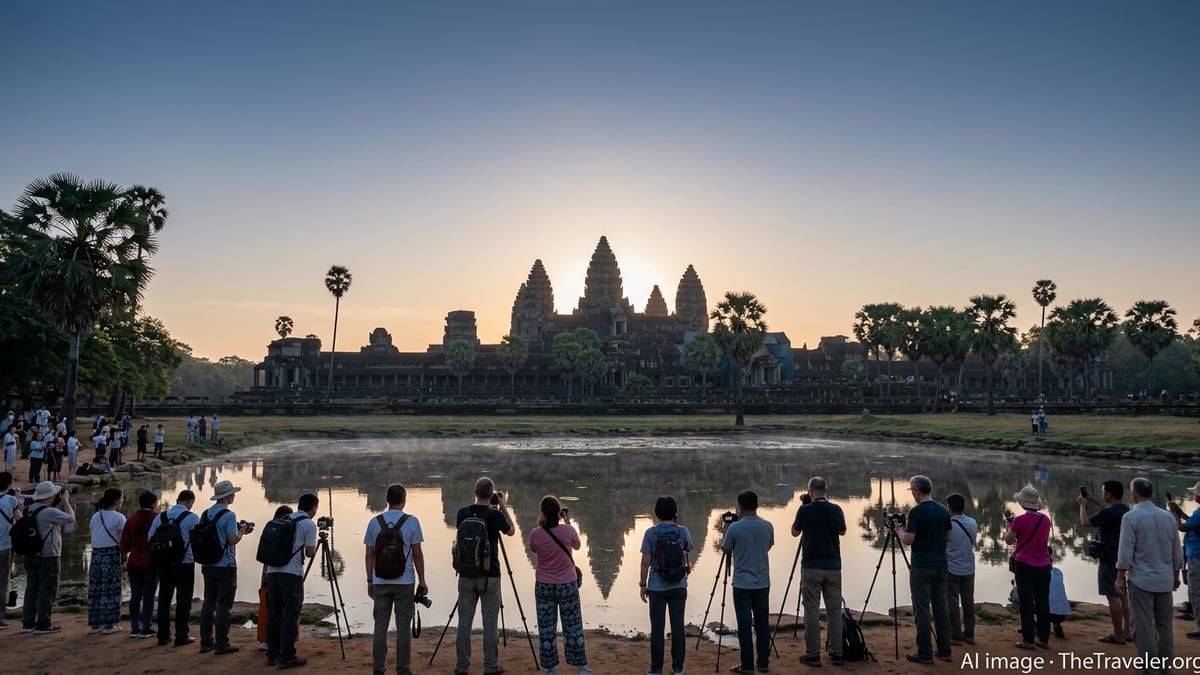
For travelers, the new guidance means that trips to key destinations such as Phnom Penh and Siem Reap may be less constrained for South Korean citizens than they were under the blanket code black. However, advisories continue to highlight risks related to petty crime, organized fraud, and localized clashes near the Thai border, urging visitors to monitor updates and avoid high risk provinces.
Venezuela: advisory shift amid ongoing volatility
Venezuela has been subject to some of the world’s toughest travel advisories from multiple governments due to economic collapse, political tensions, and high crime rates. South Korea’s own guidance historically placed large swathes of the country under its most restrictive category, effectively banning discretionary travel.
A recent update published on the website of South Korea’s embassy in Caracas outlines a limited easing for certain areas, moving them from a full ban to an advisory more aligned with “reconsider travel” or “avoid nonessential travel” language used by other nations. Caracas and several coastal regions remain under heightened warning, but the change opens the door to carefully managed trips linked to business, family ties, or essential visits.
The adjustment appears to track with incremental stabilization in some Venezuelan urban centers, where security conditions and access to basic services have seen modest improvement compared with the worst years of the crisis. At the same time, international travel advisories from other countries continue to caution about kidnapping, violent crime, and sudden disruptions to transport and medical care.
Observers of Korean foreign policy note that the nuanced downgrade does not signal a broad endorsement of Venezuela as a safe destination. Instead, it reflects an attempt to harmonize South Korea’s assessments with wider international practice while still discouraging leisure travel to most parts of the country.
What the shift means for Korean travelers
The lifting of outright bans, even in limited form, carries practical implications for South Korean citizens. Under the highest restriction level, travelers risked administrative penalties at home if they entered prohibited areas without special permission. The new, lower level warnings in parts of Cambodia and Venezuela reduce that risk, although they do not remove the need for caution.
Travel insurance coverage is another factor. Some insurers use government advisories to determine eligibility and exclusions. When a destination moves out of a formal “no travel” category into a less severe advisory, it can improve access to coverage for medical emergencies, evacuation, and trip disruption, though policies still often impose conditions for high risk locations.
Industry observers suggest that demand from South Korean travelers is likely to recover first in Cambodian resort and heritage destinations, where tourism infrastructure remains comparatively robust. In Venezuela, by contrast, ongoing economic challenges and flight connectivity issues are expected to limit any immediate rebound to niche segments such as family visits or specialized business travel.
Travelers considering either destination are encouraged by publicly available guidance to monitor Korean and local government notices closely, register their trips when possible, and prepare contingency plans in case of sudden changes to security conditions or transport options.
Regional impact and outlook
The recalibration of Korea’s travel advisories fits into a wider pattern of shifting risk assessments across Asia and Latin America in 2026. Several governments in the region are rebalancing between pandemic era controls, rising concern over transnational crime, and pressure to revive tourism driven economies.
In Southeast Asia, Cambodia’s efforts to reassure foreign partners about the security of major tourism corridors come at a time when regional competitors are reporting stronger visitor numbers. Analysts point out that even a partial relaxation by a key source market such as South Korea could help shore up sentiment among airlines, tour operators, and investors considering new routes or projects.
Across the Atlantic, any improvement in Venezuela’s travel risk profile, however modest, is watched closely by diaspora communities and energy sector firms with longstanding ties to the country. For South Korea, which balances global commercial interests with a reputation for cautious consular advice, the latest steps in both Cambodia and Venezuela may serve as a template for future, more tailored advisory updates.
Further reviews are expected as part of South Korea’s regular cycle of global risk assessments. Observers anticipate that any additional easing will depend on sustained improvements in local security, successful crackdowns on transnational crime networks, and consistent coordination between Seoul and partner governments over traveler safety.