


Kotor looks almost too dramatic to be real: a medieval stone town pressed between steep mountains and a glassy bay that feels more like a fjord than the Adriatic. For first-time visitors to Montenegro, this compact UNESCO-listed city is often the highlight of the trip. This guide walks you through what Kotor is really like today, how to plan your stay, what to see and do, and the practical details that first-timers often learn the hard way.
Get the latest updates straight to your inbox!
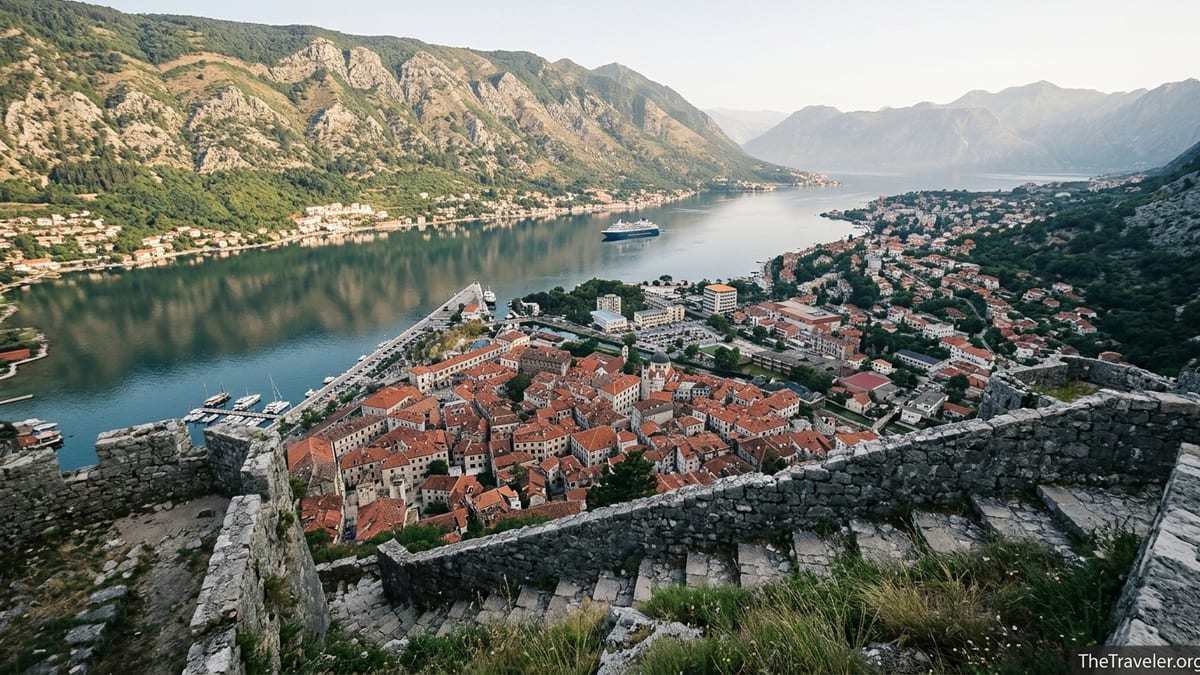
What and Where Is Kotor?
Kotor is a small coastal city in southwestern Montenegro, set at the innermost point of the Bay of Kotor, about 90 kilometers south of Dubrovnik and 80 kilometers west of the capital Podgorica. The surrounding mountains rise almost straight from the water, creating one of the most dramatic natural harbors in the Adriatic. The old town itself is tiny, with only a few thousand residents, but it receives hundreds of thousands of visitors a year, especially from cruise ships and day trips out of Croatia.
Historically, Kotor was an important Venetian port, and much of what you see today dates from the 15th to 18th centuries. The city walls climb high above the town, and narrow stone lanes twist between churches, small palaces and shaded squares. It is officially part of a UNESCO World Heritage Site that covers both Kotor’s medieval core and the wider natural and cultural landscape of the bay.
For planning purposes, Kotor splits into three main areas for visitors. There is the walled Old Town, where you will spend most of your sightseeing time. Immediately outside are the waterfront and marina, with the cruise pier and a strip of restaurants and small hotels. A few kilometers around the bay, you find quieter residential areas and beach spots, especially toward Dobrota heading northwest and Muo and Prčanj on the opposite shore.
Most international visitors arrive via Tivat Airport, around 8 kilometers away, or Dubrovnik Airport across the Croatian border. A typical taxi fare from Tivat Airport to Kotor is around 20 to 25 euros if you book in advance, more if you just grab the first car outside the terminal. Buses connect Kotor with Budva, Podgorica and Dubrovnik, but schedules change frequently and often run late, so plan a margin of error if you have a flight to catch.
Exploring Kotor Old Town
Kotor’s Old Town is compact enough to cross in ten minutes, but you can easily spend a full day exploring its alleys, churches and viewpoints. Most people enter through the Sea Gate, the main stone entrance facing the waterfront, and step straight into the main square anchored by the clock tower. From there, lanes spider off in every direction, and it is worth allowing yourself to get a little lost rather than following only the main tourist flow.
Key landmarks include St Tryphon Cathedral, with its twin bell towers and modest treasury; the square in front fills quickly with tour groups in mid-morning. Nearby, the Church of St Luke is a small Romanesque building that has served both Catholic and Orthodox communities, and it often feels more atmospheric and less crowded than the cathedral. The Maritime Museum, housed in a former palace, gives context to Kotor’s seafaring past with ship models and old navigation instruments.
Old Town Kotor is packed with cafes, small restaurants and souvenir shops. In high season between June and September, streets can feel extremely crowded when large cruise ships are in port, especially between 10 a.m. and 3 p.m. If your schedule allows, explore early in the morning or later in the evening, when day-trippers have gone and the town’s stone walls reflect the softer light. Many visitors report that stepping out at sunrise to wander almost-empty alleys becomes one of their favorite memories.
Prices inside the walls are noticeably higher than just outside. A simple espresso on a main square terrace can run 2.50 to 3 euros, while at a cafe a five-minute walk away you may pay around 1.50. The same rule applies to gelato, cocktails and souvenirs. If you are on a budget, follow the side streets toward less obvious squares, and check menu prices before you sit down. Most places accept card payment, but smaller bakeries and kiosks may prefer cash.
The Bay of Kotor and Classic Views
The Bay of Kotor is often called a fjord, even though it is technically a drowned river canyon. In practice, that means you have steep limestone cliffs dropping into deep, sheltered water, with small villages dotting the shoreline. For a first-time visitor, getting out on the bay is almost as essential as walking the Old Town walls, and it is usually easy to organize.
One popular option is a speedboat tour that combines several highlights in half a day. Typical itineraries from Kotor include a stop at the tiny artificial island of Our Lady of the Rocks near Perast, a swim near the Blue Cave at the outer bay, and a quick pass by the old island prison at Mamula. Prices vary by season and group size, but you can expect something in the range of 30 to 50 euros per person for a shared tour, more for private charters. In July and August, boats often fill up, so pre-booking a reputable operator or arranging a tour through your accommodation can prevent disappointment.
For a quieter experience, many travelers take a local bus or taxi to Perast, around 20 minutes northwest of Kotor, then rent a small boat with skipper from the waterfront there. Perast is less crowded than Kotor and has a more relaxed, small-town feel, with baroque churches and stone villas lining the shore. A short boat hop from Perast to Our Lady of the Rocks to visit the church and small museum typically costs a few euros, paid in cash on the pier.
If you prefer to stay on land, walking the flat promenade from Kotor toward Dobrota offers great bay views without much effort. You will pass small pebble beaches, informal swimming platforms and cafes right on the water. In the morning, the mountains on the opposite side catch the first light, while evenings can bring intense pink and gold sunsets reflecting in the bay. In peak season, water quality near town can be affected by boat traffic, so consider swimming a little further along the shore where there is more circulation.
The Kotor Fortress Hike and New Cable Car
The single most famous activity in Kotor is climbing to the fortress of San Giovanni, the ruined stronghold perched above the Old Town. The official trail starts from within the city walls and rises by a combination of stone steps and steep paths. Recent local guides describe around 1,300 to 1,350 steps in total, and a vertical gain of roughly 260 meters, so while the hike is short, it is sustained and can feel demanding in summer heat.
Opening hours and access rules can change, but at the time of writing there is typically a small entrance fee collected at the lower gate during the day. The path is mostly stone and can be polished and slippery, especially in sandals. In July and August, local advice is to start as close to sunrise as possible, both to beat the heat and the cruise crowds. Many visitors report that beginning around 6 a.m. gets you to the top before the first big groups arrive and offers wonderfully soft light on the bay.
From the upper viewpoints, you can see the red-tiled roofs of Kotor Old Town squeezed between the water and the slopes, with cruise ships anchored in the bay. There are ruins of chapels and bastions to explore, but the main draw is the panorama. Bring at least a liter of water per person, especially in hot weather, and avoid climbing in flip-flops. Weather can change quickly, and the stones become treacherous when wet, so postpone your hike if thunderstorms are forecast.
In addition to the fortress path, a new cable car system connects the Kotor area with the Lovćen mountain region above. As of the latest information, the Kotor Lovćen cable car operates seasonally and provides a fast way to reach cooler air and wide views over the bay and inland mountains. Round-trip tickets are priced in line with other European cable cars of similar length, and visitors frequently pair the ride with a visit to Lovćen National Park’s viewpoints and restaurants. If you are short on time or not up for a steep hike, the cable car can be an efficient way to get a big-picture view of the landscape without much physical effort.
Cruise Port Basics and Arriving by Sea
Kotor has become one of the busiest cruise ports in the Adriatic for its size, sometimes receiving multiple ships a day in high season. Larger vessels anchor in the bay and use tenders to bring passengers ashore, while smaller ships may dock directly at the concrete pier just outside the Old Town walls. On busy days, lines can form for tenders both leaving and returning to the ship, and some recent passengers have reported long waits in the midday heat.
The practical upside is that you step straight into the heart of Kotor. The cruise pier is only a few minutes’ walk from the Sea Gate, and you can see the city walls from the gangway. Port facilities immediately around the pier include basic services such as ATMs, taxi stands and kiosks selling cold drinks and snacks. Internet connections can be patchy when ships are in, as hundreds of people try to use the same mobile networks, so do not rely on a local eSIM for large downloads during those hours.
If you want to explore beyond the Old Town during a cruise call, consider pre-booking a shore excursion or a private guide rather than trying to organize everything on the spot. Tour operators that specialize in Kotor often coordinate schedules with ship arrival and departure times and know how to dodge the worst of the crowds. A typical small-group shore excursion, for example, might combine a guided Old Town walk, a boat trip to Perast and Our Lady of the Rocks, and a short tasting stop in a nearby village, all timed to get you back to the tender pier at least an hour before departure.
Because Kotor is largely a tender port for bigger ships, passengers on ship-organized tours usually get priority on early tenders. Independent travelers sometimes report being held back until groups have been taken ashore. If you are planning to explore on your own, check your ship’s tender ticket system in advance, aim for an early start, and avoid scheduling anything that requires strict timing, such as a long taxi trip or independently booked boat tour departing immediately after the first tender.
Where to Eat and Sleep in Kotor
Kotor’s food scene mixes traditional Montenegrin and broader Mediterranean influences, with a strong emphasis on seafood around the bay. Inside the Old Town, you will mostly find sit-down restaurants with terraces facing small squares and lanes. Dishes like grilled squid, black risotto, mussels in white wine and simple fish-of-the-day plates are common. Expect to pay around 12 to 18 euros for a main course in a mid-range Old Town restaurant, more on the most popular squares or at places with particularly good views.
For quicker or more budget-friendly options, bakeries just outside the walls sell burek pastries filled with cheese, meat or spinach for a few euros, and small pizza slices are common snacks. Ice cream stands do good business on hot days. If you want a quieter, more local-feeling meal, look for restaurants and konobas along the waterfront in Dobrota or in small villages around the bay. Prices can be a little lower, and you often get tables right at the water’s edge, where you can swim before or after your meal.
Accommodation in Kotor ranges from simple guesthouses and private rooms to boutique hotels in renovated stone buildings. Many first-time visitors are tempted to stay within the walls for the atmosphere, and it is magical to step out of your door straight into an old stone lane. However, Old Town rooms can be noisy in summer due to bars, late-night restaurants and early-morning deliveries. If you value sleep, consider staying just outside the walls or along the bay in Dobrota, where you can still walk into town in 10 to 20 minutes but enjoy a quieter night.
Prices fluctuate significantly with season. In July and August, a well-located double room in or near the Old Town can easily reach 130 to 200 euros per night, while in shoulder seasons like May, June, September or early October the same room might drop closer to 70 to 120 euros. Most official accommodations in Montenegro charge a small per-person, per-night tourist tax, often around a couple of euros, which may be added on top of the advertised rate. Sometimes this is paid in cash at check-in or check-out, so having small bills ready is helpful.
Safety, Crowds and Practical Tips
Despite its dramatic cliffs and cruise traffic, Kotor is generally a safe destination with relatively low violent crime. The main annoyance is petty theft in crowded areas, especially when multiple cruise ships are in port. As in any busy tourist town, keep valuables zipped and close, avoid leaving bags unattended while swimming, and be cautious of anyone creating a distraction in tight spaces. After dark, the Old Town remains lively and usually feels safe to walk, though the uneven stone surfaces require attention.
Crowds are a more serious concern than crime for many visitors. On some summer days, the population inside the walls can easily feel several times larger than the town’s permanent residents. Streets become clogged, restaurant terraces overflow, and lines form for popular viewpoints and ice cream stands. To cope, plan your most sought-after activities in the early morning or late afternoon and use the crowded midday hours for a leisurely lunch, a siesta in your room, or a swim further along the bay.
Transport and prices are another common source of frustration. Reports from recent travelers mention taxi drivers quoting unexpectedly high fares, especially for short hops to nearby beaches or villages. Ask your hotel or host for approximate fair prices before you get in a car, and if possible use registered taxi companies or pre-booked transfers rather than unmarked vehicles. In general, Montenegro remains cheaper than many Western European countries, but prices in Kotor’s core have risen quickly, and it is wise to check menus and agree on taxi fares in advance.
Finally, be prepared for some bureaucratic quirks, particularly around registration and tourist tax. In theory, all visitors staying in private accommodation should be registered with local authorities, with the host or agency usually handling paperwork. In practice, many travelers never hear about this because hotels and licensed apartments take care of it behind the scenes. If you are staying longer in one place or using very informal rentals, ask your host if they will register you and how the tax is handled to avoid surprises later.
Easy Day Trips from Kotor
Kotor makes an excellent base for exploring much of coastal and central Montenegro. Many of the country’s best-known sights are within one to two hours’ travel, though mountain roads, tunnels and summer traffic can make journeys slower than the distance suggests. For a first-time visitor, simple day trips that radiate from Kotor and return by evening offer the easiest taste of the region.
Perast is the shortest and simplest of these trips, often combined with time on the water. You can reach it by local bus, taxi or boat in around 20 to 30 minutes. Spending a half day strolling its waterfront, visiting the islands and lingering over a meal in one of the stone-terraced restaurants gives a softer, less hectic counterpoint to Kotor’s bustle. Many visitors consider Perast and Our Lady of the Rocks essential stops along the bay.
Further afield, Budva lies about 30 to 40 minutes south by car. It has its own walled old town, beaches and a livelier nightlife, with beach clubs and bars that stay open late in summer. Some travelers find Budva too busy and developed, while others enjoy mixing a day there with quieter nights back in Kotor. Another popular outing is to Lovćen National Park above Kotor, sometimes reached in combination with the Kotor Lovćen cable car or via the serpentine old road with its famous hairpin bends. From Lovćen, you can continue to Cetinje, the historic royal capital, whose museums and Austro-Hungarian architecture provide a different perspective on Montenegrin history.
Herceg Novi, closer to the bay’s entrance, offers another old town and a more spread-out coastal promenade, suitable for a full-day trip if you have time. Inland, Skadar Lake near the Albanian border is possible as a long day trip from Kotor with an organized tour, including boat rides through reed channels and bird-watching. If you are considering renting a car for day trips, remember that parking in Kotor itself is limited and often paid; many visitors choose accommodations with dedicated spaces or leave the car in a longer-stay lot just outside the center.
First-Time Montenegro Tips from Kotor as a Base
Using Kotor as your main base gives a good first impression of Montenegro, but it can also distort your expectations if you never leave the bay. Kotor and the immediate surroundings are among the country’s most intensely touristed areas, particularly between June and September. Prices here are higher, crowds thicker and services more geared toward short-term visitors than in inland towns or less famous stretches of coast.
For a first trip, consider combining a few nights in Kotor with time elsewhere, even if it is just a short stay in a quieter coastal town or a mountain village. This can mean splitting your stay between Kotor and a place like Herceg Novi, Budva, or an inland base near Durmitor or Biogradska Gora national parks if you are interested in hiking. Doing so shows you that Montenegro is more than one bay and one old town and can also give you a break from the cruise-ship crowds.
Language is rarely a barrier in Kotor. While Montenegrin is the official language, English is widely spoken in tourism-related businesses, and staff at hotels, restaurants and tour agencies are used to international visitors. Prices are usually in euros, and Montenegro uses the euro as its de facto currency. Tipping follows a flexible European pattern: rounding up small bills or leaving around 10 percent in restaurants if service is good is appreciated but not always expected.
If you are connecting Kotor with Croatia, factor border delays into your plans. In summer, queues at the border crossings between Dubrovnik and Montenegro can lengthen, sometimes adding an hour or more to the journey. Buses may also be delayed, and it is not unusual for travelers to arrive later than the printed schedule. Give yourself extra time if you are traveling to or from airports, and keep flights and bus journeys on separate tickets wherever possible so you do not depend on a perfect connection.
FAQ
Q1. How many days should I spend in Kotor on my first visit? 2 to 3 full days is a good starting point, allowing time for the Old Town, the fortress hike, a bay boat trip and at least one relaxed evening.
Q2. Is Kotor safe to visit? Kotor is generally safe, with most issues limited to petty theft and occasional taxi overcharging. Normal urban precautions such as keeping valuables secure are usually sufficient.
Q3. When is the best time of year to visit Kotor? Late April to early June and September to early October offer a balance of pleasant weather and fewer crowds compared with peak summer months.
Q4. Do I need a car in Kotor? You do not need a car to enjoy Kotor itself, but renting one can make day trips to places like Lovćen, Cetinje or Skadar Lake easier. Parking in Kotor can be challenging and often paid.
Q5. How difficult is the Kotor fortress hike? The hike is short but steep, with more than a thousand stone steps and little shade. Most reasonably fit people manage it in about 30 to 60 minutes each way with frequent breaks.
Q6. Can I swim in the Bay of Kotor? Yes, many people swim from small beaches and concrete platforms along the shore. Water is generally clean, though in peak season it is better to swim slightly away from the busiest boat traffic.
Q7. Is Kotor suitable for families with children? Kotor can work well for families, but parents should be aware of uneven stone surfaces, steps, and in summer, heat and crowds. Choosing accommodation with easy access and quieter surroundings helps.
Q8. How expensive is Kotor compared with other European destinations? Kotor is often cheaper than major Western European cities but more expensive than some inland Balkan towns. Food, accommodation and tours around the bay are priced closer to mid-range Mediterranean levels.
Q9. Can I visit Kotor as a day trip from Dubrovnik? It is possible and popular, but travel and border queues can make the day long and rushed. Staying at least one night in Kotor usually gives a more relaxed experience.
Q10. Do I need to book tours and accommodation in advance? In July and August, advance booking for accommodation, popular boat tours and the busiest restaurants is strongly recommended. In shoulder seasons, you have more flexibility but should still book ahead for specific activities.