


More news on this day
Hundreds of passengers were left stranded across France on Monday as a fresh wave of aviation disruption swept through major hubs including Paris, Lyon, Nice, Marseille and Toulouse, with publicly available tracking data indicating 981 delayed flights and 34 cancellations affecting services operated by Air France, easyJet, Lufthansa, Ryanair and KLM.
Get the latest news straight to your inbox!
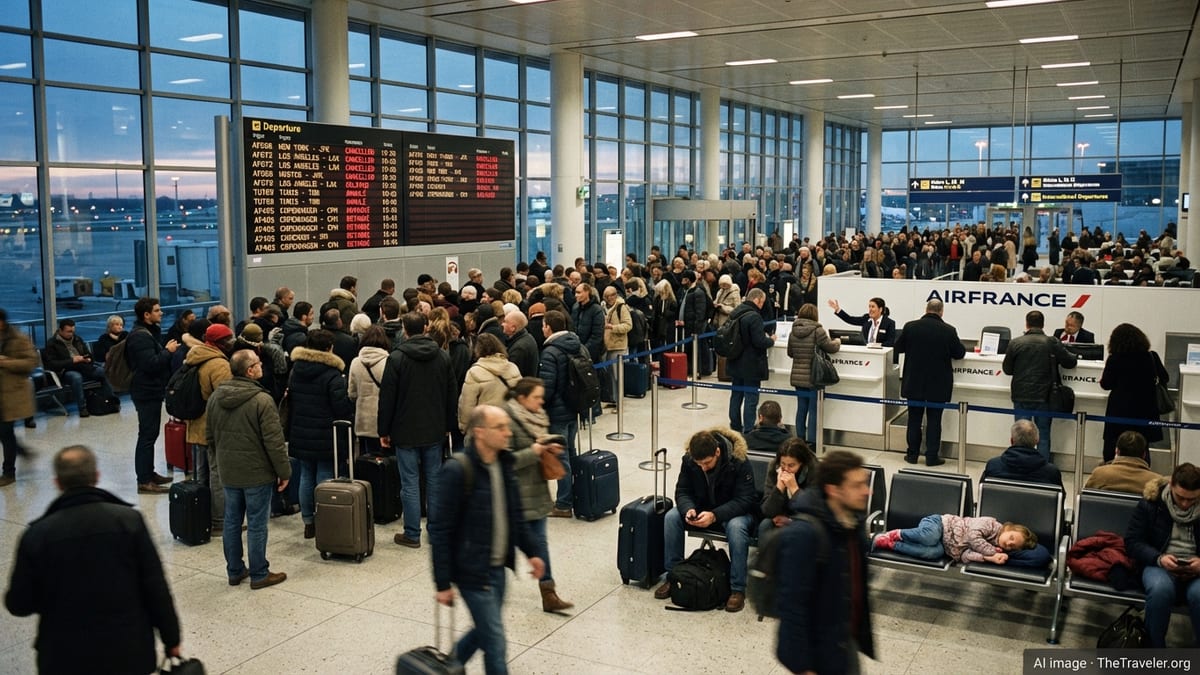
Delays Ripple Through France’s Major Hubs
The latest disruption, recorded on June 29, 2026, has hit some of France’s busiest airports at the height of the summer travel season, compounding an already fragile operational picture across European skies. Flight-status dashboards and aviation tracking platforms show widespread delays at Paris Charles de Gaulle and Orly, as well as at regional gateways in Lyon, Nice, Marseille and Toulouse, with many departures pushed back by several hours.
Air France, easyJet, Lufthansa, Ryanair and KLM feature prominently in the delay statistics, reflecting their dense schedules on French domestic and intra-European routes. While many services are still operating, the cumulative effect of rolling hold-ups has left passengers facing missed connections, curtailed holidays and unexpected overnight stays as aircraft and crews fall out of position.
The pattern mirrors recurring strain seen in recent weeks across France and neighboring countries, where network-level bottlenecks have repeatedly turned localized issues into continent-wide knock-on disruptions. For travelers beginning or ending their journeys in France, the result has been an increasingly unpredictable flying experience, even on traditionally frequent and resilient routes between major cities.
Causes Tied to Network Strain and Capacity Constraints
Publicly available operational briefings and performance data point to a combination of structural and short-term factors behind the spike in delays. Air traffic flow management reports for June highlight France as one of Europe’s principal delay hotspots, with several area control centers, including those serving Reims and Marseille, reporting high en-route congestion and capacity constraints during peak hours.
These capacity pressures sit alongside staffing challenges and the integration of new air traffic management systems, which have reduced flexibility in handling surges in demand. When traffic levels rise, relatively small schedule deviations can quickly escalate into longer ground holds and airborne sequencing delays, particularly around dense hubs such as Paris Charles de Gaulle and busy Mediterranean airports like Nice and Marseille.
At airline level, carriers including Air France, easyJet, Lufthansa, Ryanair and KLM are all operating tight summer schedules calibrated to strong leisure demand. Any disruption in one part of the network, whether due to weather, congestion or technical issues, can reverberate across multiple rotations, leaving aircraft and crews in the wrong place at the wrong time and forcing last-minute retimings or cancellations.
Passenger Impact: Missed Connections and Overnight Disruptions
For travelers on the ground in France, the operational complexity translates into very tangible frustrations. Across Paris, Lyon, Nice, Marseille and Toulouse, passengers have reported extensive waits at departure gates and check-in desks as departure times slide and connection windows evaporate. Long queues have formed at service counters as travelers seek rebooking options, food vouchers and accommodation.
The situation is particularly acute for those relying on onward connections to long-haul flights or time-sensitive events such as cruises, tours or business meetings. Even when flights eventually depart, significant delays can lead to missed links at major hubs, forcing passengers into unplanned overnight stays or multi-stop routings to reach their final destinations.
Published consumer guidance on air travel in Europe underscores that lengthy delays and cancellations can trigger a range of passenger rights, including care and assistance, rerouting, refunds and, in certain circumstances, financial compensation. However, accessing these entitlements often requires persistence, detailed record-keeping and clear documentation of the scale and cause of the disruption, which can be challenging during fast-moving events at crowded terminals.
France’s Tourism and Business Travel Under Pressure
The timing of the latest disruption is problematic for France’s tourism sector, which is entering one of its busiest periods of the year. Cities such as Paris and Nice, along with coastal regions and cultural centers accessed via Marseille, Lyon and Toulouse, are heavily reliant on reliable air links to feed hotels, restaurants and attractions with both international visitors and domestic holidaymakers.
Frequent flight delays and cancellations can erode traveler confidence, prompting some potential visitors to reconsider itineraries or seek alternative routes and destinations perceived as more stable. For regions that depend on weekend city breaks and short-haul leisure traffic, a single day of severe disruption can reverberate across occupancy rates, tour schedules and local transport planning.
Business travel is similarly exposed. Delayed or cancelled services on high-frequency routes, including those linking Paris with key European business centers, can derail meetings, conferences and corporate events. Organizations that rely on tight same-day return patterns may be forced to build in additional buffers or switch to hybrid or remote arrangements when air reliability weakens, shifting value away from destination cities.
What Travelers Can Do Amid Ongoing Volatility
Given the scale of current disruption and the underlying capacity issues reported across parts of the French and wider European air network, analysts caution that operational volatility may persist in the coming weeks. Travelers planning journeys via Paris, Lyon, Nice, Marseille or Toulouse are being encouraged, in publicly available advisories, to treat schedules as subject to change and to monitor flight status frequently on the day of travel.
Practical measures such as allowing longer connection times, favoring early-day departures where possible and ensuring that airlines have up-to-date contact details can help reduce the impact of last-minute changes. Travel experts also recommend retaining receipts for any additional expenses incurred during disruption, such as meals, accommodation and alternative transport, in case reimbursement claims are later possible under applicable air passenger regulations or travel insurance policies.
While Monday’s tally of 981 delays and 34 cancellations underscores the severity of the current episode, it also fits into a broader pattern of strain across Europe’s skies during the early summer of 2026. For now, passengers flying to, from or within France face a travel environment where flexibility, preparation and close attention to operational updates have become as essential as passports and boarding passes.