


More news on this day
New York’s LaGuardia Airport is grappling with a fresh operational meltdown, as a wave of 181 flight cancellations linked largely to Delta Air Lines and American Airlines regional affiliates has unleashed significant travel disruption across the domestic network.
Get the latest news straight to your inbox!
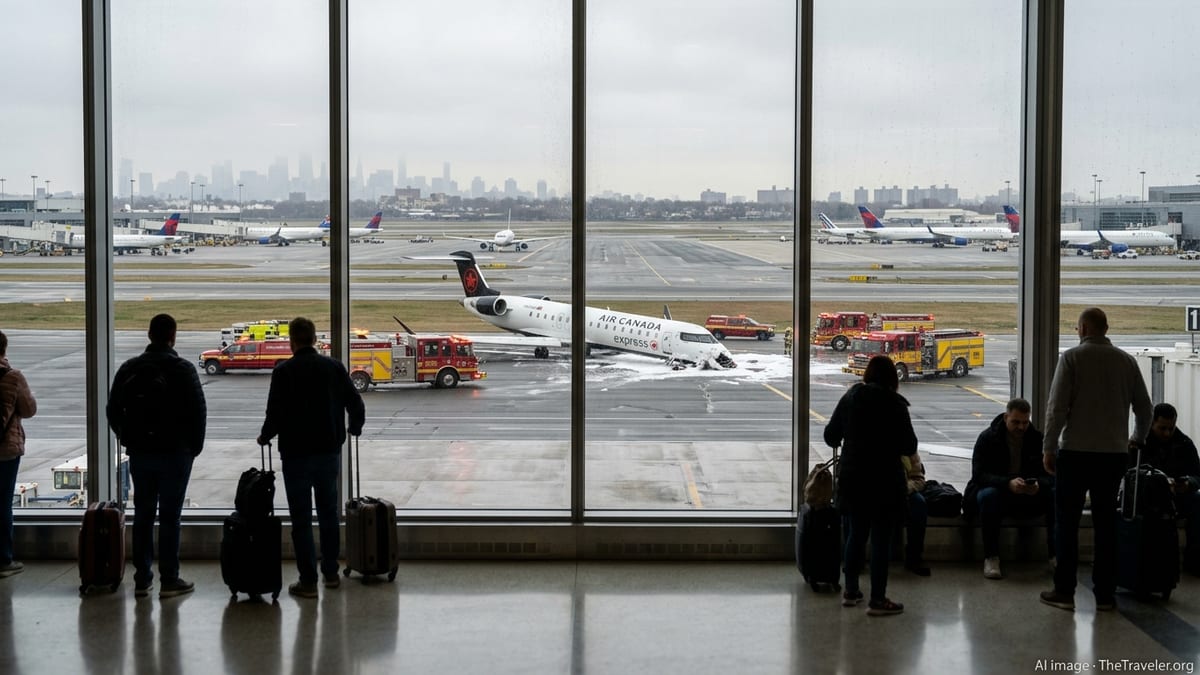
Weather, Runway Strain and Network Pressures Converge
Publicly available flight-tracking data and waiver bulletins indicate that the latest disruption coincides with a period of unsettled weather across the Northeast and renewed strain on LaGuardia’s compact airfield. A recent sinkhole discovery and repairs near one of the airport’s two runways highlighted how little redundancy exists when a critical piece of infrastructure is taken out of rotation, even temporarily.
Delta has issued multiple exception policies for New York–area airports, including LaGuardia, citing adverse weather and operational constraints for June travel. These bulletins, which cover both mainline and Delta Connection regional services, allow affected passengers to change itineraries without typical fees, reflecting the scale of the schedule upheaval.
American’s regional network, which relies heavily on feeder flights into LaGuardia from smaller East Coast and Midwest markets, has faced similar pressure. Industry reporting and airline schedule adjustments show American trimming and reshaping domestic capacity in response to broader operational headwinds, leaving its regional affiliates more vulnerable when a hub experiences sudden congestion or runway restrictions.
While LaGuardia remains fully open, the combined effect of recurring weather disruptions, runway work and tight summertime traffic levels has created the conditions for a cascading series of cancellations concentrated among regional operators flying under the Delta and American brands.
Feeder Carriers Bear the Brunt of 181 Cancellations
The majority of the 181 affected flights are understood to involve regional jets operating short-haul feeder routes into LaGuardia on behalf of Delta and American. These services, often scheduled with high daily frequency and quick turnarounds, tend to be the first to be cut when airlines need to free up runway slots or crew resources at a constrained airport.
Regional feeder carriers connect LaGuardia with secondary cities such as Hartford, Syracuse, Richmond and smaller Midwestern markets. When cancellations concentrate on these routes, passengers not only lose nonstop access to New York but also miss onward connections to larger hubs, magnifying the disruption throughout the national network.
Operational data and historical patterns show that such feeder-heavy cancellation waves can quickly overwhelm rebooking options. Because many of these flights operate with smaller aircraft and limited seats, replacing a lost frequency is more difficult than substituting a larger mainline jet on a trunk route. As a result, travelers are more likely to face overnight stays, long ground delays or rerouting through alternate airports in the region.
The current meltdown at LaGuardia is particularly acute for Delta, which positions the airport as a key component of its New York strategy, and for American, which relies on regional affiliates to maintain breadth in its short-haul schedule. When both carriers trim feeder flying at the same time, the impact on connectivity is felt well beyond New York City.
Knock-On Effects Across the Northeast and Beyond
Disruption at LaGuardia rarely stays local. Because the airport is tightly integrated into the broader Northeast corridor, a high volume of cancellations can ripple outward into Boston, Washington, Philadelphia and several Canadian cities. Published accounts of earlier LaGuardia disruptions this year have shown that even a modest number of canceled flights can trigger wider schedule issues across dozens of destinations.
In the latest episode, passengers connecting through LaGuardia on multi-leg itineraries face particular difficulty. When a feeder leg into New York is canceled, the remainder of the journey often unravels, forcing travelers to compete for scarce seats on alternate routings. Airlines typically prioritize rebooking through other regional hubs, but intense summer demand means spare capacity is limited.
Further compounding the challenge, airlines throughout the United States are already managing tight aircraft utilization and staffing levels. Industry analysis in recent months has highlighted how quickly network performance can deteriorate when a single hub experiences a spike in cancellations, especially during holiday or peak travel periods. LaGuardia’s current troubles fit this pattern, pushing stress into airline operations centers that must rebalance fleets and crews in real time.
For nearby airports such as Newark and John F. Kennedy, LaGuardia’s woes can translate into additional load as passengers are rebooked onto alternative departures. While this can offer some relief for stranded travelers, it also risks transferring congestion to other already-busy New York–area gateways.
Passengers Navigate Waivers, Refunds and Limited Options
For travelers caught in the LaGuardia meltdown, airline waivers and flexible booking policies have become critical tools. Delta has published multiple exception notices for New York–area disruptions, enabling customers whose flights are canceled to rebook without change fees or, in some cases, request refunds when no acceptable alternatives exist.
American generally follows a similar pattern, allowing passengers on canceled or significantly delayed flights to move travel dates or adjust routings without incurring standard penalties. Consumer-rights organizations advise passengers to document all disruptions, retain boarding passes and receipts, and monitor official airline channels for waiver updates that may expand eligibility as events unfold.
However, the scale of the 181 cancellations means that even with flexible policies, many travelers are encountering long call-center waits and limited same-day rebooking options. Airlines are increasingly encouraging passengers to use mobile apps and websites for self-service changes, though these tools can struggle to reflect the full range of manual options available to agents in complex, fast-changing disruption scenarios.
Industry observers note that in the current environment, travelers connecting through congested hubs like LaGuardia may wish to build in longer layovers, travel earlier in the day when more backup flights are available, or route through less constrained airports when practical, particularly during the storm-prone summer months.
Another Stress Test for LaGuardia’s Revamped Facilities
The ongoing cancellations arrive only a few years after LaGuardia completed a multi-billion-dollar redevelopment that replaced outdated terminals and earned improved service-quality rankings. The current turmoil is serving as an early stress test of how the modernized facilities, airlines and air-traffic partners handle surges in disruption.
Observers point out that while the rebuilt terminals and upgraded amenities have improved the passenger experience under normal conditions, LaGuardia’s fundamental constraints remain. Its limited runway configuration, dense urban location and heavy concentration of short-haul traffic mean the airport is still vulnerable when weather, infrastructure issues or airline scheduling pressures collide.
Analysts following recent episodes of travel chaos at other major U.S. hubs suggest that the lessons are similar in New York. Building more resilience into schedules, ensuring adequate staffing for irregular operations and enhancing real-time communication with passengers can soften the impact of sudden meltdowns, even when cancellations are unavoidable.
As airlines work through the backlog from LaGuardia’s 181 cancellations, attention is likely to focus on how quickly operations normalize and whether carriers adjust their peak-period schedules to reduce the risk of another breakdown as the busy summer season continues.