


More news on this day
Travelers at Missouri’s Springfield–Branson National Airport faced cascading disruptions today after Envoy Air and SkyWest canceled six regional flights and delayed several more, triggering missed connections at major hubs including Charlotte, Clearwater, Atlanta and Denver.
Get the latest news straight to your inbox!
Regional Carriers Cut Flights at Springfield–Branson
Publicly available aviation data shows that Envoy Air and SkyWest, two of the largest regional operators serving Springfield–Branson National Airport, scrubbed a combined six departures and arrivals on June 14. The cancellations affected American Airlines and United-branded services that rely on Envoy and SkyWest aircraft and crews.
Springfield–Branson National Airport functions as a spoke gateway feeding passengers into larger hubs across the country. Schedules published for the airport list Envoy Air operating multiple American Eagle routes and SkyWest flying under several major-airline brands. On a typical day those regional flights connect Springfield passengers to cities such as Charlotte, Atlanta, Denver and the Tampa–St. Petersburg and Clearwater area.
With a comparatively small number of daily departures, Springfield’s operation is sensitive to any reduction in capacity. When several regional flights are removed from the schedule at once, rebooking options quickly narrow, particularly for travelers bound for evening connections at busy hub airports.
The six cancellations followed a period of unsettled weather across parts of Missouri, with recent flood advisories in the wider region. Operational records for regional carriers also highlight how storms and crew displacements can combine to disrupt tightly timed rotations at smaller airports.
Weather and Operational Strain Fuel Wider Delays
Recent flood warnings and heavy rain in sections of southwest Missouri added another layer of complexity for airlines planning weekend operations. While Springfield itself remained open, adverse conditions in nearby counties and along common flight paths contributed to tighter spacing in the airspace and occasional ground-hold programs at hubs.
Industry reports emphasize that regional airlines such as Envoy Air and SkyWest operate on dense, interlinked schedules. An inbound aircraft arriving late from another city or a crew reaching federal duty limits can trigger cancellations far from the original point of disruption. As a result, passengers may see their Springfield flight canceled even when local conditions appear calm.
Airport and aviation databases underline that Springfield–Branson’s network is heavily oriented toward connections, with many passengers using the airport as an entry point to the national system rather than as a terminus. This structure means that any local disruption can quickly escalate into missed onward flights, overnight stays and reroutes via secondary hubs.
Operational analyses of recent disruptions at other US airports indicate that airlines sometimes prioritize mainline jet services on trunk routes when resources are tight, leading to deeper cuts among regional flights. That pattern appeared to be reflected at Springfield, where the affected services were primarily operated by regional partners rather than by the major carriers’ own fleets.
Charlotte, Clearwater, Atlanta and Denver Feel the Impact
The knock-on effects of the Springfield cancellations were felt across the national network. Data compiled from flight-status boards and schedule trackers showed disrupted connections on routes linking Springfield to Charlotte, Clearwater’s regional gateway, Atlanta and Denver, four of the most important hubs for domestic and leisure traffic from southwest Missouri.
Charlotte serves as a key connecting point for east coast and transatlantic itineraries. When Springfield-bound or departing regional flights were pulled from the schedule, passengers heading to the East Coast or onward to Europe faced longer reroute times and tighter seat availability, particularly on peak weekend departures.
Clearwater and the broader Tampa Bay region remain among the most popular leisure destinations from Springfield, based on recent passenger totals published for Springfield–Branson National Airport. With limited non-stop options and many flights clustered around key travel days, the loss of a single service can strand vacation travelers or push them into lengthy connections through alternate Florida airports.
Atlanta and Denver, both major domestic hubs, also experienced additional pressure on connecting banks as Springfield passengers sought alternative routes. Public schedule information shows that Springfield contributes steady traffic to both airports, feeding flights across the Southeast, Mountain West and West Coast. Displaced travelers raised demand on already busy flights, making same-day recovery more difficult.
Passengers Confront Long Lines and Limited Alternatives
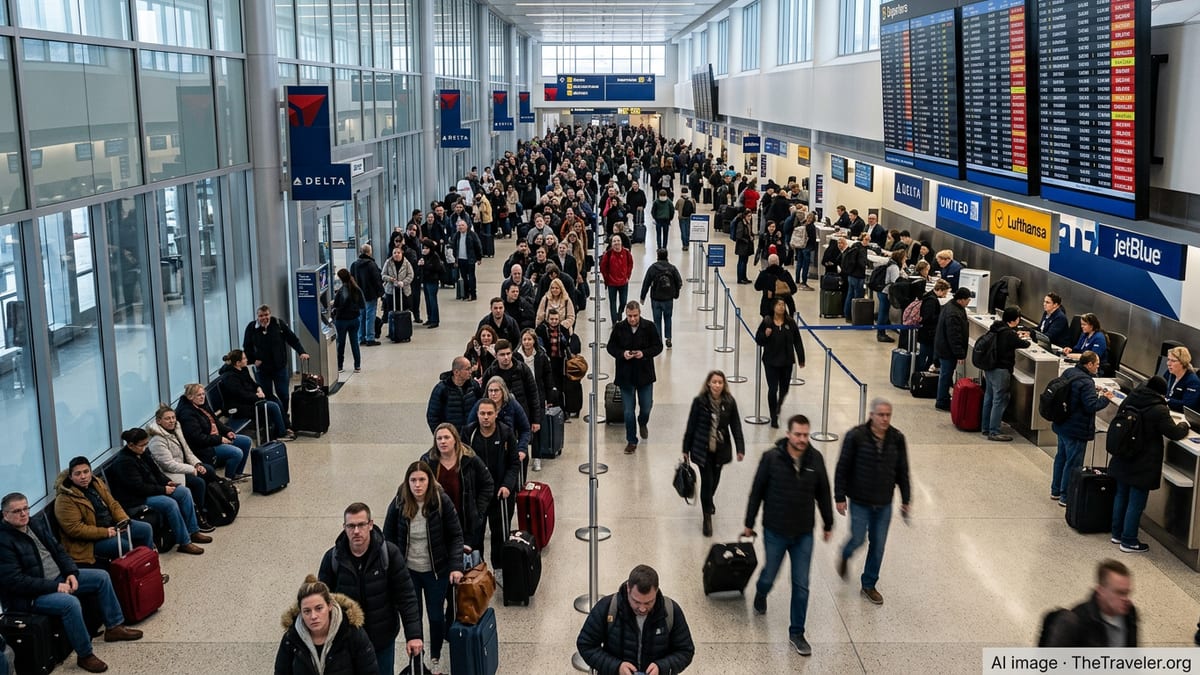
Reports from consumer flight-tracking platforms and social media posts from affected travelers described long lines at Springfield–Branson ticket counters and gate areas as passengers tried to secure new itineraries. With six flights removed and several others delayed, available seats on remaining departures quickly filled.
Regional disruptions tend to hit small and midsize airports hardest, as there are fewer overlapping services and competing carriers. When a Springfield passenger loses a nonstop connection to a hub such as Charlotte or Denver, the most immediate alternatives may involve driving to another regional airport, staying overnight, or waiting for space on flights the following day.
Travel forums and recent coverage of similar events at other US airports indicate that passengers able to rebook through mobile apps or airline websites often move faster than those relying solely on in-person assistance. However, when an entire flight is canceled and nearby services are also constrained, even digital tools offer limited options.
Some travelers bound for Florida beaches or western mountain destinations opted to shift their plans entirely, based on public posts describing abandoned weekend trips and rescheduled vacations. Others searched for last-minute rental cars to reach larger hubs, reflecting a broader trend in which regional air disruptions spill over into highway traffic and hotel occupancy.
What the Disruption Signals for Summer Travel
Aviation analysts have warned that the summer of 2026 could bring heightened strain across the US domestic network as airlines work to balance staffing, aircraft availability and volatile weather. Recent disruptions involving regional operators at airports such as Springfield fit into that wider picture, where a relatively small number of flights can have outsized effects on traveler experience.
Company disclosures from regional airlines highlight how weather-related cancellations and schedule changes can reduce revenue while increasing costs. At the same time, major carriers have leaned more heavily on regional partners to maintain frequency on smaller markets, which leaves communities like Springfield dependent on a limited pool of aircraft and crews.
Travel-planning tools that aggregate advisories, airspace notices and historical disruption patterns have encouraged passengers to build in longer connection times, especially when connecting through storm-prone hubs. The events at Springfield reinforce that advice, showing how quickly a localized issue can cascade through a network of spokes and hubs.
For travelers using Springfield–Branson and similar regional airports, publicly available guidance from aviation and consumer groups continues to stress flexible itineraries, early-day departures where possible and close monitoring of flight status. The chain reaction from six canceled regional flights on June 14 illustrates how even modest schedule changes can reshape an entire travel day for hundreds of passengers across the country.