


More news on this day
Passengers at New York’s LaGuardia Airport faced long lines, crowded concourses and mounting frustration as 181 flight cancellations and more than 200 delays disrupted major routes across the United States and Canada, affecting services operated by regional carriers such as Republic and Endeavor Air alongside American Airlines, Delta, Southwest, Jazz and others.
Get the latest news straight to your inbox!
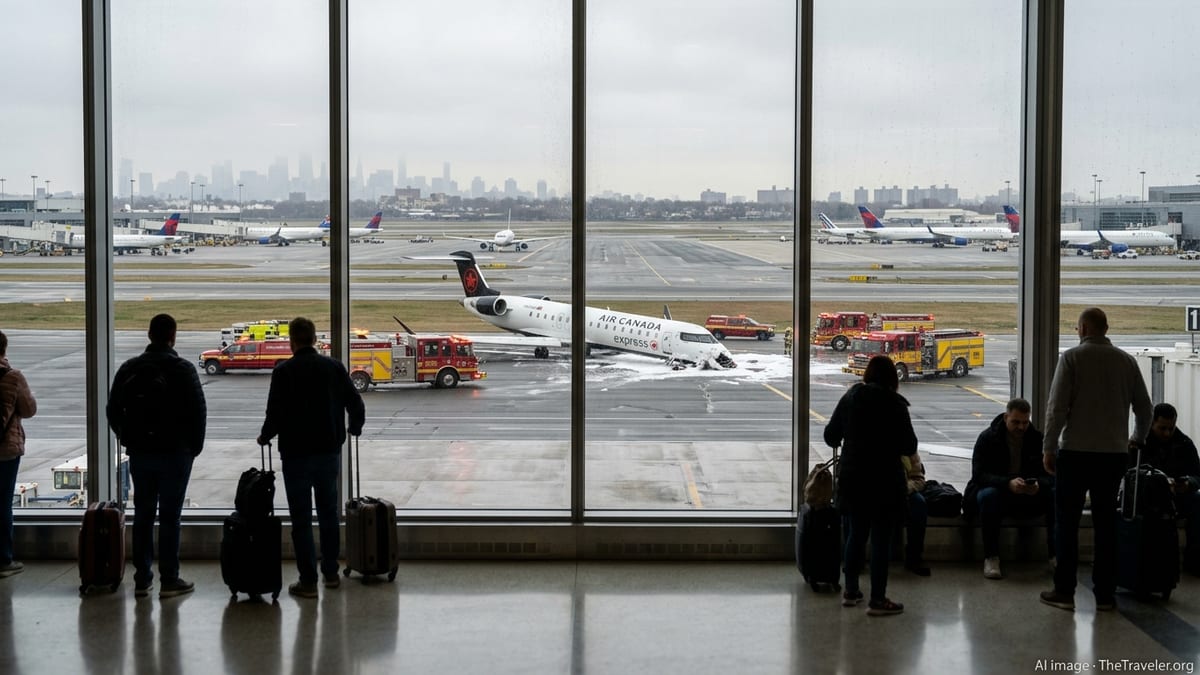
Network Shock at a Key New York Hub
LaGuardia Airport, one of the busiest short-haul hubs in North America, experienced a sharp spike in operational disruptions as cancellations and late departures accumulated across multiple terminals. Publicly available tracking data for the day show 181 flights scrapped outright at LaGuardia, while more than 200 additional services departed late or were held at the gate, creating knock-on congestion throughout the airport’s domestic network.
The disruption has been particularly acute among regional partners that connect LaGuardia with secondary markets. Republic Airways and Endeavor Air, which operate feeder flights for larger brands such as American Airlines and Delta, were among the hardest hit, according to aviation tracking dashboards that compile live schedule and status information. Their cancellations removed key spokes from airline route maps, shrinking connection options for travelers bound for smaller cities.
Mainline carriers were not spared. American Airlines and Delta, two of LaGuardia’s dominant operators, each recorded clusters of canceled departures and late-arriving aircraft, forcing rebookings and equipment swaps throughout the day. Southwest and Canadian regional operator Jazz also reported affected services, underscoring how a localized breakdown at a single New York airport can quickly ripple across international borders.
Observers note that LaGuardia has become increasingly sensitive to operational shocks due to tight runway capacity, heavy peak-time scheduling and its role as a transfer point for regional flights. When multiple airlines cancel or delay flights at once, gate availability, crew scheduling and passenger flows can quickly become overwhelmed.
Major Routes to Richmond, St. Louis and Canadian Cities Hit
The wave of cancellations and delays quickly translated into tangible impacts for travelers across the eastern half of the continent. Flights linking LaGuardia with Richmond, Virginia, and St. Louis, Missouri, were among those disrupted, leaving passengers in both origin and destination cities facing missed connections and extended airport waits.
Regional services to Canadian destinations were also affected, particularly those operated by Jazz and other feeder airlines that connect LaGuardia with hubs in eastern Canada. With some key departures canceled and others running hours behind schedule, travelers heading for business meetings, family events and summer holidays were forced to rearrange plans or accept overnight stays in connecting cities.
Because many of the affected flights serve as the first leg in multi-stop itineraries, the cancellations had an outsized effect on long-haul journeys. A single scrapped regional flight from Richmond or St. Louis to LaGuardia could cause passengers to miss onward departures to cities such as Boston, Toronto or Montreal, compounding disruption far beyond the New York area.
Airport data from other hubs indicate rising delays on LaGuardia-bound services as aircraft and crews fell out of position. This type of cascading disruption is common in tightly scheduled networks, where the late arrival of one flight can delay several subsequent departures using the same aircraft or crew.
Weather, Congestion and Operational Constraints Converge
While a full accounting of today’s disruptions is still emerging, early analyses from aviation data providers and industry commentators point to a familiar mix of causes. Seasonal weather patterns around the New York region, including low clouds and thunderstorms, have periodically constrained runway capacity at LaGuardia, triggering ground holds and forcing airlines to thin their schedules.
At the same time, LaGuardia operates within one of the most congested airspaces in the world, where minor slowdowns can quickly escalate into significant delays. Any reduction in traffic flow by air traffic management can lead carriers to cancel select departures preemptively, often focusing on shorter regional flights that are easier to rebook, which helps explain the high concentration of affected Republic and Endeavor services.
Operational limitations within airlines can deepen the impact. When disruptions accumulate, crews may reach duty-time limits, aircraft rotations fall behind schedule and spare capacity becomes scarce. In such circumstances, mainline brands like American Airlines, Delta and Southwest can be forced into a series of rapid schedule adjustments that spread delays across multiple markets, rather than keeping them confined to New York.
Historical government and industry data show that weather, national aviation system constraints and late arriving aircraft are the dominant drivers of cancellations and delays across U.S. carriers. The pattern visible at LaGuardia aligns with those longer-term trends, even if today’s tally of more than 180 cancellations stands out as unusually high for a single airport on a single day.
Stranded Passengers Face Long Lines and Limited Options
For travelers caught in the middle of the disruption, the statistics translate into hours on the ground and diminished choices in the air. With multiple airlines canceling flights throughout the morning and afternoon, rebooking desks and customer service channels at LaGuardia quickly filled with passengers seeking alternative routes or compensation.
Because many affected services are short-haul routes with limited daily frequency, seats on later flights to cities like Richmond and St. Louis were scarce by midday. Some passengers were offered itineraries with overnight connections at other hubs, while others turned to rail, car rentals or intercity buses to complete regional trips along the Northeast Corridor.
Families traveling with children, older passengers and those with tight onward connections appeared particularly exposed to the disruption, based on reports shared through social media posts and traveler forums. With airport hotels near capacity and on-the-day room rates climbing, the cost of an unplanned overnight stay added a new layer of stress to an already challenging travel day.
Consumer advocates regularly urge travelers to keep essential items such as medication, chargers and a change of clothes in carry-on bags precisely because disruptions of this scale, while infrequent, can develop rapidly and leave checked luggage inaccessible for many hours.
What Today’s Chaos Signals for Summer Travel
The severe disruptions at LaGuardia come at the outset of the busy summer travel period, when U.S. airlines typically operate at or near peak capacity. Recent performance rankings show that while major carriers like Delta, American and Southwest have improved on-time metrics year to date, they still face regular pressure from storms, congestion and tight staffing.
Analysts warn that a single day featuring 181 cancellations and hundreds of delays at a key hub offers an early stress test for the months ahead. If similar patterns recur during holiday weekends or periods of intense leisure demand, passengers could see more frequent knock-on disruptions across the national network, particularly on regional routes that connect smaller cities to coastal hubs.
Travel planners suggest that passengers schedule longer connection windows when transiting congested airports such as LaGuardia, build flexibility into itineraries and monitor flight status closely through airline apps and airport information displays. They also note that understanding basic passenger rights and compensation policies can be helpful when flights are canceled or significantly delayed.
For now, the priority at LaGuardia is clearing the backlog of aircraft and passengers created by today’s cancellations and delays. As operations gradually stabilize and airlines reposition crews and equipment, the effects are expected to linger into the next day’s schedule, reminding travelers across the United States and Canada how quickly a disruption at one airport can reshape journeys across an entire continent.