


More news on this day
Hundreds of travelers were left stranded at New York’s LaGuardia Airport this week as a cluster of regional and mainline carriers, including Republic Airways, Jazz Aviation, Endeavor Air, and American Airlines, scrubbed more than 20 flights and logged over 200 delays, snarling major routes across the United States and Canada from Huntsville to Burlington and Rochester.
Get the latest news straight to your inbox!
Fresh Disruptions at an Already Strained LaGuardia
The latest wave of disruption comes as LaGuardia continues to grapple with a fragile operating environment shaped by recent safety incidents, runway constraints, and a dense schedule that leaves little margin for recovery. Publicly available disruption trackers and airline operations data indicate that on one of the airport’s busiest days of early June, Republic Airways, Jazz Aviation, Endeavor Air, and American Airlines collectively accounted for more than 20 flight cancellations and well over 200 delays.
These carriers operate a mix of regional and mainline services that connect LaGuardia to secondary markets and major hubs across North America. When multiple operators encounter operational bottlenecks at the same time, even a relatively small number of cancellations can quickly cascade into widespread delays as aircraft and crew rotations fall out of sync.
Industry-focused coverage notes that LaGuardia has experienced several significant disruption events in recent months, including runway closures and ground delay programs that have periodically reduced arrival capacity and pushed average delay times well past an hour. In that context, the latest cluster of cancellations has underscored how quickly conditions can deteriorate when the airport’s schedule is already operating near its limits.
Real-time flight data platforms show that the disruption was not limited to a single carrier or route, reflecting a broader operational strain at the airport rather than a localized issue with one airline’s fleet or crew availability.
Knock-on Effects for Huntsville, Burlington, Rochester and Beyond
The impact of the LaGuardia disruption was felt acutely in smaller and mid-sized markets that rely on regional partners to maintain connectivity to New York. Flights linking LaGuardia with Huntsville in Alabama, Burlington in Vermont, and Rochester in upstate New York were among those affected, with cancellations and multi-hour delays rippling through schedules.
These routes are typically operated by regional affiliates such as Republic Airways, Jazz Aviation, and Endeavor Air on behalf of larger network airlines. When operations at LaGuardia falter, these thinner routes often bear the brunt of cancellations because airlines prioritize protecting high-demand trunk routes where aircraft can carry more passengers once conditions improve.
Travel industry analyses emphasize that disrupted LaGuardia rotations can strand travelers in both directions, affecting passengers departing from smaller cities as well as those attempting to return home from New York. Missed connections in New York can also leave passengers stuck far from their final destinations if they are traveling onward to other US or Canadian cities.
For airports like Huntsville, Burlington, and Rochester, even a handful of cancellations can translate into a significant share of the day’s schedule, shrinking options for alternative same-day travel and compounding the sense of isolation for affected passengers.
Recent Safety Incidents and Runway Constraints Shape the Backdrop
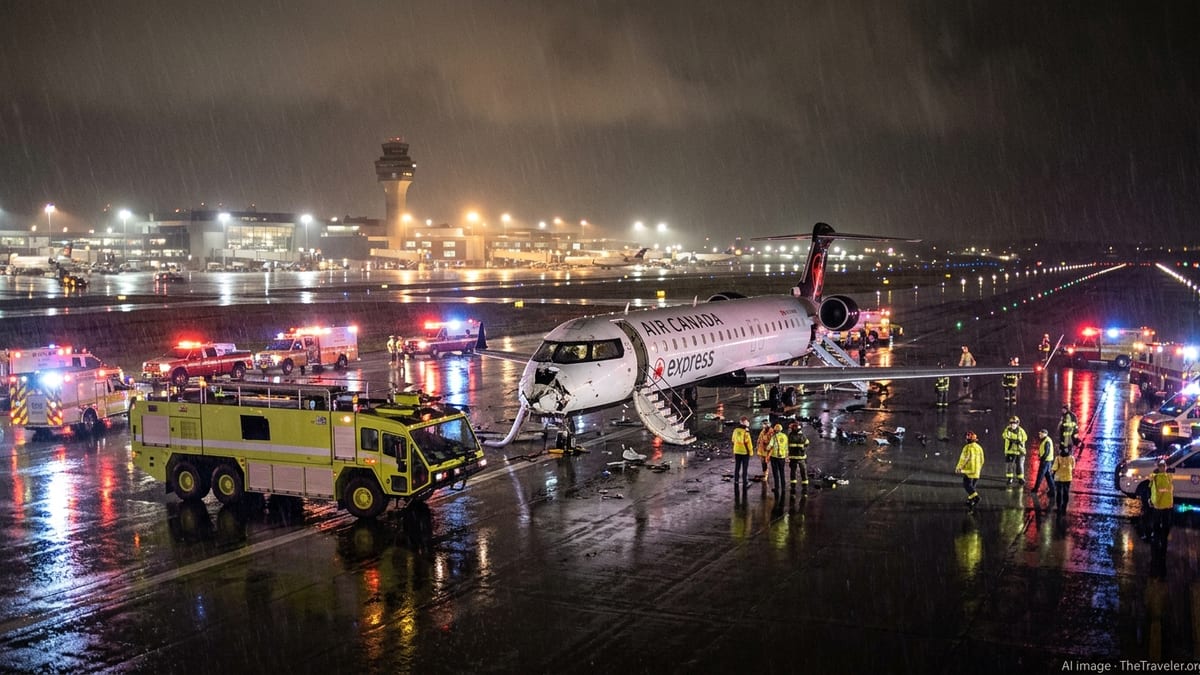
The latest episode of cancellations and delays is unfolding against the backdrop of a challenging year for LaGuardia. Earlier in 2026, published coverage detailed a fatal collision involving an Air Canada Express flight operated by Jazz Aviation and an airport fire vehicle on one of LaGuardia’s runways, an event that temporarily shut down operations and triggered a large number of cancellations and diversions.
Separate reporting has highlighted additional infrastructure-related pressures, including a runway-area sinkhole that forced the closure of one of LaGuardia’s primary runways in May. That event alone was associated with nearly 200 cancellations and a similar number of delays over several days, underscoring how sensitive the airport’s operations are to any reduction in available runway capacity.
While the current disruptions are not tied to a single dramatic incident of that scale, the recent history of safety investigations and infrastructure challenges has kept the airport operating with limited resilience. Ground delay programs implemented by air traffic authorities in response to reduced capacity have periodically pushed arrival delays into the multiple-hour range.
Industry observers note that this combination of infrastructure stress, safety scrutiny, and concentrated schedules makes LaGuardia particularly vulnerable to cascading effects when weather, staffing, or equipment issues arise among its key carriers.
Passenger Experience: Long Lines, Missed Events, and Scrambled Plans
For travelers on the ground, the statistics translate into long lines at customer service counters, crowded gate areas, and hours spent refreshing mobile apps for rebooking options. Social media posts and traveler advocacy sites described passengers sleeping in terminal seating areas, missing weddings, business meetings, and connecting flights as the disruption unfolded.
Publicly available flight logs show that many delayed departures from LaGuardia during the disruption period exceeded two hours, with some pushed back repeatedly as crews and aircraft were repositioned. In several cases, delayed flights ultimately turned into cancellations late in the day, leaving passengers with reduced options for same-day alternatives.
Travel forums and consumer-rights platforms reported particular frustration among passengers on regional routes where substitute flights were limited or fully booked. Travelers from cities such as Huntsville, Burlington, and Rochester often faced overnight stays or long connections through alternative hubs like Chicago, Detroit, or Toronto when direct LaGuardia service could not be restored quickly.
At the same time, some airlines operating at LaGuardia have issued systemwide travel advisories in recent weeks, encouraging passengers to check flight status frequently and to consider flexible travel plans when flying through the airport during periods of heightened disruption risk.
What Stranded Travelers Can Do Next
Consumer advocates and travel-rights organizations urge passengers caught in LaGuardia disruptions to first verify whether their flight was officially canceled or significantly delayed, as this can determine eligibility for refunds or other assistance. Public information from regulators notes that when an airline cancels a flight or makes a significant schedule change and a passenger chooses not to travel, the customer is generally entitled to a refund for the unused portion of the ticket and certain optional fees.
For those still trying to reach their destinations, rebooking through airline apps or websites can sometimes yield faster results than standing in line at the airport, particularly during large-scale disruption events. Some carriers serving LaGuardia have a recent track record of issuing fee waivers or flexible change policies during operational challenges, allowing travelers to move flights to different days or nearby airports without additional charges.
Travel experts also advise stranded passengers to document expenses such as meals, ground transportation, and overnight lodging, as certain travel insurance policies and premium credit cards may offer reimbursement for costs arising from extended delays or cancellations. Keeping copies of boarding passes, cancellation notices, and receipts can be critical when filing claims after the trip.
With LaGuardia’s recent history of high-profile incidents and infrastructure-related shutdowns, analysts suggest that travelers with time-sensitive itineraries consider building extra connection time into schedules or, when possible, routing through alternative New York–area airports during peak travel periods. While the latest disruption highlights ongoing vulnerabilities, it also serves as a reminder that informed planning can help mitigate at least some of the impact when operations at one of the country’s busiest hubs begin to unravel.