


More news on this day
New York’s LaGuardia Airport is facing another day of widespread disruption, with heavy delays and a wave of cancellations stranding passengers and complicating travel plans across one of the United States’ busiest air hubs.
Get the latest news straight to your inbox!
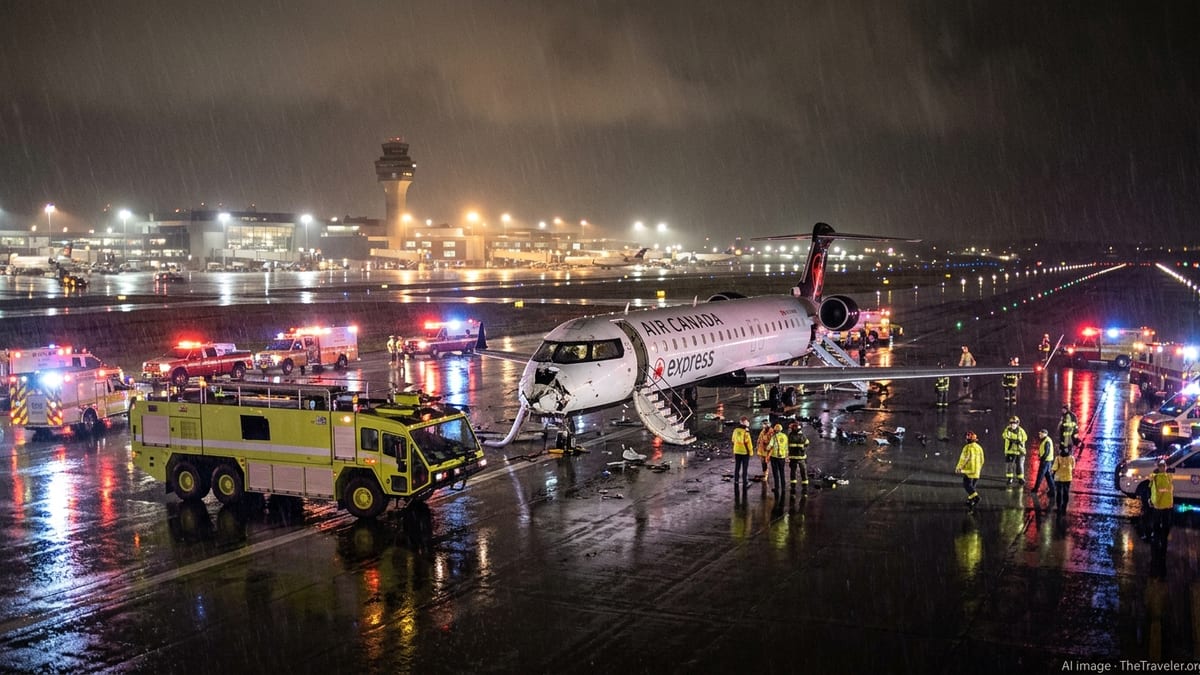
Delays Stack Up Across Departures and Arrivals
Live tracking data on July 3 indicates that LaGuardia is contending with a high volume of late-running flights, with on-time performance slipping well below typical summer levels. Real-time status boards show clusters of departures pushed back by 30 minutes or more, along with a growing list of scrubbed services as airlines attempt to reset their schedules.
Publicly available airport-condition dashboards describe a pattern of mounting departure and arrival disruptions, with rolling delays spreading throughout the day as early hold-ups ripple across the network. An elevated rate of schedule changes has been particularly visible in peak bank periods, when the airport’s tightly packed timetable leaves little room to absorb operational shocks.
Although exact figures vary by carrier and time of day, aggregated tracker information suggests that a significant minority of flights are departing late, and cancellations are concentrated on shorter-haul routes where airlines have more flexibility to consolidate passengers. Travelers bound for major East Coast and Midwestern cities appear especially affected, reflecting the dense web of LaGuardia’s domestic connections.
Some independent analytics platforms highlight LaGuardia as one of the more delay-prone major U.S. airports in early July, noting that average departure delays can surge well beyond an hour when conditions deteriorate. Those same services show fluctuating performance today, with pockets of normal operations punctuated by periods of pronounced congestion.
Recent Sinkhole and Runway Closure Add to Summer Strain
The latest disruptions arrive on the heels of a high-profile infrastructure incident that put LaGuardia’s already constrained airfield under additional pressure. In late May, a sinkhole discovered near one of the runways forced an abrupt closure and triggered hundreds of delays and cancellations, according to coverage from national and New York-focused news outlets.
Reports from that episode describe a cascading operational impact, with more than 400 flights affected as crews worked to stabilize the damaged area and regulators imposed ground-delay programs to manage traffic. Average departure delays during the height of the incident were reported to be well over an hour, underscoring how quickly conditions at LaGuardia can deteriorate when a single runway is taken out of service.
While the runway has since been reopened following emergency repairs, the event underscored long-standing concerns about the airport’s limited real estate and vulnerability to infrastructure issues. With little spare capacity built into the layout, any unplanned restriction can have outsized consequences for airlines and travelers, especially during the busy summer season.
Analysts note that even after a specific crisis passes, residual effects can linger in the form of repositioning flights, aircraft out of sequence, and crew-scheduling challenges. Those knock-on factors can deepen the impact of otherwise routine weather or congestion events weeks after the initial disruption.
Weather, Construction and Chronic Congestion Intersect
Today’s problems are unfolding against a backdrop of seasonal thunderstorms, ongoing construction and LaGuardia’s reputation for chronic congestion. Weather maps tracking conditions across the New York region show scattered storm cells and low ceilings developing at times, which can prompt air-traffic flow restrictions and slow departure rates at already busy airports.
At the same time, Federal Aviation Administration documentation outlines a multi-year program of airfield and terminal work at LaGuardia, including recurring overnight closures and reduced-capacity periods during the construction season. Although much of this work is scheduled for off-peak hours, system-capacity analyses indicate that it can still contribute to delays when schedules are tight and recovery windows are limited.
LaGuardia’s role as a slot-controlled, high-demand airport compounds these pressures. With airlines operating dense schedules on short- and medium-haul routes, minor disruptions can rapidly escalate into a backlog of delayed aircraft awaiting departure slots or gate space. Historical performance reports have frequently ranked the airport among the nation’s most delay-prone facilities, particularly during summer and holiday peaks.
Travel data providers point out that these structural factors mean LaGuardia is more susceptible than many airports to “stacking” delays, where a single weather or operational issue early in the day triggers multiple waves of schedule changes. The result, visible again today, is an uneven passenger experience in which some flights operate close to schedule while others see repeated pushbacks or cancellations.
Airlines Trim Schedules and Offer Limited Flexibility
In response to the latest disruptions, airlines operating at LaGuardia appear to be selectively trimming schedules, combining lightly booked flights and canceling shorter segments to free up aircraft and crews. Publicly available flight-status feeds show clusters of cancellations concentrated within a handful of domestic markets, while larger hub-to-hub services are more often delayed than outright scrapped.
Several carriers have recently adjusted their broader New York schedules, with some shifting capacity among LaGuardia, John F. Kennedy International and Newark Liberty International to better manage operational risk. Industry analysts note that these moves are part of a long-running effort to balance demand, slot constraints and reliability, particularly as summer storms become more frequent.
During periods of heavy disruption, major airlines typically activate flexible travel policies that allow affected passengers to change flights without traditional penalties. While details vary by carrier, these waivers are usually time-limited and focused on travelers booked to depart within a defined window. Passengers are encouraged through public advisories and website updates to check their flight status repeatedly rather than relying on earlier confirmations.
Even with such measures, rebooking options at LaGuardia can quickly become scarce when large numbers of flights are impacted at once. With many services operating near capacity in peak season, finding open seats on later departures or alternative airports often proves difficult, leaving some travelers facing lengthy waits or overnight stays.
Advice for Travelers Heading to LaGuardia
With delays and cancellations persisting, travel experts recommend that passengers treat any LaGuardia departure today as subject to change and plan accordingly. Checking flight status directly through airline channels multiple times before leaving for the airport is widely advised, as schedules can shift rapidly in response to evolving weather and air-traffic conditions.
Arriving earlier than usual may help cushion the impact of longer check-in and security lines, which tend to swell when large numbers of travelers are rebooked onto later flights. Passengers connecting through LaGuardia are generally urged to allow longer layover times than they might at less congested airports, given the elevated risk of inbound delays.
For those with flexible plans, considering nearby airports such as JFK or Newark may provide additional options, particularly if their chosen airline operates multiple New York-area gateways. Ground-transport alternatives, including intercity rail or coach services, can also be worth evaluating for shorter regional trips when air schedules appear unstable.
As the busy travel weekend continues, the situation at LaGuardia remains fluid. Public information sources indicate that operational performance could improve if weather cooperates and earlier disruptions are cleared, but the combination of recent infrastructure issues, seasonal storms and heavy demand means travelers should remain prepared for continued turbulence in their plans.