


More news on this day
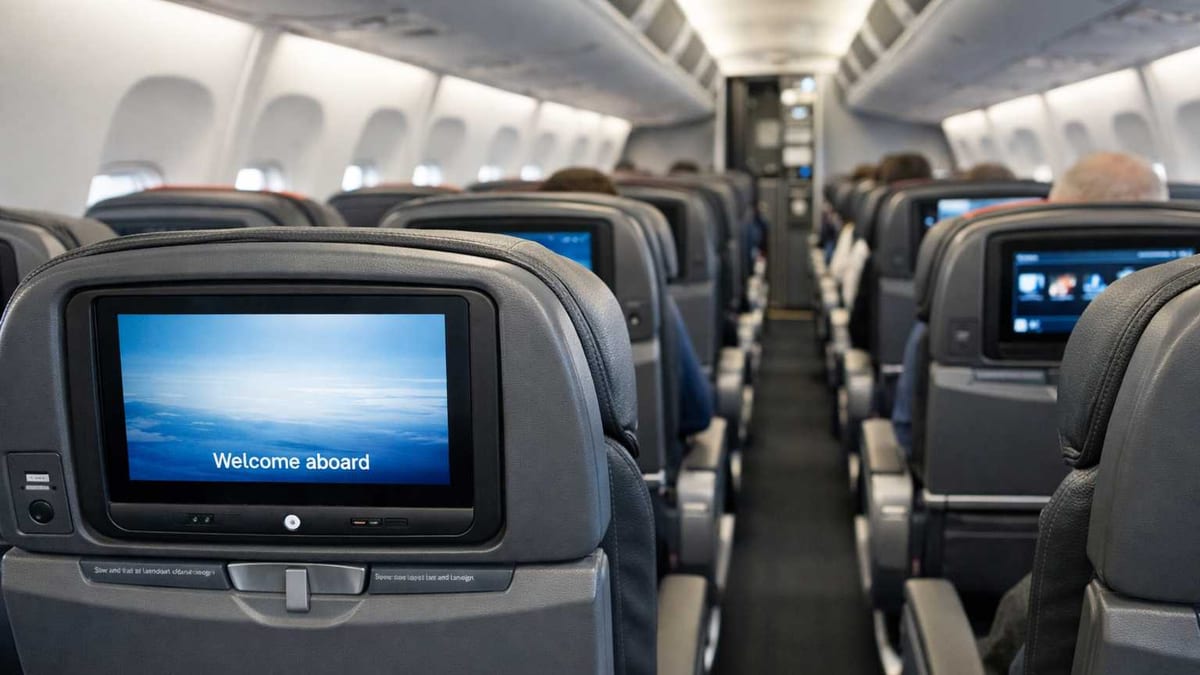
American Airlines is planning a sweeping overhaul of its domestic cabins, restoring seatback entertainment screens and adding more premium seating across much of its narrowbody fleet in a renewed push to court higher-spending travelers and lift profitability.
Get the latest news straight to your inbox!
Reversal after years of relying on personal devices
For much of the past decade, American has moved in the opposite direction of key rivals by removing individual screens from most domestic aircraft and steering customers to stream content on their own phones, tablets or laptops. Industry coverage has repeatedly highlighted that narrowbody jets such as the Boeing 737-800 and Airbus A319, once equipped with seatback entertainment in some configurations, were retrofitted with higher-density cabins and device holders instead of built-in displays.
Recent public information and internal communications summarized by aviation forums indicate that this strategy is now being revisited. A new cabin program, described in company-facing materials and widely discussed by employees, outlines plans for a “next-generation platform” of inflight entertainment with 4K seatback screens, Bluetooth connectivity for personal headphones, and USB-C power at every seat on future narrowbody deliveries and retrofits.
The shift would bring American closer to Delta Air Lines and United Airlines, which have spent years marketing onboard entertainment as a differentiating feature. Consumer reaction on traveler forums in recent months has frequently contrasted American’s bring-your-own-device approach with the more traditional model of built-in screens, often framing the lack of seatback entertainment as a symbol of cost-cutting.
Restoring screens across the narrowbody fleet is therefore being interpreted as both a competitive response and a signal that the carrier is prepared to reinvest in what customers can see and touch, after a period in which many upgrades were focused on less visible technology and network changes.
More first class and extra-legroom seats to drive revenue
Alongside the return of seatback entertainment, American is preparing to increase the share of higher-yield seats on a range of single-aisle aircraft. Publicly available fleet planning documents and reporting from aviation-focused outlets describe upcoming Boeing 737 MAX deliveries featuring larger first class cabins, as well as Airbus A321neo and other narrowbodies gaining additional first class and extra-legroom rows in new layouts.
Customer-facing communications about recent refits have already emphasized Main Cabin Extra, the airline’s extra-legroom economy product, as a revenue and loyalty lever. Travelers posting seat maps and trip reports have noted that new configurations on some aircraft types include more rows of these seats, which come with early boarding, extra legroom and complimentary drinks on many routes.
By expanding premium and extra-legroom capacity rather than standard economy, American appears to be following a broader industry playbook. Airlines have found that demand for more space and better amenities has held up even when leisure budgets are under pressure, and that corporate travel buyers often prioritize consistent access to extra-legroom and first class seating for frequent travelers.
Analysts tracking U.S. carriers have repeatedly pointed to premium revenue as a critical support for margins, particularly on constrained routes from major hubs. A cabin plan that combines more premium seating with a refreshed entertainment and power offering is seen as a way to justify higher fares and strengthen the airline’s appeal to both business travelers and high-spend leisure customers.
New inflight tech aimed at closing the competitive gap
American has already detailed parts of its next-generation onboard experience in earlier announcements tied to widebody deliveries and long-haul products, including new Flagship Suite seats and upgraded premium economy cabins. Those plans referenced 4K seatback screens, Bluetooth pairing, and enhanced power options on future Boeing 787-9, 777-300 and Airbus A321XLR aircraft, signaling the technology direction even before the latest narrowbody-focused moves.
Extending similar hardware and software to domestic fleets would create a more unified experience for travelers who connect between long-haul and short-haul flights. Industry observers note that inconsistency in entertainment and seating across aircraft types has been a common frustration for frequent flyers, particularly when premium cabins on one leg of a trip are followed by older interiors with limited amenities on the next.
American has also been exploring faster onboard connectivity, with industry reports earlier this year highlighting talks with satellite internet providers to upgrade Wi-Fi performance. Combining improved connectivity with modern seatback systems would allow the airline to offer features such as personalized recommendations, richer moving maps, and synchronized content across devices, aligning it with innovations already visible at some competitors.
While streaming to personal devices is expected to remain available, the addition of dedicated screens gives customers more choice. Travelers who prefer to keep phones charged, share entertainment with children, or simply avoid handling a device for hours at a time are likely to see the change as an upgrade, according to sentiment expressed on frequent flyer forums reacting to the news.
Timeline and implementation across the fleet
Documents referenced in employee communications and summarized by aviation reporters suggest that the full rollout of new narrowbody interiors will be a long-term project rather than an immediate transformation. Newly delivered aircraft from Boeing and Airbus are expected to arrive with the updated cabins starting around 2028, while selected existing jets will be retrofitted over several years, depending on maintenance schedules and fleet priorities.
American operates one of the largest narrowbody fleets in the world, and retrofitting each aircraft with seatback screens, new seats and updated power systems represents a complex logistical and financial undertaking. Work is typically carried out during heavy maintenance checks, when aircraft are already out of service, to minimize disruptions to schedules.
Fleet watchers note that the airline has only recently completed earlier retrofit programs on certain Airbus A319 and A320 aircraft that removed older screens, added more seats and installed device holders. The prospect of reversing course and installing new-generation entertainment hardware underscores how quickly competitive and customer expectations can shift in the U.S. domestic market.
Even with an extended timeline, American’s public positioning of the program as a fleetwide transformation sets an expectation that customers will gradually see more aircraft with the new interiors on key routes in the coming years, particularly from its largest hubs.
Customer reaction highlights shifting expectations
Initial reaction from travelers and aviation enthusiasts, expressed across online communities and social platforms, has largely framed American’s move as catching up with peers. Many frequent flyers have argued that while bring-your-own-device streaming is useful, it should complement rather than replace seatback systems, particularly on longer domestic flights and in premium cabins.
Discussion threads that circulated widely on the day of the announcement pointed out that passengers have continued to compare American’s cabins with those of Delta and United, where screens are now seen as part of the standard offering on much of the mainline fleet. Comments also highlighted practical considerations such as conserving phone battery life, ease of viewing for families, and the convenience of built-in moving maps.
At the same time, some travelers have questioned whether the cost of installing and maintaining thousands of screens might ultimately be reflected in higher fares or tighter seating in other parts of the cabin. Others argue that investment in basic comfort, reliable operations and transparent pricing should remain the top priority, even as airlines compete on technology and onboard amenities.
For American, the decision to restore seatback entertainment while expanding premium seating illustrates how central the onboard product has become in the race for profitable growth. As the new cabins begin flying later this decade, passenger response and revenue performance will show whether reversing earlier cuts to visible amenities can deliver the financial and competitive gains the airline is seeking.