


More news on this day
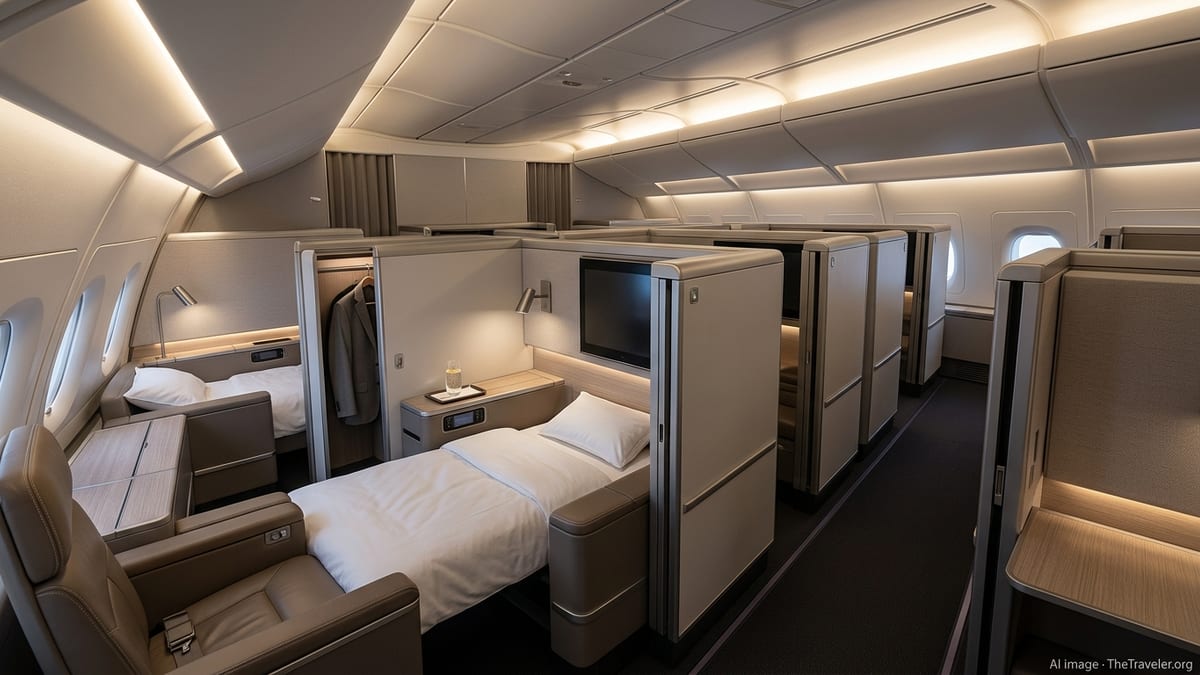
American Airlines is launching a major overhaul of its domestic cabins, planning to increase the share of premium seating across its narrowbody fleet from roughly one quarter to about 40 percent as it chases higher-yield revenue and responds to growing demand from frequent flyers willing to pay more for extra space and amenities.
Get the latest news straight to your inbox!
A Strategic Shift Toward High-Yield Travelers
The move to expand premium seating reflects a broader strategy at American Airlines to prioritize revenue from customers who purchase higher-fare products, including domestic first class, extra-legroom economy and, on select routes, premium economy style seating. Publicly available investor presentations in early 2026 highlight a company-wide effort to grow premium capacity at roughly twice the rate of main cabin seats, particularly on aircraft serving key hubs and high-demand business markets.
By increasing premium seating from about 25 percent to around 40 percent of its narrowbody capacity, American is aligning its domestic product more closely with rivals that have long leaned into premium-heavy configurations. Industry coverage over the past year points to similar strategies at Delta Air Lines and United Airlines, which have added more extra-legroom and domestic first class seats to capture passengers who are willing to pay a surcharge for comfort and flexibility.
For American, the reconfiguration is also a way to reduce reliance on last-minute discounting in the back of the aircraft. A larger premium cabin gives the airline more inventory to sell to corporate accounts, small business travelers and high-status loyalty members who increasingly expect consistent access to upgraded seating across the network.
How Cabins Will Change on Key Narrowbody Types
The narrowbody transformation is expected to center on the workhorse Airbus A319 and A320 families and the Boeing 737 fleet, which together operate thousands of daily domestic and short-haul international flights. Earlier planning documents and investor slides have already flagged significant premium growth on the A319 and A320, with some layouts adding rows of first class and expanding extra-legroom sections near the front of the cabin.
On the Boeing 737-800 and 737 MAX 8, American is widely expected to rebalance the current layouts that were optimized for maximum main cabin density. Industry watchers have noted that the airline’s earlier high-density “Oasis” configuration favored seat count over comfort, sparking criticism from some travelers. The new initiative to lift premium share to about 40 percent suggests a partial reversal of that approach, with more seats in the front of the aircraft and a larger block of extra-legroom seating in the first few rows of economy.
While detailed seat maps have not been fully rolled out across all fleets, aviation analysts anticipate that some aircraft will see a modest reduction in total seat count as premium rows are added. That tradeoff is often acceptable to airlines if higher fares and stronger loyalty from business travelers offset the loss of a handful of low-yield economy seats.
Integration With New Seatback Entertainment and Cabin Upgrades
The premium expansion comes alongside a separate, headline-grabbing decision by American to bring back seatback entertainment screens across much of its narrowbody fleet. Recent coverage and enthusiast reports indicate that the airline is undertaking a sweeping retrofit program that will install modern in-seat systems while refreshing cabins with new lighting, power outlets and redesigned seating.
Pairing a larger premium cabin with upgraded entertainment supports American’s stated goal of offering a more consistent experience, regardless of whether passengers are flying domestically or on long-haul routes. For higher-paying customers at the front of the aircraft, refreshed seats combined with gate-to-gate access to movies, series and live programming add to the perceived value of buying up from basic economy.
At the same time, the return of seatback screens in the main cabin may soften the impact of reducing a few standard economy rows in favor of more premium capacity. Even travelers who remain in regular coach will encounter a visibly upgraded onboard environment, which American hopes will improve satisfaction scores and make the airline more competitive against carriers that already offer similar amenities.
Implications for Frequent Flyers and Upgrade Dynamics
For members of American’s AAdvantage program, a larger premium share across narrowbodies is likely to bring mixed effects. On one hand, more first class and extra-legroom seats could translate into additional opportunities for mileage or loyalty point redemptions and, on some flights, a higher number of complimentary or paid upgrades cleared in advance.
On the other hand, airlines increasingly aim to sell as many premium seats as possible rather than give them away. Industry discussion suggests that as cabins grow, American will continue to focus on monetizing premium seats through advance purchase fares, post-booking buy-ups and targeted offers, particularly on routes with strong corporate demand. That means elite travelers may see more upgrade inventory overall, but they may also face more competition from customers paying to move forward in the cabin.
Travelers who value comfort but are price sensitive could benefit from an expanded middle tier of extra-legroom economy, which often carries a smaller surcharge than full domestic first class. With more of these seats spread across rows near the front and exits, American is positioning this product as a flexible option for both leisure travelers willing to splurge and business travelers whose companies restrict premium cabin spending.
Competitive Pressures in the North American Market
American’s decision to push premium seating to about 40 percent of its narrowbody fleet also reflects competitive pressure across the North American airline landscape. Over the past several years, Delta and United have emphasized premium revenue in their financial commentary, frequently highlighting the outperformance of first class, premium economy and extra-legroom products compared with standard economy.
Reports on investor presentations from American in 2025 and 2026 show the carrier adopting similar language, signaling that premium cabins are central to its long-term profitability plan. Growing lie-flat and premium economy seats across the international fleet, while simultaneously expanding premium share on domestic narrowbodies, is framed as a way to win high-value travelers in major metropolitan areas and hub markets.
The strategy also positions American to better compete on routes where low-cost and ultra-low-cost carriers have aggressively targeted price-sensitive leisure demand. By leaning into premium differentiation, American can focus on segments less exposed to bare-bones competition and reinforce its image as a full-service carrier offering a range of comfort levels, from basic economy to top-tier suites. For travelers, the shift means that on more domestic flights, the front of the cabin will look and feel more premium, and a larger portion of the plane will be dedicated to those willing to pay extra for space, service and amenities.