


More news on this day
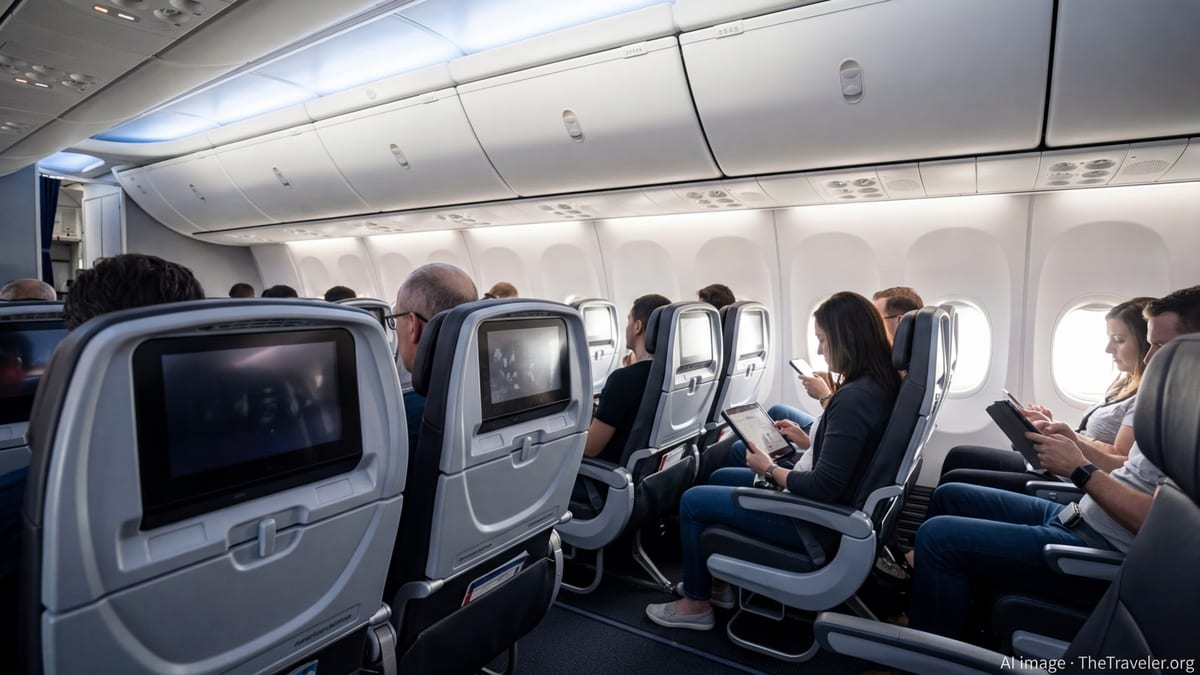
American Airlines is reinstating seatback entertainment screens across its narrowbody fleet starting in 2028, reversing a years-long strategy that favored streaming to passengers’ personal devices and signaling a renewed focus on premium onboard amenities.
Get the latest news straight to your inbox!
A Strategic Reversal In The Battle For Passengers
Publicly available information shows that American Airlines plans to equip every seat on its narrowbody aircraft with new seatback screens, after spending much of the past decade removing built-in monitors in favor of a bring-your-own-device model. The move aligns the carrier more closely with rivals that have leaned on in-seat entertainment as a visible marker of a full-service product.
The decision follows a period in which American became an outlier among the largest United States airlines, with most domestic narrowbody jets offering only streaming entertainment via onboard Wi-Fi and passengers’ phones or tablets. Industry coverage indicates that the lack of seatback screens had become a common point of criticism in customer feedback and on social media, particularly when travelers compared American with competitors on similar routes.
The new strategy reflects a recognition that screens are not just about content libraries, but also about brand perception. Aviation analysts writing in trade outlets have noted that personal-device streaming may be functionally similar, yet travelers frequently view built-in screens as a sign of a more premium, long-haul style experience, especially on cross-country flights and high-yield leisure routes.
What The New Seatback Systems Will Include
According to recent corporate materials and media reports, American’s upcoming seatback systems are being positioned as a significant technological step forward from older, bulkier inflight entertainment hardware. The airline is highlighting large-format 4K-resolution displays, Bluetooth connectivity for wireless headphones, and USB-C power at each seat, features that bring the cabin experience closer to modern consumer electronics standards.
The systems are expected to offer expanded content options, including movies, television series, music, and interactive moving maps. Reporting based on company announcements suggests a more personalized interface, with recommendations tailored to traveler preferences and real-time flight information available directly on the screen. Such capabilities mirror broader industry trends, as airlines look to emulate the curated, app-driven environments passengers are accustomed to at home.
Beyond entertainment, the screens are likely to serve as a digital platform for onboard messaging, ancillary sales, and service information. Industry observers point out that airlines increasingly use seatback interfaces to promote food and beverage offerings, loyalty-program benefits, and co-branded credit cards, which can help offset the cost of installation and maintenance over the life of the aircraft.
Timeline, Fleet Impact, And Cabin Layout Changes
American’s new seatback rollout will begin with future deliveries of Boeing 737 MAX 10 and Airbus A321neo aircraft from 2028, with plans to retrofit much of the existing narrowbody fleet over time. Narrowbody types such as 737 variants and A321 family aircraft serve the bulk of the carrier’s domestic and short-haul international network, so the program represents a substantial multi-year investment in hardware and cabin modification.
Published fleet plans indicate that the entertainment upgrade is part of a broader interior refresh. American is pairing the new screens with additional premium seating, including more First Class and Main Cabin Extra seats on many narrowbody jets. That configuration strategy mirrors initiatives at other major U.S. carriers, which have increased higher-yield seating while maintaining overall capacity through denser layouts elsewhere in the cabin.
Retrofitting existing aircraft will require careful scheduling, as aircraft are temporarily removed from service for cabin work. Industry reporting suggests that changes to monuments, wiring, seat structures, and power supply are all involved when adding modern seatback systems to aircraft that previously relied solely on personal-device streaming. As a result, passengers will see a mixture of older and newly reconfigured cabins for several years after the first installations begin.
From BYOD Back To Built-In: Why American Changed Course
American’s earlier decision to remove seatback screens rested on a series of assumptions that were widely shared in the industry at the time. Airline executives publicly argued that most travelers already carried smartphones, tablets, or laptops, making dedicated screens redundant. Eliminating heavy, maintenance-intensive equipment was seen as a way to reduce fuel burn, free up under-seat space, and simplify cabin design.
However, as more airlines upgraded onboard Wi-Fi and leaned into inflight entertainment as a differentiator, the trade-offs became more visible. Travelers who did not want to drain their own devices’ batteries, or who preferred a larger, fixed screen for long flights, increasingly voiced dissatisfaction with a streaming-only approach. Social media discussions and forum posts over recent years frequently singled out American’s lack of seatback screens as a reason to favor other carriers on routes where alternatives existed.
At the same time, improvements in seatback technology reduced some of the earlier drawbacks. Newer systems consolidate computing hardware behind the display, lowering weight compared with first-generation in-seat entertainment and simplifying maintenance. The integration of Bluetooth and high-output USB-C power further addresses passenger concerns about cables, adapters, and battery levels, making built-in systems more complementary to personal devices rather than a replacement for them.
Competitive And Customer Implications
From a competitive standpoint, the decision narrows a key gap between American and its two largest rivals in the U.S. market. Delta Air Lines has long promoted its near-fleetwide seatback entertainment on mainline aircraft, while United Airlines has been in the midst of a multiyear retrofit program that adds screens and larger overhead bins to its narrowbody jets. With American now committing to similar hardware, differences among the three will increasingly center on content quality, connectivity performance, and overall service delivery.
For passengers, the eventual result is likely to be more choice in how to pass the time in flight. Travelers can still rely on their own devices for downloaded content or work, but they will once again have access to a dedicated screen for movies, television, and maps without the need for stands or mounts. Families and infrequent flyers, in particular, may find the simplicity of a built-in system appealing, especially on longer domestic legs and holiday travel routes.
Industry commentary suggests that American’s reversal also underscores a broader lesson about visible versus invisible product investments. High-speed Wi-Fi, upgraded streaming portals, and backend technology are crucial but difficult for passengers to notice at a glance. By contrast, a large, bright screen at every seat is an immediate and tangible symbol of an airline’s investment in comfort and amenities. As American embarks on its multi-year rollout, that symbolism may prove as important as the programming itself in shaping how travelers perceive the carrier’s onboard experience.