


More news on this day
American Airlines is preparing a sweeping upgrade of its cabins, detailing plans to bring seatback entertainment back to its narrowbody fleet while adding more premium seats and refreshed interiors across both new and existing aircraft.
Get the latest news straight to your inbox!
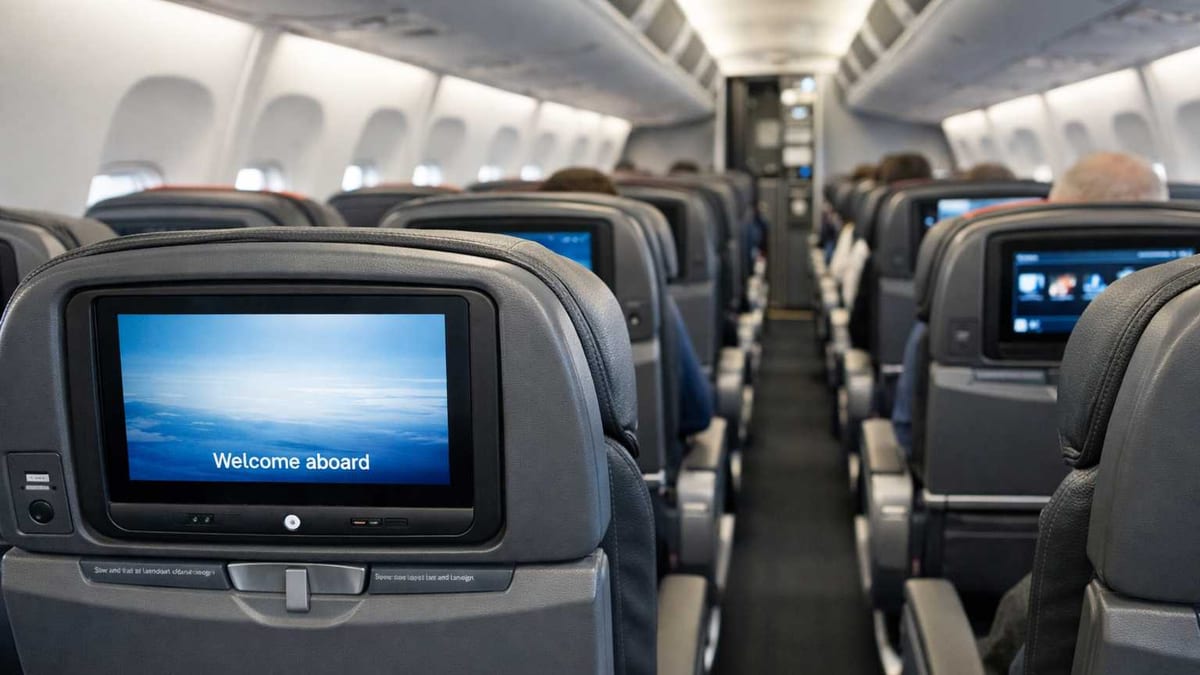
Reversing course on seatback entertainment
After years of steering customers toward streaming content on personal devices, American Airlines is now signaling a return to traditional in-seat entertainment on a large portion of its future narrowbody fleet. Publicly available information and investor materials indicate that beginning in the late 2020s, new Airbus and Boeing narrowbody deliveries are being planned with 4K seatback screens at every seat, paired with Bluetooth audio connectivity and USB-C power.
The move marks a notable strategic pivot. American had previously removed or omitted seatback screens from many domestic aircraft in favor of high speed Wi Fi and bring your own device streaming, a decision that drew unfavorable comparisons with competitors that continued to invest heavily in embedded in flight entertainment. Recent product descriptions suggest the airline now intends to position the new screens as part of a more premium, technology focused onboard experience rather than a standalone amenity.
The planned narrowbody seatback systems are described in company materials as large format for the market, with 4K resolution and an expanded catalog of films, television and curated content. These upgrades align with what American has already started rolling out on new long haul aircraft, where customers in all cabins have access to individual seatback screens, power outlets and updated user interfaces.
Industry analysis notes that a full fleet rollout will take several years once installations begin, given the size of American’s narrowbody operation. The strategy appears designed to narrow the competitive gap with domestic rivals that already offer near universal seatback entertainment on mainline aircraft.
More premium seats across A319 and A320 fleets
Alongside its entertainment plans, American is pressing ahead with an aggressive expansion of premium seating, particularly on older Airbus A319 and A320 aircraft that remain central to its domestic and short haul international network. A recent American Airlines newsroom update describes retrofitted A319s and A320s entering service with refreshed cabins, additional premium rows and more Main Cabin Extra seating, while maintaining overall capacity suited to business heavy routes.
Reports indicate that the updated layouts increase the number of First Class and extra legroom seats, giving the airline greater flexibility to sell higher yielding inventory on routes with strong corporate and loyalty demand. Aviation industry coverage notes that these refits will help American offer more premium seats than key competitors on comparable domestic networks, particularly on flights under six hours where narrowbodies dominate.
The redesigned cabins also aim to deliver a more consistent look and feel with American’s latest widebody and long haul narrowbody aircraft. Descriptions of the new interiors reference updated finishes, redesigned sidewalls and enhanced storage, all of which are meant to signal a higher quality product even in standard economy. For frequent flyers, the additional premium capacity may also translate into improved upgrade availability on select routes, depending on demand and revenue management decisions.
Analysts observing the retrofit program suggest that the focus on premium density reflects a broader trend across major U.S. airlines, which are seeking to maximize revenue per flight by increasing the share of seats that command higher fares. American’s use of its A319 and A320 fleets as test beds for this strategy underscores how central these workhorse aircraft remain to its network.
Cabin refreshes build on long haul Flagship Suite rollout
The narrowbody initiatives are unfolding in parallel with a broader reconfiguration of American’s long haul fleet. The airline has already begun introducing its next generation Flagship Suite premium cabins on new Boeing 787 9 deliveries, with fully enclosed suites, direct aisle access at every seat and upgraded privacy features for business class travelers. Public information shows that these aircraft also feature redesigned premium economy seats, updated main cabin layouts and 4K seatback screens throughout.
American has outlined plans to extend this design language across additional widebodies over the coming years, including retrofits that will expand the number of lie flat seats and premium economy positions on transoceanic routes. Investor presentations describe a goal of increasing total lie flat capacity by more than half by the end of the decade, largely through a combination of new deliveries and cabin upgrades to existing aircraft.
By aligning the aesthetic and technology of its widebody cabins with its upcoming narrowbody interior standard, American appears to be targeting a more seamless experience for frequent travelers who move between domestic and international networks. Features such as 4K in seat entertainment, modernized lighting, larger overhead bins and power at every seat are being used as core design elements across the fleet.
Industry commentators note that this strategy also allows American to phase out older premium products and configurations that had fallen behind leading competitors. As the new Flagship Suite cabins roll out, legacy first class offerings on some long haul aircraft are expected to be removed in favor of higher density, more modern business and premium economy cabins.
Connectivity, power and consistency as competitive levers
Beyond screens and seats, American is emphasizing connectivity and cabin consistency as central components of its refreshed onboard strategy. The airline has announced a major partnership to equip more than 500 narrowbody aircraft with next generation satellite based Wi Fi, targeting speeds and reliability suitable for streaming and real time communications across domestic and short haul international routes.
According to recent company announcements, the Starlink powered service is scheduled to begin rolling out in the second half of the decade, complementing existing high speed Wi Fi systems already installed across much of the fleet. At the same time, retrofit programs on both mainline and regional aircraft are adding power at every seat, including combinations of AC outlets and USB ports, to support device charging alongside any future seatback screens.
American has also highlighted its work to bring mainline comfort standards to regional flying, pairing refreshed interiors on larger regional jets with improved Wi Fi, power availability and enhanced snack offerings in premium cabins. These changes are intended to reduce the perceived gap between regional and mainline experiences, particularly on routes where American competes directly with carriers offering similar upgrades.
Analysts suggest that the coordinated focus on connectivity, entertainment and premium seating is a response to evolving customer expectations and intense competition on key domestic corridors. As rival airlines race to standardize seatback screens, high speed Wi Fi and more generous premium cabins, American’s latest raft of announcements signals a renewed effort to remain competitive on product rather than relying solely on schedule and network breadth.
Implications for travelers over the rest of the decade
For travelers, the most immediate visible changes will likely come from the ongoing retrofits of A319 and A320 aircraft, which are already entering service with more premium seating, refreshed interiors and expanded Main Cabin Extra sections. Customers on select routes should begin to notice these updated cabins during 2026, particularly from hubs where Airbus narrowbodies operate heavily.
The more transformational elements, including fleetwide seatback entertainment on narrowbodies and next generation satellite Wi Fi on hundreds of aircraft, will take longer to materialize. Based on public timelines, those enhancements are expected to ramp up closer to the late 2020s as new aircraft are delivered and retrofit slots open in maintenance schedules. During this period, travelers can expect a mixed experience, with some aircraft offering the full new package and others still relying on existing bring your own device setups.
Frequent flyers focused on premium cabins will likely see the greatest change on long haul routes, where the new Flagship Suite business class and refreshed premium economy seats are gradually replacing older configurations. This shift is expected to be particularly noticeable on transatlantic and South America services operated by the newest Boeing 787 9 aircraft and, over time, on additional widebodies as they are retrofitted.
While exact timelines and aircraft assignments may evolve, the overall direction for American Airlines is clear: more premium seats, more embedded technology and a stronger emphasis on a consistent experience regardless of aircraft type. For a carrier that previously drew criticism for removing screens and trimming cabin comforts, the latest wave of announcements represents a significant recalibration of its onboard strategy.