


Las Olas Beach in Fort Lauderdale is one of South Florida’s most popular stretches of sand, which means parking can be either pleasantly straightforward or extremely frustrating, depending on when and how you arrive. This guide walks you through real-world options around the Las Olas Garage and nearby beach parking, how the pay-by-phone system actually works on the ground, and strategies locals use to avoid tickets, towing and gridlock on busy weekends and event days.
Get the latest updates straight to your inbox!
Understanding the Las Olas Beach Layout Before You Park
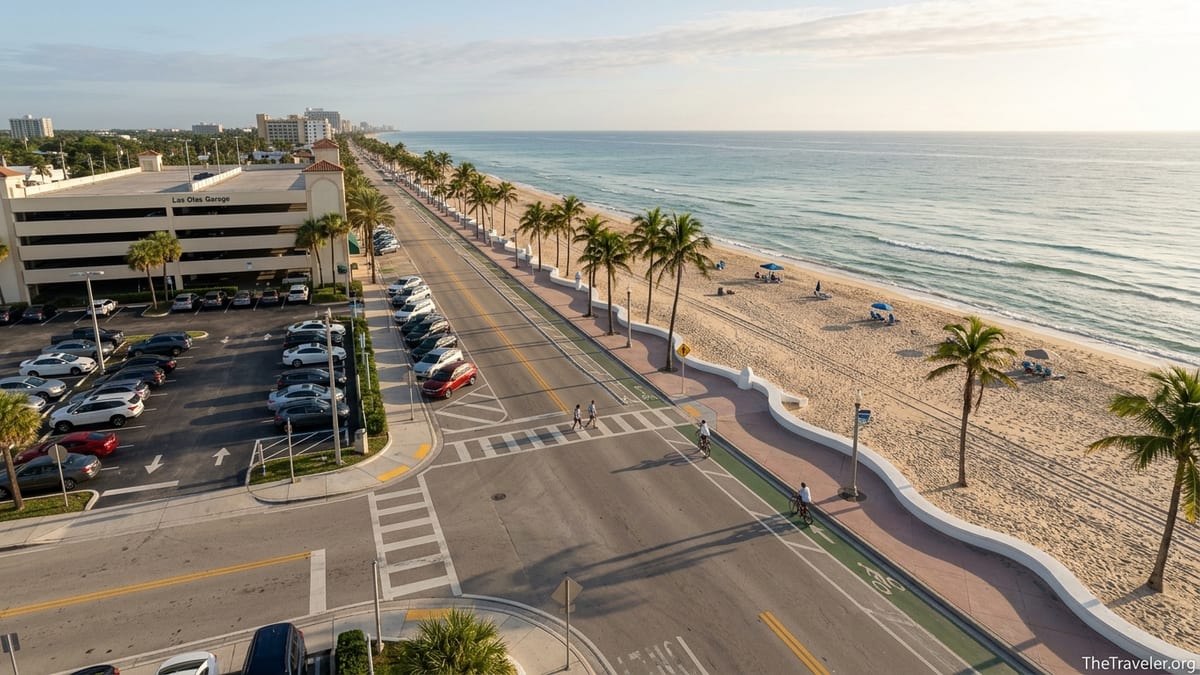
Las Olas Boulevard runs east–west from downtown Fort Lauderdale to the beach, where it meets State Road A1A at Las Olas Oceanside Park and the sand just across the street. The main beach parking cluster for visitors is concentrated around this intersection. On the west side of A1A, you have the large Las Olas Garage set slightly back from the water, while along A1A itself there are lines of metered spaces and a couple of surface lots as you head north and south toward Fort Lauderdale Beach Park and the Elbo Room corner.
First-time visitors are often surprised at how compact the beachfront area feels once you arrive. From the Las Olas Garage, it is typically a 3 to 5 minute walk to the sand, depending on which level you park on, and only a bit farther to reach most restaurants and bars along Fort Lauderdale Beach Boulevard. If you end up in one of the southern lots near Fort Lauderdale Beach Park, you are still within a 10 to 12 minute walk of the Las Olas intersection, but you should factor this into your timing if you are carrying beach gear or traveling with kids.
Most public parking around Las Olas Beach is controlled or influenced by the City of Fort Lauderdale. That means a mix of city-run garages, lots and on-street spaces, all with posted hours and rates. Private lots are sprinkled in between, often closer to bars or smaller hotels, and these may charge flat event-style rates or use a separate payment system. Treat every lot and curb as its own set of rules: check the payment signs, maximum stay limits and towing warnings before you lock the car and head to the water.
Las Olas Garage: Your Most Reliable Beach Base
The Las Olas Garage, located just off A1A near Las Olas Circle, is the workhorse facility for this part of the beach. It was built specifically to handle beach crowds and typically offers several hundred spaces spread across multiple levels, with elevators and pedestrian exits leading you toward the beachfront promenade. For many drivers, this is the first and only place they try, because it removes the uncertainty of cruising for an open meter.
Rates at the Las Olas Garage are generally hourly on regular days, with prices that are competitive with, and sometimes slightly higher than, on-street meters. While exact numbers can change, visitors regularly report paying a moderate hourly fee that adds up to a reasonable total for a half day or evening at the beach. Payment is handled by pay stations or integrated meters, and in some cases transactions are tied into the same system used for street parking, allowing you to track or extend time via your phone instead of returning to the car.
The garage frequently switches to a flat event rate on major holidays and festival days. For example, for the Great American Beach Party and similar waterfront celebrations, the city has advertised flat event parking at Las Olas Garage and nearby lots until midnight. In practice, that might look like a single charge in the mid-twenties for the entire day, which can be cost-effective if you plan to arrive late morning and stay through fireworks or evening concerts. It does mean, however, that casual beachgoers popping in for only an hour or two may pay more than they would on a normal afternoon.
Because the entrance is off the main flow of A1A, backups into the garage are common during late morning on sunny winter weekends and during spring break. A realistic plan is to arrive before about 10:00 a.m. on Saturdays and Sundays in peak season if you want a shot at an easy spot without circling multiple levels. In summer, when afternoon thunderstorms are common and crowds are somewhat lighter, arriving closer to midday can still work, but you should allow extra time when big beach events or hotel conferences overlap with good weather.
Beachfront Lots and On-Street Parking Along A1A
Beyond the Las Olas Garage, you have two main public options: surface parking lots and metered curbside spaces. Surface lots include Fort Lauderdale Beach Park to the south and the North Beach Parking Lot farther up A1A, both of which the city has used for flat event rates on busy holiday weekends. On routine days, these lots usually charge by the hour with posted maximums, and they are popular with families because unloading beach chairs, coolers and umbrellas is easier than navigating a parking garage elevator.
On-street parking lines both sides of A1A in stretches from near Las Olas down toward Seabreeze Boulevard and north toward Sunrise Boulevard. These spaces are typically metered or pay-by-plate, with clear signs indicating the zone number and maximum time. Many visitors prefer these curbside spaces because they are directly across from the sand, but turnover is high and vacancies disappear quickly on pleasant Friday afternoons and weekends. Drivers often slowly cruise the strip hoping to catch someone pulling out, which adds to congestion and can test your patience after a long drive in from I-95 or the airport.
Expect parking enforcement to be active along the beach. Local drivers share frequent stories of tickets issued within minutes of meters expiring, especially near busy intersections, popular bars and crosswalks. In one common scenario, a visitor pays for two hours of parking at a beachside meter, loses track of time over a long lunch on Las Olas Boulevard, and returns to find a citation on the windshield for only a small overstay. The lesson is simple: once you park, set a phone alarm or use the parking app’s notifications so you are not relying on memory.
When choosing between a beachfront lot and on-street parking, consider your plans. If you intend to bounce between the beach, a waterfront bar and a restaurant along Las Olas, a central location near the Las Olas intersection keeps walking distances short in multiple directions. If your day is mostly sand and sea with kids, a southern lot at Fort Lauderdale Beach Park, closer to playgrounds and picnic areas, may be more convenient, even if that means a slightly longer walk back to Las Olas later in the evening.
How Pay-by-Phone Parking Actually Works Here
Fort Lauderdale uses a mobile payment system for most city-controlled parking, allowing you to start and extend parking sessions from your smartphone. The official partner is PayByPhone, which operates across downtown, the beach and the Las Olas corridor. When you park in a metered spot or city lot, you will typically see a green or white sign with a location code and clear instructions to use the app, call a phone number, or in some cases pay at a nearby machine that still syncs to the mobile system.
In practice, most regular visitors download the app ahead of time and create an account with their license plate and a credit or debit card. Once parked, you enter the location code printed on the sign, select how long you want to stay, and confirm payment. The app then shows your remaining time and often sends a push notification as your session nears expiration, so you can add more time remotely without leaving your towel or dinner table. This is especially useful if you are having a relaxed meal at a Las Olas sidewalk café or get delayed while waiting for a table at a popular beach bar.
One practical detail that catches visitors by surprise is that the app does not always allow unlimited extensions. In some zones, once you reach the posted maximum stay, you must move the car, even if there are still open spaces. This rule is designed to keep prime beachfront spots from being occupied by the same vehicles all day. Ignoring it and simply starting a new session on the app can still result in a ticket if enforcement officers see that your car has overstayed the maximum allowed time in that specific zone.
Because enforcement in the Las Olas area is largely license-plate based, you do not always need to display a paper receipt in your windshield, but you must be sure the plate number in the app matches the plate on the car. If you are driving a rental car or borrowing a friend’s vehicle, double-check that you have added the correct plate before confirming payment. Some drivers have learned this the hard way, paying for parking on the wrong plate and coming back to find a citation even though they thought they were covered.
Timing Your Arrival and Dealing With Peak Crowds
The same beach can feel easy and relaxed or chaotic and stressful depending on when you arrive. On a typical weekday outside of major holidays, mornings and early afternoons see steady but manageable traffic, and you can often find a spot in the Las Olas Garage or along A1A without too much circling. By contrast, sunny Saturdays between December and April, school breaks, and long holiday weekends can push the area to its limits, with garages filling, lots switching to event rates and on-street spaces turning over constantly.
If you are driving, the single most effective strategy is to arrive earlier than you think you need to. In winter high season, arriving at Las Olas Beach before 9:30 or 10:00 a.m. on weekends gives you the best shot at a straightforward garage space, particularly if you want to park in Las Olas Garage and not risk having to push farther south or north. In shoulder seasons or summer, you might be comfortable arriving closer to 11:00 a.m., but still add a buffer for unexpected events or pop-up storms that briefly clear the beach and then draw crowds back out when the sky clears.
Late afternoon and early evening bring a different pattern. Beachgoers who arrived early start to leave between 3:00 and 5:00 p.m., opening up some spaces, while dinner and bar crowds begin to filter in. If your plan is purely evening drinks or a beachfront dinner near the Las Olas intersection, you may benefit from arriving around 5:30 or 6:00 p.m., when daytime visitors are exiting and before night spots are at full capacity. However, on nights with major events, concerts at Las Olas Oceanside Park, or fireworks along the beach, arrivals even this early can still mean long queues into the garage and limited on-street availability.
Weather is another factor. Short, intense showers are common on summer afternoons. Locals often wait out a storm at home and then drive to the beach once the rain stops and temperatures drop slightly. If your timing coincides with that post-rain rush, you might find traffic unexpectedly heavy even on a weekday. Checking radar and being flexible about slightly earlier or later arrivals can help you miss these mini-surges and park without rushing or frustration.
Special Events, Holidays and Surprise Parking Squeezes
Las Olas Beach is a hub for citywide celebrations, from the Great American Beach Party and the Fourth of July Spectacular to seasonal events like Light Up the Beach and outdoor concerts at Las Olas Oceanside Park. On these days, the city often sets special parking policies, including flat “event rates” in key facilities such as Las Olas Garage, Fort Lauderdale Beach Park and the North Beach Parking Lot, as well as higher-than-usual rates at some on-street spaces near the waterfront.
Event rates are usually posted in advance on city channels and at the entrance to garages and lots. A common pattern is a one-time event fee that is honored until midnight, regardless of how early you arrive. For a family spending the entire day at the beach and staying for fireworks or an evening show, this can be good value compared with hourly charges. For a couple dropping in for just a sunset walk, the same fee may feel steep. When you see attendants at the garage entrance collecting a flat rate instead of tickets or standard hourly instructions, assume you are on an event-day schedule and factor that into your budget.
Large regional events that are not strictly “beach festivals” can still affect Las Olas Beach parking. The Fort Lauderdale International Boat Show, which takes over major marinas and waterfront spaces each fall, often triggers special parking arrangements and increased demand around the beach for several days at a time. Likewise, big sports events, air shows and music festivals elsewhere along the coast can push visitors to seek secondary viewpoints from the Las Olas shoreline, quietly filling up spaces that look spare on the official event maps.
On these busier days, it is wise to have a backup plan before you even leave your hotel or rental. If your first choice is Las Olas Garage, identify a second option, such as Fort Lauderdale Beach Park’s lot or a city garage farther inland with a short rideshare connection to the beach. That way, if a police officer is already directing traffic away from the full garage entrance when you arrive, you are not scrambling to make decisions while weaving through festival crowds and temporary lane closures.
Private Lots, Hotel Garages and Common Pitfalls
In addition to city facilities, the area around Las Olas Beach has several privately operated lots and hotel garages. Some of these are clearly signed and available to non-guests for an hourly or flat fee, especially at smaller hotels or mixed-use buildings that want to monetize extra spaces. Others are reserved primarily for guests or retail patrons, with shorter time limits, validation requirements or towing policies if you leave the property to spend the day at the beach.
A common mistake visitors make is to treat every open lot near the beach as interchangeable. Pulling into a small paved area next to a bar or shop, paying a kiosk or attendant, and then walking away for several hours can be risky if small print on the sign specifies “patrons only” or limits your stay to a couple of hours. In worst cases, vehicles are towed when operators or property owners notice drivers heading straight to the sand rather than into the adjacent business. When in doubt, choose a clearly marked public lot or city-run garage, especially if you are planning to spend most of the day away from the car.
Payment methods in these private lots also vary. Some rely on their own QR-code systems or text-based payment platforms that are different from the city’s PayByPhone setup. If you regularly use PayByPhone for work or at home, it can be easy to assume it covers every space in view, but that is not always the case on the private side streets around Las Olas. Always follow the exact instructions printed on the nearest sign or kiosk. If the process feels unclear or if the lot looks poorly maintained with faded signage, it might be better to leave and seek a more transparent option rather than risk a ticket or tow.
Hotel garages close to the sand can be useful backups if public facilities are full, but they are usually priced at a premium. For example, a beachfront property may charge a daily or even hourly rate for non-guest parking that is significantly higher than city meters, justified by immediate beach access and security features like gated entry and cameras. If you only need a couple of hours and want maximum convenience near a specific resort restaurant or spa, that trade-off might be acceptable. For a full beach day, however, most travelers will find better value in city-run options a short walk away.
Should You Come to Las Olas Beach Without a Car?
Depending on where you are staying, you may not need a car at all to enjoy Las Olas Beach. Many hotels within the Central Beach neighborhood are within a 10 to 20 minute walk of the sand, and guests often choose to leave their vehicles parked in hotel garages and stroll or bike to the Las Olas intersection. For visitors staying downtown along the river or near the Broward Center, rideshare services and the city’s trolley options can provide an easy, car-free connection to the beach, particularly on weekends when traffic and parking are most intense.
Choosing not to drive can be especially smart on days when you expect to drink or stay out late. The bar and restaurant cluster at the south end of the strip near the historic Elbo Room, plus newer venues at Las Olas Oceanside Park, draw lively evening crowds. Instead of worrying about moving your car before a maximum stay limit expires or navigating late-night enforcement on side streets, taking a rideshare from your hotel or a downtown garage lets you enjoy the evening with fewer logistical concerns.
Public transportation options, though more limited than in major transit cities, still play a role. Broward County Transit operates bus routes that connect downtown Fort Lauderdale with the beach, including stops near the Las Olas area. While schedules may not be ideal for everyone, they offer a budget-friendly alternative for travelers without rental cars or for locals who prefer to avoid peak-weekend driving. Water-based services, such as the water taxi network, also give you a scenic approach to the beachfront, with stops near the International Swimming Hall of Fame and short walks to the sand.
Ultimately the decision to bring a car comes down to your itinerary. Families lugging strollers, coolers and multiple beach bags may still prefer the flexibility of a private vehicle, especially if they are coming from farther west in Broward County or neighboring cities. Solo travelers or couples staying in central locations, by contrast, often find that a combination of walking, rideshare and occasional transit rides gives them more freedom and costs less once parking fees, potential surcharges and ticket risks are factored in.
The Takeaway
Parking at Las Olas Beach does not have to be stressful if you arrive with a basic understanding of how the system works. The Las Olas Garage offers a reliable central base for both beach time and dining along the boulevard, while a network of surface lots and on-street meters fills in the gaps for visitors who prefer the convenience of parking right across from the sand. The city’s reliance on the PayByPhone system means that your smartphone is as essential as your sunscreen when it comes to managing time limits and avoiding tickets.
Peak days, holidays and special events layer additional complexity onto this picture, with flat event rates, heavier enforcement and occasional road closures. Building in extra time, checking signage carefully and having a backup parking plan can turn what might have been a frantic search into a predictable start to your beach day. If you would rather skip the stress entirely, consider leaving the car at your hotel or a downtown garage and using rideshare, transit or water-based options to reach the shore.
Whether you are here for a quiet weekday morning swim, a family weekend under the palms or a full-scale holiday celebration with fireworks and concerts, thoughtful parking decisions will shape how your day begins and ends. Treat the Las Olas area not just as a destination but as a small, busy neighborhood with its own rhythms, and you will find that navigating its garages, meters and apps quickly becomes just another part of the Fort Lauderdale beach experience.
FAQ
Q1. How much does it typically cost to park at Las Olas Beach for a day?
On an average non-event day, most visitors can expect to pay a moderate hourly rate that adds up to a reasonable total for a half day or full day in city garages or lots, while special event days may use a flat fee that is higher but covers parking until late at night.
Q2. Is the Las Olas Garage usually the best first choice for parking?
For many drivers, yes. The Las Olas Garage is large, centrally located and operated by the city, which makes pricing and rules relatively clear compared with some smaller private lots, although it can fill up quickly on sunny weekends and holidays.
Q3. Do I really need the PayByPhone app to park near Las Olas Beach?
While some machines still accept card payments, the PayByPhone app is strongly recommended because many meters and lots are app-based and the service lets you start and extend sessions remotely, reducing the risk of overstay tickets.
Q4. How early should I arrive on busy weekends or during high season?
In winter and during school holidays, aiming to park before around 9:30 or 10:00 a.m. on Saturdays and Sundays gives you a much better chance of finding a space in the Las Olas Garage or along A1A without extended circling.
Q5. What happens to parking rates on holidays and big event days?
On major holidays and officially organized beach events, the city often switches key facilities such as the Las Olas Garage and nearby lots to flat event rates, which can be higher than normal hourly fees but typically cover parking for the entire day and evening.
Q6. Are private parking lots near the beach safe to use?
Many are legitimate, but rules vary widely. Always read signs carefully to see whether spaces are restricted to patrons, whether there are time limits and which payment system is used, and avoid poorly marked lots where towing policies are unclear.
Q7. Can I leave my car parked on the street all day?
Most on-street spaces near Las Olas Beach have maximum stay limits, even if you pay through the app, so you usually cannot legally occupy the same curbside spot from morning through late evening without moving your vehicle.
Q8. Is it easier to come to Las Olas Beach without a car?
For visitors staying nearby or downtown, skipping the car can simplify things considerably. Walking, rideshare, bus routes and water-based services are often enough, especially if you are not carrying heavy beach gear or traveling with small children.
Q9. How strict is parking enforcement around Las Olas Beach?
Enforcement is active and largely plate-based, particularly along A1A and close to popular intersections. Tickets for expired meters or overstays are common, so keeping an eye on your session time, using app alerts and respecting posted limits is important.
Q10. What should I do if the Las Olas Garage sign says “Full” when I arrive?
If the garage is full, continue moving with traffic and shift to your backup plan, such as trying a nearby city lot like Fort Lauderdale Beach Park or parking at an inland garage or hotel and using rideshare or transit to finish the trip to the beach.