


More news on this day
Passengers flying through Manchester Airport on 28 July 2026 are being urged to check their flight status before travelling, as a mix of weather, air traffic restrictions and earlier operational issues contribute to fresh delays and a limited number of cancellations across several routes.
Get the latest news straight to your inbox!
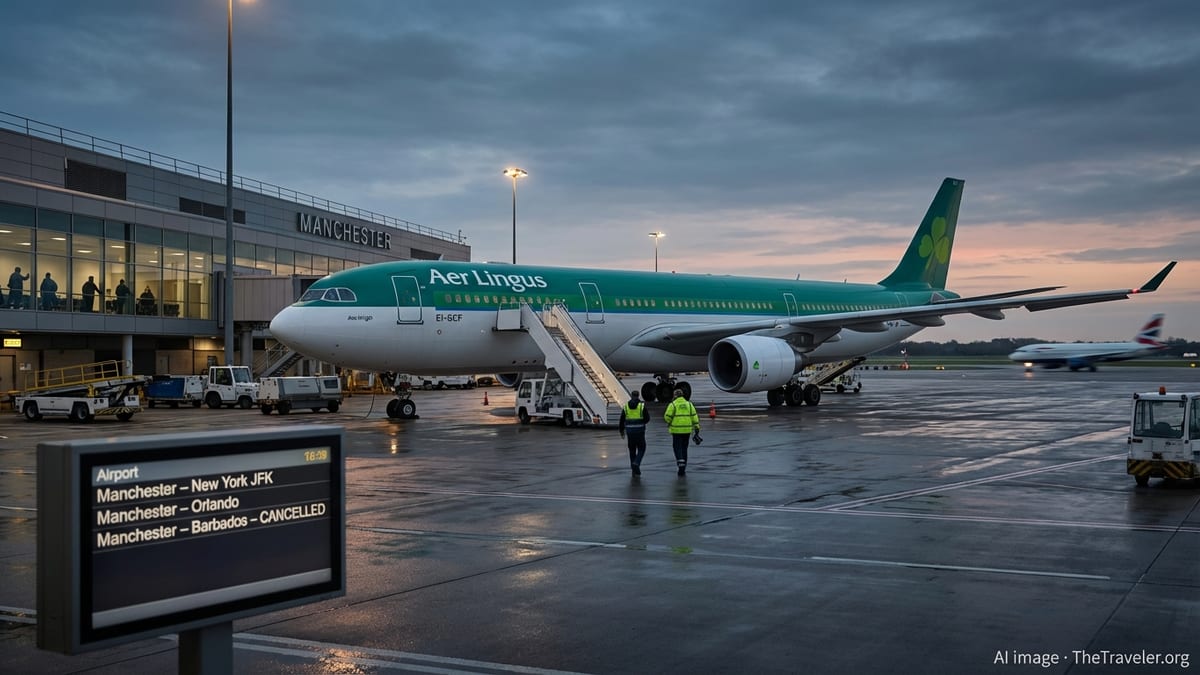
Delays build across key short-haul routes
Live departure boards on Tuesday morning show Manchester Airport operating a broadly normal schedule, but with growing pockets of disruption on busy European and domestic routes. Several early departures to major hubs such as Amsterdam, Paris and Frankfurt left behind schedule, with knock-on delays now affecting mid-morning and early afternoon waves of flights.
Data from independent flight-tracking dashboards indicates that average departure delays at Manchester over recent days have frequently reached around 20 to 30 minutes, with some peak periods seeing longer waits as traffic and weather combine to slow the schedule. While the majority of flights are still leaving within an hour of their planned times, the build-up of minor hold-ups is beginning to compress turnaround times for airlines.
Arrivals are experiencing similar conditions, with aircraft from southern Europe and the Mediterranean often placed into holding patterns when congestion or weather reduces the landing rate. This pattern appears consistent with broader network pressure in UK and European airspace, where traffic levels have risen sharply through the summer peak.
Travel analysts note that Manchester’s role as a major base for low-cost and leisure carriers makes it particularly exposed to tight aircraft rotations. When a single rotation runs late, subsequent services can also be affected, especially on high-frequency routes that rely on quick ground handling.
Weather and air traffic restrictions add pressure
Forecasts for Manchester Airport on Tuesday point to a day of changeable conditions, with cloud, showers and breezy spells passing through the North West. While not extreme, this type of unsettled weather can reduce capacity at busy times, forcing minor adjustments to arrival and departure rates and contributing to short delays.
Pilots and air traffic controllers also have to manage traffic flows through a complex section of UK airspace. Recent briefings and notices to airmen for the Manchester area highlight temporary restrictions and route changes linked to ongoing airspace management across northern England and the wider UK network. Although scheduled commercial flights to and from Manchester are typically exempt from the strictest elements of these restrictions, controllers may still need to meter traffic or introduce holding, adding a few minutes to many journeys.
European network reports from this spring have already identified Manchester as one of several airports where traffic growth, staffing and weather can combine to generate delay on busy days. That pattern is now playing out into the height of the summer season, with controllers balancing the need to maintain safety margins against strong demand for slots in and out of the airport.
For passengers, these operational realities translate into longer queues at gates and occasional last-minute gate changes. While the underlying causes lie largely in wider airspace management and weather, the visible impact is often concentrated in the departure lounge, where flights can appear ready to go but are held for clearance.
Security, knock-on disruption and recent incidents
Inside the terminal buildings, security and check-in operations are reported to be generally stable on Tuesday, a contrast to earlier summers when staffing shortages created very long queues. However, busy early-morning banks of departures can still see passengers facing slower progress through security when several full long-haul and leisure flights coincide.
Recent days have also brought isolated high-profile incidents that added further complexity to operations around Manchester. One widely reported episode involved a Qatar Airways Boeing 777 escorted to the airport by Royal Air Force jets after a communications issue, prompting temporary airspace management measures and minor disruption to nearby services. Separately, a hoax threat reported to national air traffic services late last week led to enhanced vigilance around certain flights bound for Manchester, though the affected aircraft landed safely.
Although such cases are rare, they illustrate how quickly routine schedules can be knocked off course by unexpected events in or near busy airspace. Even when safety is not compromised, investigations, runway inspections and additional checks can slow movements, in turn affecting departure slots for subsequent flights.
For travellers, the practical consequence is that apparently minor timetable changes may in fact reflect a more complex operational picture behind the scenes, involving coordination between airlines, the airport operator and national air traffic authorities.
Limited cancellations but continued strain on punctuality
Despite the challenges, the number of outright cancellations at Manchester Airport on Tuesday remains relatively low compared with peak disruption events seen in previous summers. Publicly available flight-status boards show only a small handful of services scrubbed from the schedule by mid-morning, mainly on shorter regional or European routes where airlines have some flexibility to consolidate passengers onto later flights.
However, the overall punctuality picture is far from perfect. Delay statistics compiled over the past fortnight indicate that the airport has regularly experienced average departure delays of more than 20 minutes on several days, with some spikes considerably higher during storms or peak traffic surges. These averages mask the reality that while many flights leave close to on time, others suffer more significant waits, particularly later in the day when earlier disruption has cascaded through aircraft rotations.
Industry correspondence from the UK Civil Aviation Authority in recent weeks has urged airlines and airports to plan conservatively for the summer season, highlighting the risk of cancellations if fuel supply, staffing or technical problems intersect with already tight schedules. Although no widespread Manchester-specific alert has been issued for today, the broader message underlines the fragility of on-time performance during periods of sustained demand.
Passengers booked on evening departures from Manchester on Tuesday may be particularly vulnerable to the cumulative effect of earlier hold-ups. Aviation analysts suggest that where possible, travellers with flexibility often fare better on early-morning flights, which start the day with aircraft and crews in position before delays have had time to build.
Advice for passengers using Manchester Airport today
Travel experts recommend that anyone flying from Manchester Airport on 28 July leaves extra time for their journey, particularly during the early-morning and late-afternoon peaks. With rail and road connections around the airport also susceptible to congestion and occasional disruption, allowing additional buffer time reduces the risk of missed check-in or security cut-offs.
Passengers are strongly advised to check the live status of their flight directly with their airline before setting out, and again once they are in the terminal. Many carriers provide real-time push notifications through their apps when departure times change, gates switch or flights move from delayed to cancelled, which can be faster than overhead announcements.
For those who do experience significant disruption, consumer advocates emphasise the importance of understanding rights under UK aviation regulations regarding care, rerouting and compensation. While not every delay or cancellation qualifies, cases linked to airline-controlled issues such as technical faults or crew availability may entitle passengers to support, whereas weather and certain air traffic restrictions typically fall outside compensation rules.
With Manchester Airport heading into one of its busiest weeks of the summer, the pattern of modest but persistent delays and scattered cancellations seen today is likely to remain a feature of the peak season. Passengers who stay informed, build in contingency time and keep documentation of any disruption are generally better placed to navigate the challenges of a congested travel network.