


More news on this day
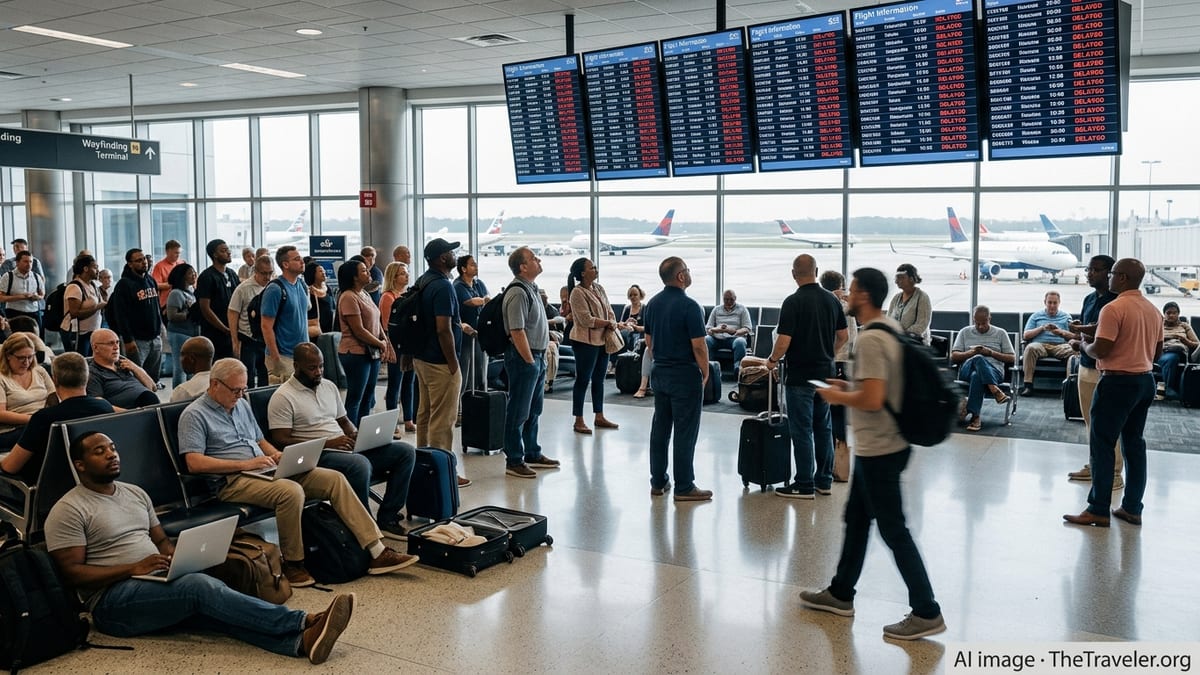
Travelers at Los Angeles International Airport faced mounting frustration after a new wave of disruption left more than a hundred flights delayed and several cancelled, affecting itineraries across the United States, Canada, Japan, China and other international destinations.
Get the latest news straight to your inbox!
Disruption Hits Major U.S. Carriers Out of Los Angeles
Publicly available flight tracking data for early July 2026 show a fresh cluster of operational disruptions at Los Angeles International Airport involving major U.S. carriers, including American Airlines, United Airlines and Southwest Airlines. On a recent travel day, combined figures for these and other airlines reflected more than one hundred delayed departures and a handful of cancellations, as schedules came under strain during the peak summer period.
Flight status services indicate that one of American Airlines’ long haul departures from Los Angeles was among the flights cancelled, underlining how irregular operations at a single hub can quickly affect long distance itineraries. While the overall percentage of cancellations at Los Angeles has historically remained relatively low compared with total movements, concentrated disruptions of this kind can still create significant queues, missed connections and last minute rebookings for passengers.
Delay tracking tools focused on Los Angeles show that the most frequent cause of late departures is categorized as airline related, which can include crew and aircraft availability or extended boarding and turnaround times. Even with on time performance at the airport generally above 80 percent, clusters of heavy delay on busy days are enough to ground travelers for hours and to push later services off their scheduled slots.
Federal transportation statistics covering the broader U.S. network illustrate how these patterns fit into national trends. Data for the most recent reporting periods show that American, United and Southwest typically complete well over three quarters of their flights on time, with cancellations accounting for less than 1 percent of operations. When irregular operations spike on a given day at a single airport, it often reflects a localized mix of airline logistics, air traffic flow management and weather or airspace constraints elsewhere in the system.
Domestic U.S. Routes Experience Knock-On Effects
Los Angeles is one of the country’s busiest domestic hubs, with heavy traffic on routes linking Southern California to major centers such as San Francisco, Las Vegas, Dallas, Denver and Chicago. When more than a hundred departures experience extended delay, the effect is felt not only in departure halls at LAX but at dozens of airports that rely on timely arrivals to keep their own schedules moving.
Summer travel patterns amplify the impact. Aircraft running late out of Los Angeles often turn around quickly onto onward legs, meaning a delayed morning departure to a domestic destination can easily cascade into multiple late flights by evening. For travelers attempting same day connections, relatively modest schedule changes of 60 to 90 minutes can force missed links and rebookings, particularly where minimum connecting times are tight.
Regulatory filings and consumer reports compiled by the U.S. Department of Transportation point to common drivers behind such domestic disruption episodes, including air carrier delays, congestion in the national airspace system and late arriving aircraft from prior flights. Extreme weather and security related issues, while less frequent, can also play a role.
On the ground, the visible outcome is familiar: longer lines at customer service counters, busy gate areas as departure times slide, and pressure on airport concessions and seating areas as travelers wait out extended holds. Even when only a small share of the daily schedule is formally cancelled, concentrated delays in a short time window can leave passengers feeling as if operations have ground to a halt.
International Links to Canada, Japan and China Affected
The ripple effects of disruption at Los Angeles extend well beyond domestic routes. LAX is a major gateway for transborder services to Canada and for transpacific flights linking the United States to Asia. Published schedule information highlights frequent services between Los Angeles and cities such as Vancouver and Montreal, operated in cooperation between U.S. and Canadian carriers.
Additional long haul routes connect Los Angeles to major Asian hubs, including Tokyo and Taipei, with further links available via partner airlines into cities in Japan and China. When departure delays mount at LAX, the impact can be felt on these long distance flights through missed connections from domestic feeder services, tighter aircraft turnaround times and potential crew scheduling challenges.
Route planning data for the current northern summer season show daily operations on several transpacific services from Los Angeles. Any late departures on these time sensitive flights can pose particular difficulties, as arrival times in Asia are carefully aligned with onward connection banks. Disruption at the origin can therefore reverberate through partner networks in Japan, China and across the wider Asia Pacific region.
Travelers booked on multi segment itineraries that start or connect through Los Angeles are especially exposed in such circumstances. A delay on a relatively short domestic hop into LAX can jeopardize a once daily onward flight to Asia or Canada, leaving passengers facing overnight stays, rerouting through alternative hubs or waiting for the next available seat on heavily booked services.
Operational Strain During Peak Summer Travel
The latest disruption comes during one of the busiest stretches of the travel calendar. Industry data for recent summers show sustained high demand across U.S. carriers, with load factors elevated and aircraft utilization pushed close to planned limits. In this environment, even modest irregularities can push airline operations into a fragile state, as schedule buffers are quickly consumed.
Department of Transportation performance statistics for the largest U.S. airlines confirm that cancellations remain relatively rare on an annual basis, but they also underscore how late arriving aircraft and airline related causes account for a substantial portion of delays. When fleets are heavily utilized, a small cluster of operational issues at a major hub can quickly translate into dozens of delayed departures.
Los Angeles, as a key connecting point for both domestic and international itineraries, is particularly sensitive to such pressure. Historical airport rankings illustrate its role as a top origin and destination for cities like Las Vegas and Tokyo, and a primary gateway for transpacific travel. Any operational disruption at LAX therefore has an outsized ability to spread across airline networks.
Observers of airline performance caution that these patterns are not confined to any single carrier. While attention may focus on particular airlines on a given day, national statistics reveal that delays and cancellations fluctuate across the industry, driven by a combination of shared constraints in airspace and infrastructure and carrier specific operational decisions.
What Travelers Can Do When Flights Are Delayed or Cancelled
For passengers caught in the latest wave of disruptions at Los Angeles, the immediate priority is often to secure an alternative itinerary. Public guidance from airlines and regulators generally encourages travelers to monitor real time flight status through official channels and to act quickly if a cancellation or significant delay appears likely, particularly during busy holiday and summer periods.
Consumer information materials from transportation authorities note that options may include rebooking on later flights operated by the same carrier, requesting refunds where eligible or seeking assistance with overnight accommodation when extensive delays occur. Policies vary by airline and by cause of disruption, so travelers are advised to review the conditions of carriage and to keep documentation of delay notices and related expenses.
Analysts also point to the value of building additional time into itineraries that rely on a Los Angeles connection, especially when linking from shorter domestic legs onto once daily services to Canada or Asia. Allowing longer connection windows and considering earlier departures into LAX can provide a margin of safety when operational strain is evident across the network.
With peak summer demand continuing and airline schedules running close to capacity, the episode at Los Angeles serves as a reminder that even brief periods of concentrated disruption can ripple across continents. For travelers, preparation and flexibility remain key tools for navigating an increasingly complex and tightly wound air travel system.