


More news on this day
Czech open access rail operator Leo Express is entering a new phase, with recent financial filings and network changes suggesting the once hard-charging challenger is now focused on balance rather than breakneck expansion.
Get the latest news straight to your inbox!
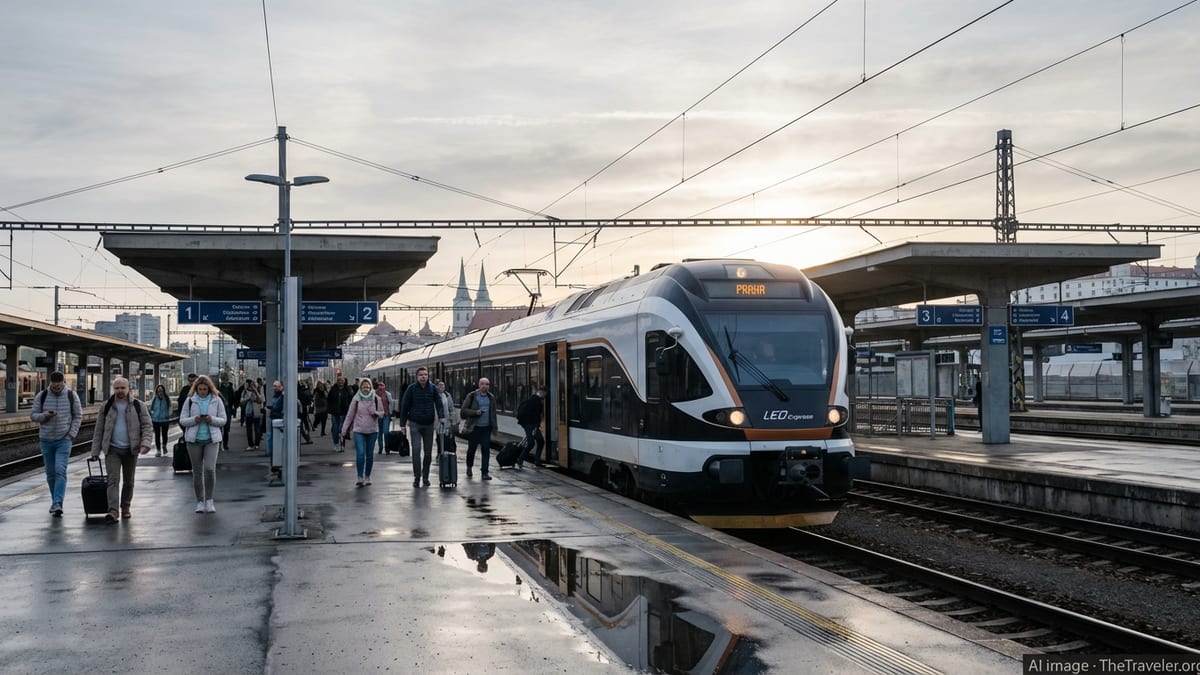
From disruptor mentality to disciplined growth
Leo Express emerged a decade ago as one of the first private competitors to state operator České dráhy on the key Prague to Ostrava corridor, helping to turn the route into one of Europe’s most competitive intercity markets. Alongside rival RegioJet, the company helped push down fares and raise service standards, drawing new passengers onto the rails.
Recent strategy, however, points to a more measured approach. Publicly available information shows that the operator has refocused on core routes in Czechia and Slovakia, fine-tuning timetables and capacity where demand is strongest. Rather than chasing network size at any cost, the company appears intent on increasing average load factors and stabilising yields on existing lines.
Analysts following Central European rail liberalisation note that many early challengers across the region are now transitioning from aggressive market entry to consolidation. For Leo Express, that has meant pulling back from some marginal services and concentrating resources on routes where its brand recognition and on-board service model can command a price premium over basic state-subsidised offerings.
The shift is visible in the company’s public messaging, which increasingly emphasises reliability, comfort and integration with other modes over headline-grabbing low fares. For leisure and business travellers, that translates into fewer deep-discount tickets than during the initial price wars, but more predictable operations and a clearer product offering.
Financial numbers hint at a new equilibrium
Leo Express’s most recent annual report indicates that the group has passed an important milestone in its development, with revenue growing into the tens of millions of euros and passenger numbers rising compared with earlier pandemic-affected years. The documents suggest that management is focused on tightening cost control while trying to protect service quality.
The figures also reflect wider pressures on European rail operators. Rising energy prices, higher wage costs and inflation in maintenance and leasing have made it harder for smaller private companies to compete purely on ticket price. For a challenger such as Leo Express, which does not enjoy the same direct public subsidies as the national incumbent on most open access routes, reaching a sustainable cost structure has become essential.
Reports from the Czech rail infrastructure manager and domestic business media show Leo Express holding only a modest share of total passenger-kilometres on the network, especially compared with České dráhy. Yet the operator’s focus on high-visibility intercity corridors and selected cross-border links means its brand presence is larger than its raw market share might suggest.
Industry observers describe the current phase as a search for equilibrium between scale and profitability. Instead of rapid geographic expansion, incremental improvements in yield management, digital sales, and ancillary services now appear to be the company’s preferred tools for strengthening the balance sheet.
Partnerships and fleet choices reshape the business model
Leo Express has long experimented with partnerships to extend its reach beyond the Prague to Ostrava backbone. Cooperation with long-distance coach platforms has enabled through-ticketing and integrated timetables on routes where rail capacity is limited or infrastructure upgrades lag behind traveller demand.
On the rail side, the carrier’s experience with new rolling stock suppliers has underscored both the opportunities and risks of trying to scale up quickly. Orders for modern electric multiple units from Chinese manufacturer CRRC were originally intended to support significant network growth. Certification delays and shifting market conditions, however, meant that some of the new trains were ultimately introduced by a rival operator instead, highlighting how sensitive smaller challengers are to technical and regulatory bottlenecks.
Today, Leo Express is leaning toward a fleet strategy that prioritises reliability and interoperability on its key routes. Public documents point to continued investment in maintaining the existing Stadler-produced trainsets that form the backbone of its intercity services, while bus partners and contracted regional operations help the group access new markets without committing large sums of capital upfront.
This hybrid model, combining open access rail with contracted regional services and bus connections, is central to how the company is trying to balance growth with risk. It offers access to new catchment areas and revenue streams while limiting exposure to long, asset-heavy bets on unproven markets.
Competition intensifies across Central Europe
The environment in which Leo Express operates continues to evolve rapidly. Liberalisation in neighbouring markets such as Poland and Germany is drawing in more private and foreign-backed operators, while domestic tenders in Czechia attract strong interest from incumbent and independent players alike.
Business media in Prague have highlighted tenders for regional and interregional services that regularly attract bids from multiple operators, including Leo Express, RegioJet, Arriva and České dráhy. The heightened competition means contract margins are under pressure, but it also creates opportunities for agile companies that can deliver efficient operations and distinctive passenger service.
For travellers, the result is a wider choice of brands and service concepts on routes that, until a decade ago, were often monopolised by a single state-owned operator. For Leo Express, the challenge is to remain visible and relevant in a crowded field, particularly as some rivals expand their own fleets and digital platforms.
Cross-border services are another arena where competition is heating up. As infrastructure managers complete upgrades on key international corridors, more operators are positioning themselves to offer direct services between major cities in Germany, Austria, Poland, Slovakia and Czechia. Leo Express’s existing international links give it a foothold in this market, but sustaining those services will require disciplined capacity management and careful coordination with foreign partners.
What equilibrium means for passengers
For passengers using Leo Express, the company’s search for equilibrium is most visible in the timetable, the booking app and the on-board experience. Rather than frequent changes to the network map, travellers are seeing a more stable pattern of services on a limited number of strong routes.
Ticket pricing increasingly reflects a balance between affordability and sustainability. Promotional fares still appear on off-peak departures and in advance purchase windows, but walk-up prices and peak-time tickets are more closely aligned with the rising cost base facing operators across Europe. Ancillary services such as seat selection, on-board refreshments and premium seating classes remain part of the offer, providing additional revenue levers beyond the basic fare.
From a wider industry perspective, Leo Express’s trajectory illustrates how Europe’s wave of rail liberalisation is maturing. Early years characterised by fierce price competition and headline-grabbing lawsuits are giving way to a more nuanced contest based on service quality, digital innovation and the ability to win public service contracts.
As the company moves through 2025 with a leaner, more focused operation, its efforts to stabilise finances, refine partnerships and reinforce its brand are likely to determine whether it can sustain its role as one of Central Europe’s best-known private rail challengers.