


In a country covered in snow for much of the year, it takes something special for one ski area to stand out. Levi, a compact fell rising above the forests of Finnish Lapland, has managed exactly that. Once a quiet local hill outside the small town of Kittilä, it is now widely regarded as Finland’s most famous winter resort, drawing everyone from World Cup racers and dedicated park riders to families seeing their first snowfall. Its rise has been driven not by one single factor, but by a careful balance of international sport, thoughtful infrastructure, easy access, and the kind of Arctic atmosphere travelers imagine when they picture Lapland.
Get the latest updates straight to your inbox!
From Local Fell To Finland’s Flagship Ski Resort
Levi’s reputation starts with a simple fact: it is the largest and best-known downhill ski resort in Finland, built around a single fell about 170 kilometers north of the Arctic Circle. The ski area wraps almost completely around the mountain, with multiple base areas and lifts radiating into the surrounding forests. Visitors arriving in the compact village center quickly understand why Levi is the name that comes up first when Finns talk about downhill skiing in Lapland: everything, from gear rentals to slope-side hotels, is within a short walk or ski bus ride.
On the mountain itself, Levi offers one of the most extensive lift networks in the country. Public information lists around two dozen lifts in total, including gondolas, high-speed chairlifts, and a web of T-bars and rope tows serving different faces of the fell. There are dedicated beginner slopes close to the village, forest-lined intermediate runs, and longer descents of roughly 2.5 kilometers on the front side. For many visitors who have only skied in the Alps, the scale is modest, but in the Finnish context Levi is a clear heavyweight and a place where local skiers know they can rack up a lot of vertical in a day with minimal queuing outside the busiest school holiday weeks.
The resort’s evolution from a small regional hill into a national flagship has been steady rather than explosive. Over several decades Levi has added new lifts, re-shaped slopes and built up snowmaking and night-skiing infrastructure to stretch its season from early November into May in a typical winter. This long season is vital in a country where early winter can still be dark and cold. It allows Levi to catch the first wave of enthusiasts in November, accommodate domestic family holidays through February and March, and still welcome spring skiers who prefer sunshine, softer snow and milder temperatures.
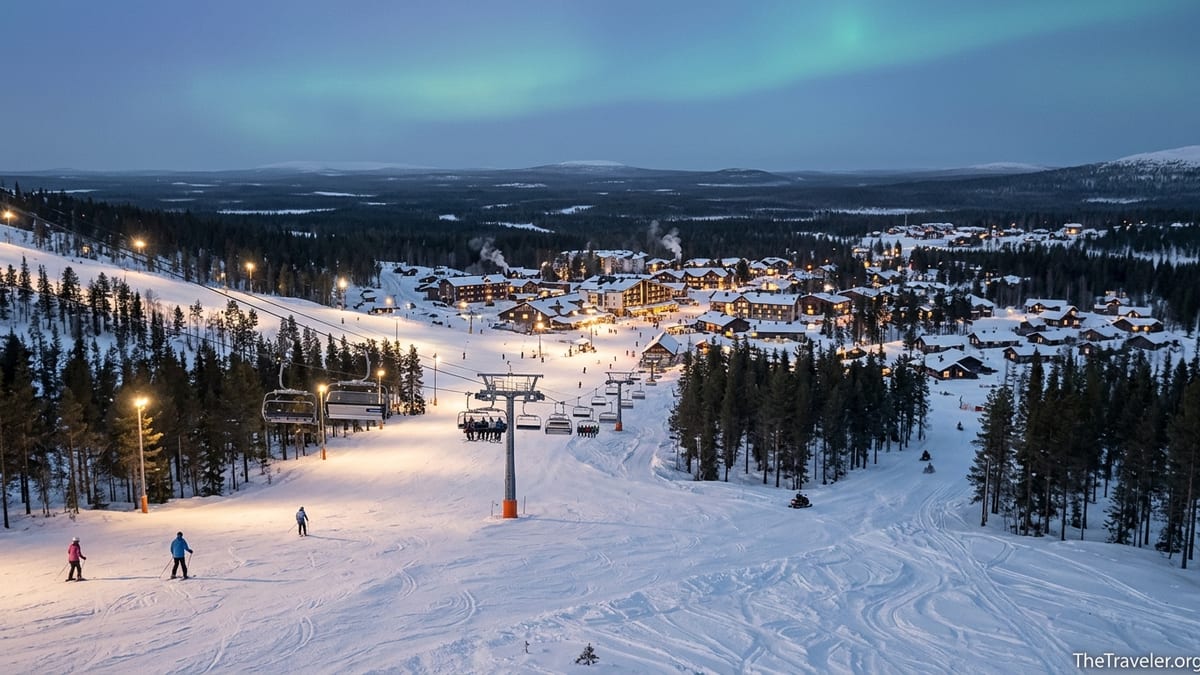
At the same time, Levi’s village has grown from a handful of guesthouses to what is now one of Lapland’s liveliest winter hubs. Ski-in hotels line the front slopes, while log cabins and apartments spread into the surrounding forest roads. You can spend the day skiing, walk directly into a spa or restaurant in your base layers, and be back at your cabin’s private sauna in minutes. This compact, walkable structure makes Levi feel like a self-contained winter village and has been central to its appeal for families and groups who want to park the car on arrival and forget about it.
World Cup Prestige On The Levi Black Slope
One of the strongest reasons Levi became famous beyond Finland is its long-running role on the FIS Alpine Ski World Cup circuit. Since the mid-2000s, Levi has regularly hosted the season-opening slalom races, drawing the world’s best technical skiers to the steep Levi Black slope on the front face of the fell. More recently, both men’s and women’s slalom seasons have opened here in November, bringing global television coverage and a traveling circus of teams, coaches, technicians and media into the Lapland forest.
The World Cup weekend transforms the normally relaxed resort into an international competition venue. Grandstands appear along Levi Black, slope-side fan zones serve hot drinks, and national supporters in team jackets gather at the finish to bang drums and wave flags. When stars like Mikaela Shiffrin race in Levi, the event often makes mainstream sports news in Europe, and the images are striking: elite racers carving icy turns under floodlights, with dark spruce forests and Arctic skies as the backdrop. For many skiers abroad, this is their first visual introduction to Levi and to Finnish skiing in general.
This World Cup status has practical effects on the resort’s development. Preparing a FIS-homologated racecourse demands serious snowmaking, grooming and safety infrastructure. Levi has invested heavily in automated snow guns, water reservoirs, timing systems and modern grooming equipment to meet these standards each year. Those improvements, initially driven by the needs of a few November race days, now benefit ordinary visitors who ski on the same slopes all season. Recreational skiers find well-prepared pistes, reliable early-season coverage, and training lanes set up for clubs and race camps from across northern Europe.
Levi has also leaned into its World Cup story in playful ways that appeal to guests. Winners in the slalom here traditionally earn naming rights to local reindeer, and repeat champions have a small herd grazing in nearby paddocks. Many visitors book reindeer farm excursions that mention these racing animals by name, creating a bridge between elite sport and the region’s reindeer herding culture. For families, the notion that the same slope where their children take their first parallel turns is also a World Cup run becomes part of the holiday narrative and a justification for choosing Levi over smaller hills.
A Complete Winter Village, Not Just Ski Slopes
Another factor in Levi’s fame is its identity as a full-service winter resort rather than a pure ski hill. The compact village center offers a concentration of accommodation, restaurants, bars and non-ski activities that is unusual in Finland. Travelers can choose between slope-side hotels such as large spa properties, characterful options like the long-established Hullu Poro (Crazy Reindeer) hotel, and a wide range of self-catering apartments. Many units come with private saunas as standard, reinforcing the Finnish ritual of ending an active day in the heat before stepping out into the cold night air.
The après-ski and nightlife scene is livelier than in most other Finnish resorts. Several bars near the main front slopes offer classic Alpine-style terrace après in March and April when the sun lingers into the afternoon, serving local beers and hot chocolate under patio heaters. Later in the evening, live music venues and clubs draw both Finnish and international visitors, especially around New Year and during domestic school holidays. While the scale is modest compared to major Alpine party towns, among Finnish ski areas Levi has a reputation as the place to go if you want to combine skiing with a social trip.
Levi has also positioned itself as a hub for Arctic experiences that go beyond skiing. Within the village or a short transfer away, visitors can join husky sledding tours, reindeer sleigh rides, snowmobile safaris and guided snowshoe walks in the surrounding forests and wetlands. Many of these excursions are scheduled for the twilight or evening hours when ski lifts are quieter, allowing guests to ski during the day and chase northern lights at night. It is common for a week-long itinerary to include two or three half-day activities alongside ski days, which suits mixed groups where not everyone is a dedicated skier.
Families and non-skiers benefit from Levi’s indoor attractions as well. A large spa complex with pools, children’s play areas and saunas offers a warm refuge on days when the temperature drops well below freezing. There are small galleries and local design shops selling reindeer hides, wool knitwear and Sámi-inspired handicrafts. Ice and snow structures sometimes appear as seasonal attractions, from temporary ice bars to sculpted snow castles that become Instagram-friendly backdrops. This breadth of things to do makes Levi an easy choice for multigenerational trips and for travelers who might otherwise choose Santa-focused destinations like Rovaniemi.
Accessibility Deep In Lapland
Levi’s location, roughly 1,000 kilometers north of Helsinki, sounds remote. In practice, it is one of the easiest Lapland resorts to reach, which is key to its popularity. Kittilä Airport sits only about 15 minutes’ drive from the village, and in winter it is served by frequent flights from Helsinki as well as seasonal direct services from various European cities. On a typical winter Saturday, you might see aircraft arriving from hubs such as Paris, Amsterdam or London, bringing in package holidaymakers who step from the plane into sub-zero air and are on their hotel transfer within minutes.
For independent travelers, the logistics are straightforward. A common scenario is to fly from a European capital to Helsinki, connect to a domestic flight of about 80 minutes to Kittilä, then take a scheduled shuttle bus or taxi to Levi. The total travel time from many European cities can be under six hours including the connection, which compares favorably with some Alpine destinations that require long road transfers. During peak weeks, charter and low-cost carriers often add direct flights from regional airports, reflecting the demand specifically for Levi and nearby Lapland resorts.
Travelers who prefer rail and road can reach Levi by combining Finland’s long-distance trains with regional buses. Overnight sleeper trains from southern Finland run to Lapland towns like Kolari and Rovaniemi. From there, buses continue to Kittilä and Levi, threading through the dark pine forests and occasionally passing herds of reindeer by the roadside. Although the overall journey can take most of a day, many visitors appreciate waking up to Arctic scenery and arriving without the airport experience. This variety of transport options, plus clear English-language information from Finnish operators, helps make Levi feel accessible even to first-time visitors to the Arctic.
Once in Levi, movement is simple. The village is walkable, with most services clustered around the front slopes. A free or low-cost ski bus circulates between different base stations and accommodation areas, meaning guests staying in cabins on the outskirts can still reach the lifts without a car. For those who do rent vehicles, roads are well-maintained and clearly signed, and local rental agencies provide winter tires and basic advice on Arctic driving. In effect, Levi manages to feel both deeply northern and logistically easy, a combination that underpins its status as Finland’s most famous winter destination.
Snow Reliability, Night Skiing And Arctic Atmosphere
Levi’s geography gives it a crucial advantage in the competition between Finnish resorts: cold, relatively reliable winters. Sitting so far north, the area typically sees consistent sub-zero temperatures from late autumn onward, which means snowmaking systems can start building a base on key slopes as early as October. This allows Levi to open a handful of runs in early November in many seasons, a full month or more before some southern hills in Finland can operate reliably. For skiers keen to make their first turns of the season, that reputation for early opening is a major draw.
The long, dark Lapland winter has also shaped how Levi presents its slopes. The resort has extensive floodlighting, and large sections of the mountain remain lit well into the evening, especially in midwinter when daylight is short. Skiing under the lights here can feel almost surreal, with snow-covered trees glowing against a deep blue sky and the outline of the village twinkling below. On clear nights in November to February, there is also a real chance of seeing the Aurora Borealis. It is not uncommon for guests to end an evening of night skiing, return to their cabin, and step back outside half an hour later to find faint green arcs appearing above the fell.
Because temperatures can drop sharply in December and January, Levi has adapted with plenty of heated indoor spaces near the slopes. Slope-side cafés serve hot berry juice, salmon soup and cinnamon buns, and many have large windows where parents watch their children on the beginner slopes while staying warm. Short lift lines outside the main holiday weeks mean skiers can cycle quickly between runs and indoor breaks, which makes the cold easier to manage. Visitors accustomed to crowded Alpine resorts are often surprised to find that even during daylight hours it is possible to have stretches of piste almost to themselves in January.
By late March and April, Levi transitions into a different kind of winter experience. The sun climbs higher in the sky, temperatures moderate, and the snowpack often stays deep and stable on the fell. Locals talk about “spring winter,” a season of long ski days and relaxed afternoons on cabin terraces. For international guests, this period can be particularly appealing: you get bright, sunny skiing, a good chance of comfortable temperatures, and still the possibility of northern lights in the evening. That combination sets Levi apart from many lower-latitude resorts that may be battling slushy snow by Easter.
Family-Friendly Slopes And Modern Infrastructure
Although Levi’s World Cup pedigree makes headlines, the day-to-day reality on the mountain is very much centered on ordinary skiers and families. The resort has multiple dedicated children’s areas with gentle gradients, magic carpet lifts and playful features. Some long, low-angle pistes loop through the forest at a gradient only slightly steeper than the kids’ slope, giving nervous adults and progressing children a chance to practice linked turns without the intimidation of steeper runs. Local ski schools run group and private lessons in several languages, often bundled with rental equipment for convenience.
For intermediate and advanced skiers, Levi offers a network of blue and red runs, plus a few black-rated slopes like Levi Black that provide more of a challenge. Park and freestyle riders find snow parks with jumps and rails, and in some seasons even a halfpipe or big air features, which help attract younger Finnish skiers who might otherwise travel abroad. While the overall vertical drop is modest compared to Alpine resorts, the terrain is varied enough that many visitors on week-long holidays report discovering new routes around the fell every day by linking different lifts and base areas.
Behind the scenes, Levi has invested significantly in its lift system and environmental performance. Recent years have seen new high-speed chairlifts added on popular sectors, LED lighting installed on major slopes, and some mountain restaurants and infrastructure connected to more efficient heating systems to reduce energy use. These upgrades have a direct impact on the guest experience: shorter lift rides in the cold, brighter and more even night-skiing conditions, and warm, modern facilities at mid-mountain stops.
On the ground, services are designed to minimize friction for visitors. Rental shops in the village and at base areas are used to handling international guests who arrive without their own equipment. It is common for families to collect skis, helmets and clothing rental in the afternoon or evening, ready for early lifts the next morning. Many accommodations offer heated storage rooms where boots dry overnight and gear can be left securely. Together, these facilities make Levi feel like a well-oiled winter resort where the practicalities of skiing are as smooth as possible, which in turn encourages word-of-mouth recommendations.
Year-Round Appeal And Sustainable Development
Though its fame rests on winter, Levi has deliberately developed a year-round profile to secure its future. In summer and autumn, the fell becomes a base for hiking, mountain biking, trail running and fishing in the nearby lakes and rivers. Gondolas operate for sightseeing and bike uplift, and some hotels adjust their pricing to attract travelers seeking quiet nature rather than snow. This diversification helps keep village businesses viable outside the main ski season and supports local employment in Kittilä and the surrounding region.
Sustainability has also become an important part of Levi’s story. Like most snow-dependent resorts, it faces long-term climate uncertainty. In response, the resort operator has publicized steps such as upgrading snowmaking systems to more efficient models, investing in renewable or lower-carbon energy where practical, and improving waste management and recycling on the mountain. Some slope-side buildings and restaurants now use modern heating solutions that reduce fossil fuel consumption compared to older oil-fired systems. While these measures alone cannot solve the broader climate challenge, they are increasingly part of the conversation when Levi promotes itself abroad.
For visitors, this focus often shows up in small details. Hotel buffets highlight local and seasonal ingredients, from Arctic char and reindeer to berries picked in nearby forests. Activities companies encourage smaller group sizes and more low-impact excursions such as snowshoeing and cross-country skiing. Public information around the resort gently reminds guests not to disturb reindeer herds, to respect Sámi culture, and to stick to marked trails when exploring the fells. Taken together, these choices help position Levi as a modern, responsible Lapland resort rather than a purely commercial playground.
Crucially, the combination of year-round tourism and environmental awareness supports Levi’s long-term fame. Travelers who come for skiing often return in autumn to see the ruska, the vivid fall colors of Lapland, or in summer for midnight sun hikes. Others first encounter Levi in a corporate incentive trip or conference held in low season and then return privately in winter with their families. This repeat visitation, across different seasons and demographics, reinforces Levi’s name recognition at home and abroad and cements its role as the symbolic heart of Finnish winter tourism.
The Takeaway
Levi did not become Finland’s most famous winter ski resort by accident. Its rise is the result of decades of gradual investment combined with a few decisive advantages: an early and reliable snow season, strong international exposure through World Cup racing, and an unusually complete winter village deep in Lapland that is still easy to reach. Visitors can ski on a World Cup slope in the morning, soak in a spa in the afternoon, and chase northern lights after dinner, all without needing a car or complicated logistics.
For skiers used to the towering peaks of the Alps or Rockies, Levi’s modest vertical might be surprising. Yet for many travelers, especially families and those seeking an Arctic experience rather than maximum altitude, that scale is part of the charm. Short, manageable runs, efficient lifts and relatively uncrowded slopes outside peak weeks create a stress-free environment where beginners can learn and experienced skiers can relax. Combined with Lapland’s distinctive light, snow-covered forests and cultural traditions, it is easy to see why Levi has become the default Finnish answer when someone asks where to go for a winter holiday.
As climate patterns shift and competition for winter visitors intensifies, Levi’s future will depend on how well it continues to balance growth with sustainability and authenticity. So far, its track record suggests a resort that understands the need to invest in modern infrastructure while preserving the quiet magic of a small fell rising above endless northern forest. For anyone curious about Finnish skiing or dreaming of a snowy Lapland village under the aurora, Levi remains the natural place to start.
FAQ
Q1. When is the best time of year to ski in Levi?
The main ski season runs roughly from late November to late April, with early season in November and December, peak Finnish holiday weeks in February and March, and sunny “spring winter” conditions often in late March and April.
Q2. How cold does it get in Levi in winter?
Midwinter temperatures commonly sit below freezing, and it can occasionally drop to around minus 20 degrees Celsius or colder, especially in December and January, though milder days are also possible.
Q3. Is Levi suitable for complete beginner skiers?
Yes. Levi has several gentle beginner areas with magic carpets, easy green-style runs, and ski schools that are used to teaching first-timers, including children and adults who have never seen snow before.
Q4. How do I get from Kittilä Airport to Levi village?
Kittilä Airport is about 15 minutes by road from Levi. In winter, scheduled shuttle buses usually meet arriving flights, and taxis and private transfers can also be booked in advance or on arrival.
Q5. Do I need a car to get around Levi?
No. The village is compact and walkable, and a ski bus connects the main accommodation areas and base stations. A car can be useful for exploring wider Lapland, but it is not essential for a ski-focused trip.
Q6. Can I see the northern lights in Levi?
Yes, Levi lies well within the aurora zone. On clear, dark nights from roughly September to April, there is a realistic chance of seeing northern lights, especially away from village lights or on guided aurora tours.
Q7. What kind of accommodation is available in Levi?
Accommodation ranges from slope-side hotels and spa complexes to traditional log cabins, apartments and chalets with private saunas, catering to both budget-conscious travelers and those seeking upscale comfort.
Q8. Is Levi crowded compared to Alpine resorts?
Outside peak holiday weeks around Finnish school vacations, many visitors find Levi’s slopes relatively quiet, with short lift lines and plenty of space compared with large Central European resorts.
Q9. What can non-skiers do in Levi?
Non-skiers can enjoy husky and reindeer rides, snowmobile safaris, snowshoeing, spas, shopping for local design and handicrafts, ice and snow attractions, and evening northern lights excursions.
Q10. Is Levi a good destination for families with children?
Levi is very family-friendly, with gentle slopes, kids’ areas, English-speaking ski schools, indoor pools and play spaces, and a wide choice of cabins and apartments that work well for family groups.