


More news on this day
Liat Air has issued a public apology after a wave of delays and cancellations upended travel across its Caribbean network, stranding passengers on multiple islands and drawing renewed scrutiny of the regional carrier’s reliability.
Get the latest news straight to your inbox!
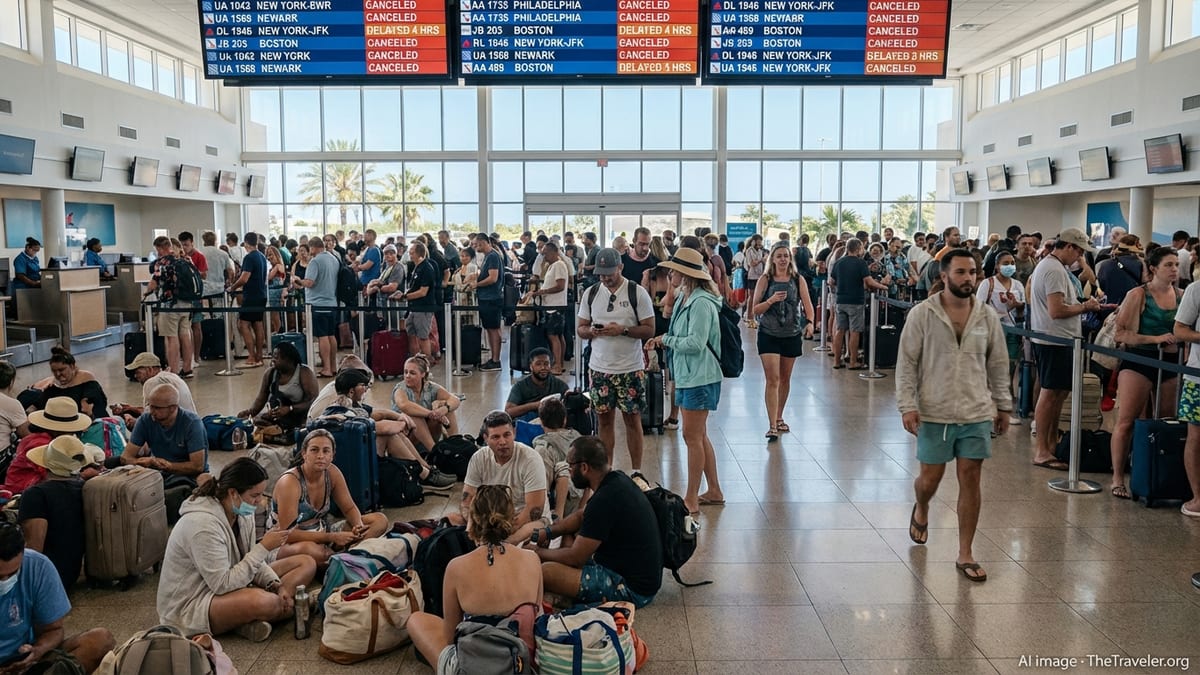
Apology follows days of rolling disruptions
According to recent coverage of regional aviation, Liat Air’s apology comes after several days of rolling disruptions that affected services on key routes linking islands in the Eastern Caribbean. Publicly available information indicates that flights were delayed or canceled on multiple consecutive days, creating knock-on effects for later services as aircraft and crew fell out of position.
Reports suggest that the disruptions began with isolated schedule changes and quickly evolved into a wider operational challenge as limited spare capacity made it difficult to recover. Travelers described extended waits, multiple rebookings and, in some cases, overnight stays while they attempted to complete relatively short inter-island journeys.
In its public statement, the airline acknowledged the impact on travelers and signaled that it is working to stabilize operations. The apology marks an attempt to reassure both leisure and business travelers in a region where dependable air links are essential for tourism, trade and medical travel.
The episode has also raised broader questions about the resilience of small regional carriers that operate dense schedules with tight turnarounds and modest fleets. Aviation analysts often note that this operating model leaves little margin when weather, technical issues or crew availability disrupt the plan.
Where operations broke down
Available information about the disruption pattern indicates that Liat Air’s difficulties were concentrated on some of its busiest island pairs, where aircraft cycles are frequent and turnaround times short. Once delays began to lengthen on early-morning services, later flights reportedly inherited those schedule slips, creating a cascading effect that stretched late into the evening.
Operational specialists point out that regional airlines are especially vulnerable when they lack spare aircraft or crews to step in during irregular operations. Publicly accessible fleet data for Liat Air shows a relatively small number of aircraft, meaning a single technical or staffing issue can force schedule adjustments across an entire day’s flying.
Weather also appears to have been a contributing factor on at least some days, with scattered storms in parts of the Caribbean limiting departure and arrival windows. While such conditions are common in the region, they can prove particularly disruptive when coupled with already tight scheduling and limited contingency options.
Ground handling capacity and airport constraints on smaller islands may have further complicated efforts to recover. Short runway lengths, limited gate availability and constrained ramp space can slow boarding, refueling and baggage loading, reducing the airline’s ability to “catch up” once it falls behind schedule.
Passenger experience and consumer expectations
Social media posts and regional news coverage describe passengers facing long lines at check in and customer service desks, as well as uncertainty about rebooking options. Some travelers reported receiving updated departure times only minutes before scheduled boarding, while others said they received information primarily through airline apps and airport screens.
Consumer advocates note that communication is often as important as the disruption itself in shaping passenger perceptions. When travelers receive clear explanations, realistic rebooking options and prompt assistance with meals or accommodation where applicable, frustration can be significantly reduced, even when delays are substantial.
Caribbean travelers are also increasingly aware of evolving passenger rights frameworks in larger markets such as North America and Europe, where rules governing care and compensation after disruptions are well publicized. While local regulations may differ, this broader awareness influences expectations of transparency, support and financial redress.
Reports also highlight the particular impact on inter-island travelers connecting to long haul flights in hubs like Barbados or Antigua. Missed onward connections can lead to days-long delays, additional costs for hotels and new tickets, and in some cases the loss of nonrefundable bookings for cruises or packaged holidays.
Liat Air’s recovery plan and operational pledges
In its apology, Liat Air outlined several measures intended to prevent a repeat of the recent disruption pattern. Public statements from the airline describe a review of crew rostering practices, schedules and maintenance planning to build greater resilience into day-to-day operations.
The carrier has indicated that it is scrutinizing first-wave departures, which are critical to keeping the rest of the daily schedule on time. By adding extra buffers to early rotations, the airline aims to ensure that minor delays do not cascade into a full-day disruption across the network.
Published information suggests that Liat Air is also investing in improved real-time communication tools between its operations control center, airport teams and passengers. The goal is to shorten decision times during irregular operations and provide more accurate departure estimates, boarding times and gate information.
Industry observers note that small regional airlines often face difficult trade-offs between commercial efficiency and operational robustness. Any move to add slack to the schedule, maintain additional standby crews or secure backup aircraft carries higher costs, but it can also reduce the risk of high-profile breakdowns that undermine traveler confidence.
What travelers can do when disruptions hit again
Travel experts advise passengers flying with any regional carrier in the Caribbean, including Liat Air, to build additional time into itineraries that involve onward international connections. Allowing for a longer layover can provide a margin of safety if an early inter-island leg is delayed or rescheduled.
Passengers are also encouraged to monitor their bookings closely through airline apps and airport displays, particularly during periods of unsettled weather or known operational strain. Proactively contacting the airline through digital channels or call centers can sometimes secure earlier rebooking options than waiting in physical queues at the airport.
Travel insurance that includes disruption coverage may provide financial protection for extra accommodation, meals and replacement flights when delays or cancellations extend overnight. Policies vary widely, so travelers are advised to check the fine print regarding covered causes and documentation requirements.
While Liat Air’s apology signals an intention to improve reliability, aviation data from multiple regions indicates that flight disruptions are likely to remain a feature of modern air travel. For Caribbean travelers, combining realistic expectations with careful planning and awareness of available protections can help mitigate the impact when schedules unravel.