


More news on this day
Passengers using Manchester Airport today are facing a patchy pattern of disruption, with live data showing a significant share of flights departing late but a relatively low number of outright cancellations compared with overall traffic.
Get the latest news straight to your inbox!
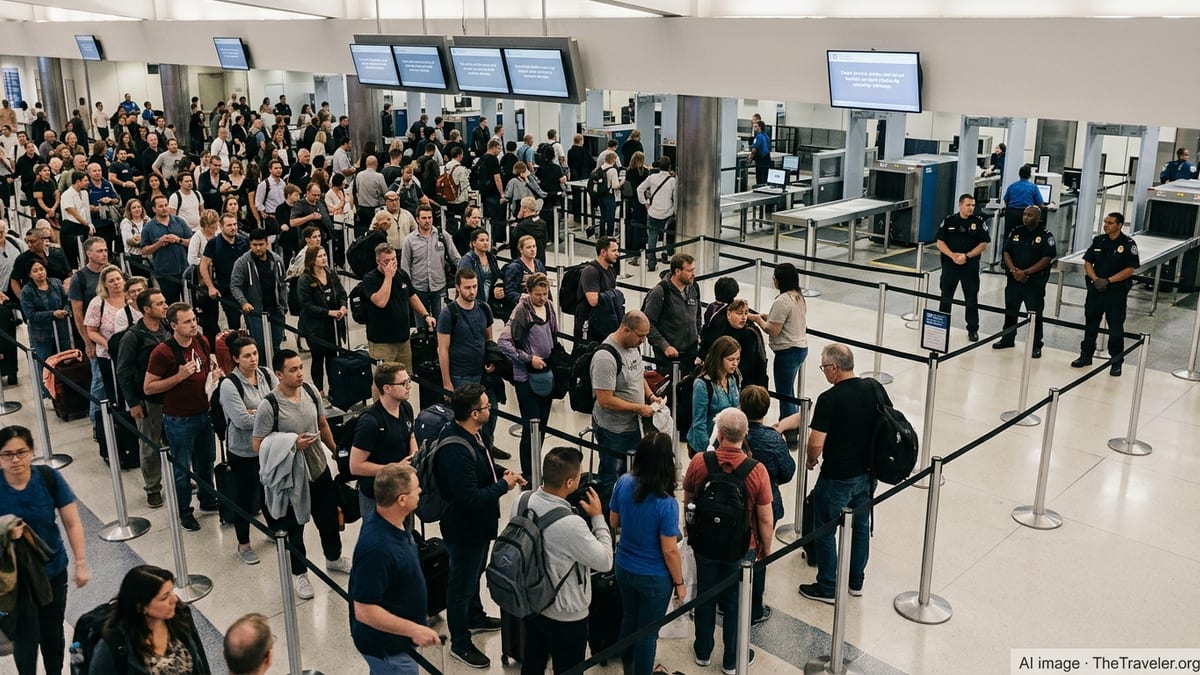
Overall disruption picture at Manchester Airport
Live tracking boards and independent aviation data indicate that Manchester Airport is operating with moderate disruption today, marked by a mix of on-time services and clusters of delayed departures. While the majority of flights are still running, a notable proportion are leaving later than scheduled, reflecting wider operational pressures across European aviation.
Statistics collated over recent weeks show that around one third of departures from Manchester have been delayed by more than 15 minutes, with average waits of roughly 40 minutes for affected flights. Cancellations remain comparatively rare, accounting for well under 1 percent of movements, but even a small number of scrubbed services can lead to knock-on queues at check-in, security and rebooking desks throughout the day.
Today’s pattern broadly mirrors that recent trend. Real-time disruption indexes place Manchester in the lower half of the European disruption table, suggesting some punctuality issues yet no sign of a system-wide breakdown. For most travellers, that means a realistic chance of flying close to schedule, tempered by the need to plan for potential extra time at the airport and at the gate.
Departures: delays dominate over cancellations
Departure boards for Manchester Airport today show the clearest impact of operational strain. Across the schedule, many flights remain listed as “on time,” but a steady stream of services has moved into the “delayed” category as the day has progressed. The majority of these delays appear to sit in the short to moderate range, often under an hour, yet they are frequent enough to alter the experience for departing passengers.
Independent flight-statistics services report that, over the past month, roughly one in three flights leaving Manchester has suffered a delay of more than 15 minutes. Applied to today’s schedule of several hundred planned departures, that equates to dozens of services leaving behind their slot, even if most eventually operate. With average departure delays of around 40 minutes for those impacted flights, passengers are encountering meaningful, if not extreme, disruption.
Despite this, outright cancellations on the departure side remain limited. Historical data for the last 30 days point to a cancellation rate of around a quarter of one percent of all flights using the airport, and reports today align with that pattern. Where cancellations do occur, they are typically tied to airline-specific issues such as technical problems, aircraft availability or crew-hours constraints, rather than to a complete shutdown of the airport’s infrastructure.
Arrivals: knock-on effects and recovery times
Arrivals into Manchester Airport today reflect many of the same pressures seen on departures, especially where inbound aircraft are operating as turnarounds for later flights. When an aircraft leaves its origin late, its arrival at Manchester tends to be pushed back in parallel, raising the risk of missed connections, delayed baggage delivery and longer waits at the arrivals hall.
Live arrivals boards show that many inbound flights are still reaching Manchester close to their scheduled times, yet a steady minority have been recorded as late. These delays range from modest schedule slips to more substantial lags where earlier disruptions elsewhere in Europe have cascaded through the network. In a busy hub serving more than 600 scheduled movements on a typical day, even a small percentage of delayed arrivals can translate into a visible build-up of passengers in immigration and baggage reclaim areas.
Turnaround times are a key factor in how quickly the operation can recover. When an inbound aircraft arrives late, ground handling, cleaning, refuelling and boarding are compressed into a shorter window if the airline attempts to keep its outgoing service on schedule. Where this is not feasible, the delay at arrival tends to reappear as a new delay at departure, contributing to the rolling disruption seen on today’s boards.
How today compares with Manchester’s recent performance
In the context of Manchester Airport’s recent record, today’s pattern of delays and cancellations falls into the category of “elevated but not exceptional.” Over the last 30 days, the airport has handled more than 20,000 flights, averaging about 680 per day across all terminals. Within that period, the combination of roughly one third of departures running more than 15 minutes late and a sub-one-percent cancellation rate has been relatively consistent.
Real-time disruption rankings for European airports today place Manchester in a middling position: the airport is experiencing a noticeable proportion of delayed departures and arrivals, as well as a shorter-than-ideal average delay, but without the widespread cancellations seen during major weather events or system outages. An index score in the low-to-mid range, with very few flights outright cancelled, underscores the fact that the airport is coping with demand despite persistent strain on punctuality.
Passenger experiences continue to vary sharply. Some travellers are passing through with only minor schedule changes, while others report extended waits at gates, re-timed boarding calls and tight connections. The current data suggests that today is more challenging than a perfectly smooth day of operations, but far removed from the levels of disruption that have previously seen large-scale queues, stranded passengers and wholesale timetable overhauls.
What passengers should expect for the rest of the day
Based on live disruption indicators and recent performance patterns, passengers flying through Manchester Airport today should be prepared for a realistic chance of delay, while still expecting that their flight is likely to operate. The ratio of delays to cancellations means that, for most travellers, the main impact will be additional waiting time rather than the need for full rebooking or overnight accommodation.
Publicly available guidance continues to stress the importance of checking flight status regularly in the hours before travel, using both airline communications and live airport boards. As rolling delays accumulate, departure times and gate allocations can change repeatedly, particularly in the late afternoon and evening peaks. For arrivals, friends and family collecting passengers are being advised to monitor updated landing times rather than relying solely on the original schedule.
Transport links to and from the airport, including rail services, appear to be functioning close to normal levels today, helping to limit the wider impact of aviation delays. With average flight delays remaining in the tens of minutes rather than hours and cancellations comparatively rare, Manchester Airport is currently managing a day of moderate, but still contained, disruption.