


More news on this day
Ljubljana Jože Pučnik Airport is set to enter the coming winter season with an expanded route network, as new and reinforced services from easyJet and airBaltic promise stronger links between Slovenia, the United Kingdom and popular leisure destinations.
Get the latest news straight to your inbox!
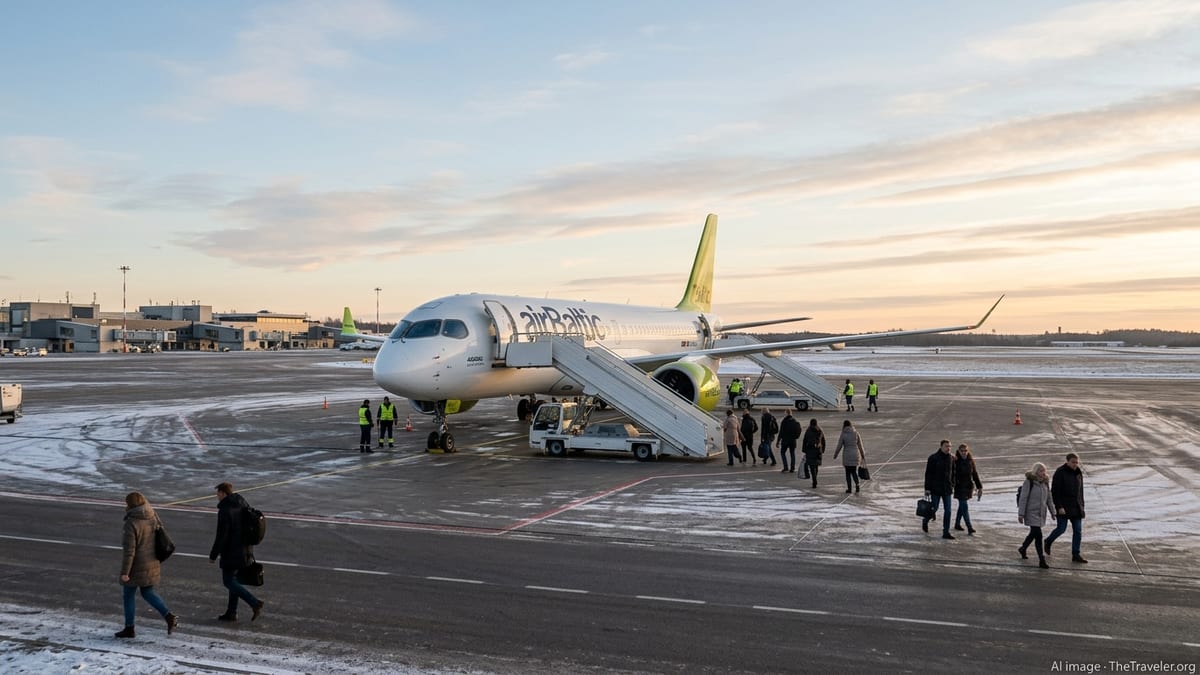
New UK links put Ljubljana on more winter city-break maps
According to publicly available timetable information and airline announcements, easyJet is preparing to grow its presence at Ljubljana Airport in the 2026 winter season, reinforcing a trend that has seen the carrier steadily widen its Slovenia offering beyond its long-standing London Gatwick link. Recent network updates indicate that the low cost airline is planning additional winter capacity into the Slovenian capital from the UK, with services positioned to appeal to city-break travellers and skiers heading for the Alps.
In recent seasons, easyJet has already committed to new routes such as Manchester to Ljubljana, a twice-weekly service that targets both inbound tourism and outbound city breaks from Slovenia. The introduction of more winter flights is expected to give the airport a stronger foothold in the competitive Central European market, where rival airports in Venice, Trieste, Zagreb and Vienna traditionally capture a significant share of regional winter traffic.
Data shared by the airport operator shows that London Gatwick remains one of Ljubljana’s busiest international city pairs, underscoring how important the UK market has become for Slovenia’s tourism economy. Additional easyJet capacity during the colder months is therefore viewed within the local travel industry as a way to smooth seasonality, helping hotels and tour providers maintain occupancy outside the peak summer period.
Industry observers note that greater low cost connectivity typically stimulates new segments of demand, from short midweek trips to longer stays that combine Ljubljana with nearby alpine resorts. The timing of the expanded easyJet schedule, aligned with the start of the winter timetable at the end of October, is expected to support both early ski season traffic and festive city tourism.
airBaltic strengthens northern connectivity with new winter leisure flying
While easyJet is deepening Ljubljana’s links with the UK, airBaltic is working on the northern and leisure side of the network. Publicly available information from the airline and tourism bodies indicates that the Latvian carrier, which already connects Ljubljana with its Riga hub, plans to reinforce its winter presence by linking Slovenia to warmer destinations served from its bases.
In communications outlining network developments, airBaltic has highlighted the popularity of routes to the Canary Islands and other sun destinations during the European winter. The carrier has signalled that Tenerife will feature more prominently in its broader winter network, and Ljubljana has been cited by tourism organisations as one of the airports that stand to benefit from these leisure-focused expansions.
The Riga link remains strategically important for Ljubljana, offering connections to the Baltics, Scandinavia and parts of Eastern and Northern Europe that are otherwise only indirectly accessible from Slovenia. As airBaltic continues to expand its Airbus A220 fleet and deploy it across a growing route map, Ljubljana’s inclusion in the airline’s winter plans reinforces the airport’s role as a secondary but valuable spoke in the carrier’s network.
For Slovenian travellers, a stronger airBaltic programme in winter means more one-stop options to destinations that previously required complex itineraries via major hubs. For inbound visitors from northern Europe, additional frequencies and leisure routes operated by the carrier improve access to Slovenia’s mountains, spas and festive city offerings during the colder months.
Airport seeks to tackle seasonality with broader winter portfolio
Fraport Slovenija, which operates Ljubljana Airport, has repeatedly pointed to seasonality as one of the key challenges in developing traffic. Public documents and reports show that while summer schedules feature a wide choice of European hubs and holiday routes, demand typically softens in winter, limiting the number of airlines and frequencies that can be sustained.
The planned expansion of easyJet and airBaltic services is therefore significant beyond the individual routes themselves. More low cost and point-to-point capacity in the off-peak period helps diversify the airport’s portfolio, reducing reliance on a small set of hub connections and charter flights. This broader base of services is seen by industry analysts as an important step in building resilience and supporting long-term passenger growth.
Recently published figures from the operator highlight strong growth in overall traffic, with passenger numbers rising by double digits compared with previous years. The expectation is that with a reinforced winter timetable featuring more direct links to key markets, Ljubljana can build on this momentum and move closer to pre-pandemic levels of year-round connectivity.
Greater winter capacity also offers practical benefits for Slovenia’s tourism sector. More predictable, regular schedules can encourage foreign tour operators to package Slovenian ski resorts and wellness destinations with flights into Ljubljana, rather than routing customers through distant airports. In turn, this may support investment in mountain infrastructure, hospitality and transport links serving the capital and nearby alpine regions.
Competitive pressures from nearby hubs shape route decisions
Despite the positive trajectory, Ljubljana Airport operates in a challenging regional environment. Travellers in Slovenia and neighbouring countries have access to several larger airports within a few hours’ drive, including Venice, Milan, Vienna, Zagreb and Trieste. These competitors often benefit from greater airline presence, denser schedules and a broader mix of ultra-low-cost and full-service carriers.
Public analysis of the Slovenian market frequently notes that low cost carriers have historically been cautious about expanding in Ljubljana, partly due to this intense competition and partly due to cost structures perceived as less favourable than at some rival airports. Against this backdrop, easyJet’s decision to base more winter capacity on routes linking the UK and Slovenia, and airBaltic’s commitment to keep Ljubljana in its winter network, are seen as incremental but meaningful endorsements of the market.
For airlines, Ljubljana’s advantage lies in its proximity to high-value tourism assets. From the airport, travellers can reach the capital’s old town in under an hour and alpine destinations such as Lake Bled and Kranjska Gora in a relatively short time. As winter tourism strategies increasingly emphasize sustainability and shorter-haul travel within Europe, industry observers suggest that well-timed routes into smaller, scenic capitals like Ljubljana can fit neatly into the evolving preferences of both leisure and bleisure travellers.
The combination of expanded winter services from easyJet and airBaltic, supported by a generally improving traffic base, indicates that Ljubljana Airport is gradually repositioning itself from a strongly seasonal gateway toward a more consistently connected regional hub. The coming winter schedule will offer a tangible test of how far this transition has progressed, and how strongly passengers respond to the new links.