


More news on this day
A SkyWest-operated regional flight listed as SKW4607 on the Minneapolis to Detroit route returned to Minneapolis shortly after departure, according to live flight-tracking data and publicly available airport information.
Get the latest news straight to your inbox!
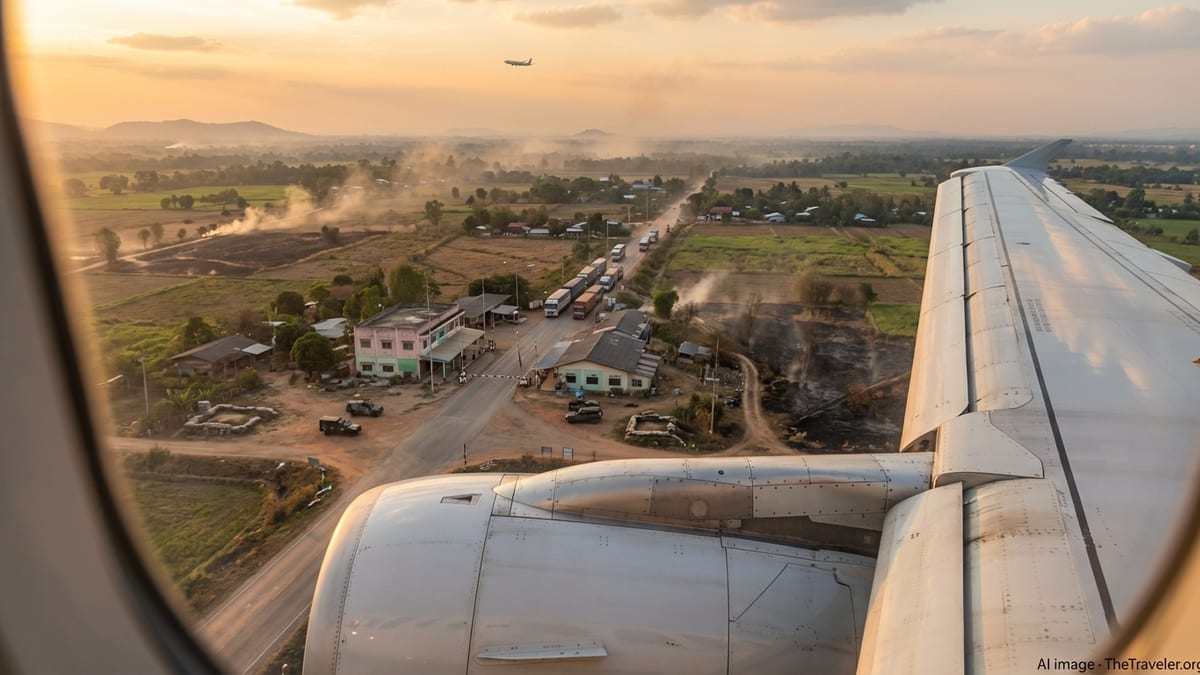
Flight Briefly Departs Minneapolis Before Turning Back
Publicly available flight-tracking information shows that a SkyWest Airlines service operating under the SkyWest code SKW4607 on the Minneapolis–Saint Paul to Detroit route began its journey as scheduled before making a turn back toward Minneapolis. The aircraft, operating on behalf of a major U.S. network carrier under a codeshare arrangement, departed from Minneapolis–Saint Paul International Airport and climbed away from the Twin Cities before the change in routing became apparent on tracking displays.
Data points indicate that the aircraft did not continue on the planned eastbound track toward Detroit Metropolitan Wayne County Airport for the full duration of the sector. Instead, the flight trajectory shows a relatively early reversal in course, consistent with a precautionary return to the departure airport rather than continuation to the original destination.
There were no immediate indications in publicly available operational summaries of severe weather or airspace disruptions specifically along the Minneapolis to Detroit corridor at the time, suggesting that the decision to return may have been related to factors specific to the aircraft or flight rather than regional conditions. However, the precise reason for the diversion was not listed in open flight-status summaries.
On flight-tracking timelines, the return to Minneapolis appears within a relatively short period after takeoff, a pattern typical of events in which flight crews opt to bring an aircraft back to base so any technical, operational or cabin-related concern can be assessed on the ground.
Regional Operator Serving Major-Hub Route
SkyWest Airlines operates as a regional carrier for several large U.S. network airlines, including Delta Air Lines and others, typically flying smaller regional jets on short and medium-haul routes between key hubs and spokes. The Minneapolis to Detroit corridor is among the high-frequency Upper Midwest routes where regional aircraft are commonly used to supplement mainline jet services.
Route and schedule information published by industry data providers describes Detroit and Minneapolis as significant connecting points within SkyWest’s partner networks, with multiple regional departures each day. These flights are often marketed under a major airline’s two-letter code while being flown by SkyWest flight crews and aircraft under the SkyWest “SKW” designator in operational systems.
Documents such as federal filings and carrier fact sheets describe SkyWest’s role as operating flights under capacity purchase agreements, in which the major airline controls scheduling and ticket sales while SkyWest provides aircraft and crews. On the Minneapolis to Detroit pairing, regional jets typically operate in configurations of roughly 50 to 76 seats, linking two of the Upper Midwest’s primary hubs for domestic and international connections.
The use of regional aircraft on hub-to-hub routes allows the partnering mainline airline to adjust capacity throughout the day, pairing larger mainline aircraft at peak times with smaller jets at off-peak periods. In this context, a single flight returning to origin is operationally significant for affected travelers but generally absorbed within a wider schedule that includes multiple daily frequencies.
What Flight-Tracking Data Reveals About the Return
While airlines do not routinely publish detailed narratives about individual in-flight decisions, modern flight-tracking platforms provide partial insight into what occurred. For SKW4607, those tools show an initial departure from Minneapolis followed by a change in heading and altitude profile that aligns with an early return scenario rather than a continuation to Detroit or diversion to an alternate airport along the route.
Tracking histories for other Minneapolis to Detroit services around the same period show standard point-to-point operations with typical flight times of around one and a half hours. The early termination of SKW4607’s progress toward Detroit stands out against this pattern, reinforcing the characterization of the event as a return to origin rather than routine re-routing for traffic-management reasons.
Publicly available data did not indicate an extended holding pattern or multiple approaches, which can be associated with broader airspace congestion or adverse weather. Instead, the path appears comparatively direct back to Minneapolis, suggesting a clear operational decision to conclude the flight at the departure airport in a controlled manner.
In the absence of formal explanatory statements, observers typically rely on such trajectory details, timing and comparisons with other flights on the same route to infer the nature of an incident. In this case, the profile is consistent with a precautionary diversion rather than a prolonged in-flight irregularity.
Impacts on Passengers and Schedule Recovery
For passengers onboard SKW4607, the immediate effect of a return to Minneapolis would likely have been delay in reaching Detroit and potential disruption to onward connections. On hub-to-hub routes with multiple daily departures, however, airlines often seek to re-accommodate travelers on later services the same day, especially where seat availability allows.
Operational data and industry reporting practices suggest that in similar events passengers are commonly rebooked onto subsequent flights operated either by SkyWest or by the partnering mainline carrier, depending on schedule fit and aircraft type. In some cases, a replacement aircraft is assigned if the original equipment requires additional checks, while in others travelers are consolidated onto regularly scheduled departures already in the timetable.
From a network perspective, a single flight returning to origin can trigger a series of adjustments, including potential crew reassignments and changes to aircraft routing later in the day. Regional operators such as SkyWest typically build some flexibility into their schedules, but multiple irregular operations within a short period can compound delays across the network.
There were no public indications that the SKW4607 return led to prolonged cancellations on the Minneapolis to Detroit route, which continued to be served by other flights in the following periods according to timetable data and live departure boards.
Context Within SkyWest’s Broader Operations
The SKW4607 event took place against the backdrop of a large, complex regional operation that connects smaller cities and major hubs across the United States. Company fact sheets and regulatory filings describe SkyWest as operating thousands of daily departures under the brands of its major-airline partners, using a fleet of regional jets based at hubs such as Minneapolis and Detroit.
Industry analyses frequently note that regional carriers operate under rigorous safety and maintenance oversight that is aligned with national standards for commercial aviation. When flight crews detect any anomaly that merits further investigation, returning to the gate or to the departure airport is considered a conservative, precautionary step designed to prioritize safety over schedule.
Events involving returns to origin are tracked in internal reliability statistics and can influence future scheduling, maintenance planning and training focus. For travelers, such diversions can be inconvenient, but they also highlight the conservative decision-making frameworks in place in U.S. commercial aviation, particularly on short-haul routes where alternate flights and operational resources tend to be more readily available.
As of the latest available data, SkyWest and its partner airlines continued regular service on the Minneapolis to Detroit corridor, underscoring that the SKW4607 return appears to have been an isolated operational incident within an otherwise routine day of regional flying.