


More news on this day
The US Flight Disruption Index ticked higher in July 2026 as at least 141 flights were canceled across major hubs and carriers, with Chicago O’Hare, Southwest Airlines and Delta Air Lines among the operations most exposed to a volatile mix of summer storms, congestion and tight schedules.
Get the latest news straight to your inbox!
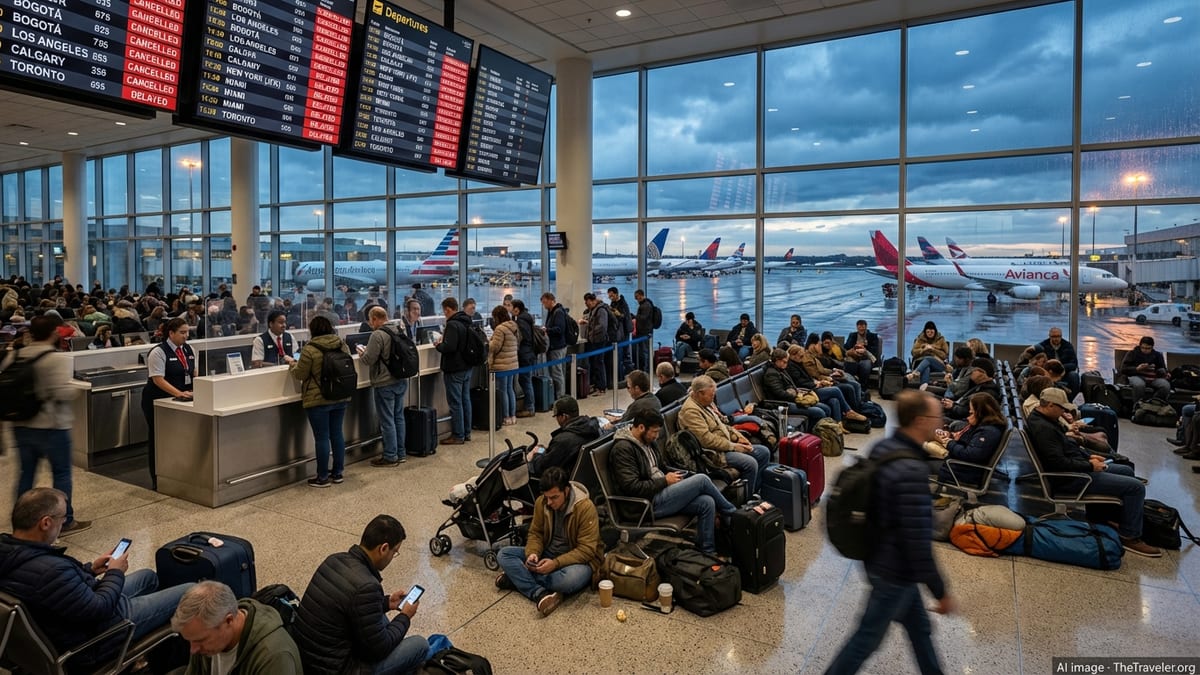
Summer turbulence pushes disruption metrics higher
Air travel data for July indicates a noticeable rise in the US Flight Disruption Index, a composite measure derived from publicly reported cancellations, delays and ground stops. Industry trackers show that cancellations surged into the triple digits in recent days, surpassing 141 flights across the country as peak vacation travel coincided with severe weather and airspace constraints.
Chicago O’Hare International Airport, one of the nation’s busiest hubs by daily movements, has been a focal point for the disruption. Reports from operational dashboards and aviation analytics platforms show clusters of same-day cancellations and rolling delays on routes into and out of O’Hare, particularly during thunderstorm activity over the upper Midwest.
The July uptick follows a broader pattern of stress visible in federal consumer reports and airline punctuality rankings for the spring and early summer. While overall nationwide cancellation rates have remained well below the most disruptive periods of recent years, the absolute number of affected passengers has grown as airlines schedule more peak-day flights and squeeze additional capacity into constrained hubs.
Analysts note that the higher Flight Disruption Index reading reflects not only outright cancellations but also longer taxi times, diversion events and multi-hour delays that ripple across carriers’ networks. Each cancellation at a hub airport can displace hundreds of travelers, and multiple cancellations in quick succession can quickly multiply the impact across connecting cities.
Chicago O’Hare confronts limits as traffic swells
Chicago O’Hare has entered the height of the 2026 summer season with more flights on peak days than a year ago, even as it continues to manage structural constraints and weather-related bottlenecks. Federal aviation data and local airport information show that on-time performance at O’Hare remains under pressure when convective storms move through the Great Lakes region and when arrival and departure queues build during afternoon rush periods.
In early July, regulators extended existing limits on scheduled operations at the airport for another year, citing the need to keep traffic at a level that the surrounding airspace and runways can handle under typical summer conditions. Publicly available information about that decision notes that the order is intended to prevent excessive delays and cancellations that might otherwise occur on peak travel days if carriers attempted to add even more flying.
Despite these caps, operational data suggests that O’Hare still sees dense arrival banks and departure waves, particularly for large network carriers using the airport as a connecting hub. When thunderstorms or low clouds force temporary ground stops or slow arrival rates, the resulting backlog can translate into late-day cancellations as airlines work to reset aircraft and crew rotations.
Travelers passing through O’Hare in July have reported crowded gate areas, rolling delay estimates and occasional last-minute cancellations as airlines reshuffle flights. While many passengers are being rebooked on later departures or routed through alternate hubs, the cumulative effect contributes to the elevated disruption index reading for the national system.
Southwest and Delta cancellations highlight different vulnerabilities
Southwest Airlines and Delta Air Lines have also featured prominently in July’s disruption figures, though for different structural reasons. Southwest operates a point-to-point network with a heavy concentration of short-haul flights, which can leave it sensitive to knock-on effects when a single weather system disrupts multiple cities on the same aircraft line.
Industry on-time performance snapshots for late spring and early summer indicate that Southwest’s punctuality has slipped compared with some legacy competitors, with a larger share of its schedule arriving late and a measurable number of flights canceled on busy days. Aviation data providers point to congested gateways, tight turn times and storm-prone regions as contributing factors behind the cancellations counted toward the July index.
Delta, by contrast, has generally reported stronger on-time statistics over recent reporting periods, but still faces pockets of cancellations when severe weather affects its hub network or when regional partners encounter crew and aircraft imbalances. Federal consumer reports for 2026 list several long tarmac delays and diversion events involving Delta and its regional affiliates, illustrating how quickly a localized disruption can expand into cancellations later in the day.
July’s tally of at least 141 cancellations across O’Hare, Southwest and Delta reflects these combined vulnerabilities. A band of thunderstorms through the Midwest or East Coast can simultaneously affect Southwest’s point-to-point flights and Delta’s hub operations, leading to overlapping disruption that pushes the national index higher even when each individual carrier maintains a relatively modest cancellation rate.
Weather, staffing and infrastructure converge to strain operations
Meteorologists and aviation planners had already warned that the 2026 summer travel season would be challenging, with an active pattern of convective storms across central and eastern states coinciding with record passenger demand. Publicly available advisories from airlines and airports in June and July show multiple travel waivers issued for the Chicago region and other major hubs in response to forecast lightning, heavy rain and low ceilings.
At the same time, staffing and infrastructure constraints continue to play a role in how quickly airlines can recover from disruptions. Airlines and air traffic control facilities have rebuilt much of their workforces since the sharp reductions earlier in the decade, but industry reports still highlight tight crew availability on certain fleets and at busy bases. When storms cause extended ground stops or require rerouting around congested airspace, those staffing margins can be quickly exhausted, making cancellations more likely late in the day.
Ground infrastructure adds another layer of complexity. Taxiway congestion, limited gate availability at peak hours and the need to accommodate diverted aircraft can all extend handling times and contribute to missed connection windows. Federal data on tarmac delays in 2026 shows several multi-hour events tied to storm systems that passed through the Midwest earlier this year, underscoring the fragile balance between schedule density and recoverability.
These interacting factors mean that even a modest increase in July storm activity can produce a disproportionate increase in cancellations and missed connections. The 141 cancellations associated with O’Hare, Southwest and Delta this month represent only a fraction of total US operations, but they serve as a visible indicator of how close the system is running to its limits on busy weekends and holiday periods.
What rising disruption means for US travelers
The elevated US Flight Disruption Index in July carries practical implications for travelers planning trips through the remainder of the summer. Historical patterns and current advisory trends suggest that late afternoon and evening departures through storm-prone hubs face a higher risk of cancellation or significant delay when convective weather is in the forecast.
Travel experts who track operational data recommend that passengers build more flexibility into their itineraries when routing through congested airports such as Chicago O’Hare, New York-area hubs and key Southern gateways. Early-morning departures, longer connection windows and willingness to accept rebookings through alternate cities can help mitigate the impact when cancellations do occur.
For Southwest and Delta customers specifically, published performance snapshots suggest that the overall likelihood of a flight operating as scheduled remains high, but that the small percentage of cancellations is concentrating on weather-affected days and on routes that depend on tightly timed aircraft turns. Travelers may benefit from monitoring airline apps closely on travel days and considering proactive changes when thunderstorms appear in the forecast along their route.
Market observers expect the Flight Disruption Index to remain elevated through the core of the summer before easing as schedules taper after the Labor Day holiday. How airlines, airports and regulators manage the remainder of July and August will provide an early indication of whether the system can absorb continued growth in demand without a more sustained rise in cancellations and delays.