


More news on this day
LNER is preparing to add extra rail capacity into Newcastle for the 2026 AJ Bell Great North Run, aligning special services with a radically expanded East Coast Main Line timetable and the return of the half marathon on Sunday 13 September 2026.
Get the latest news straight to your inbox!
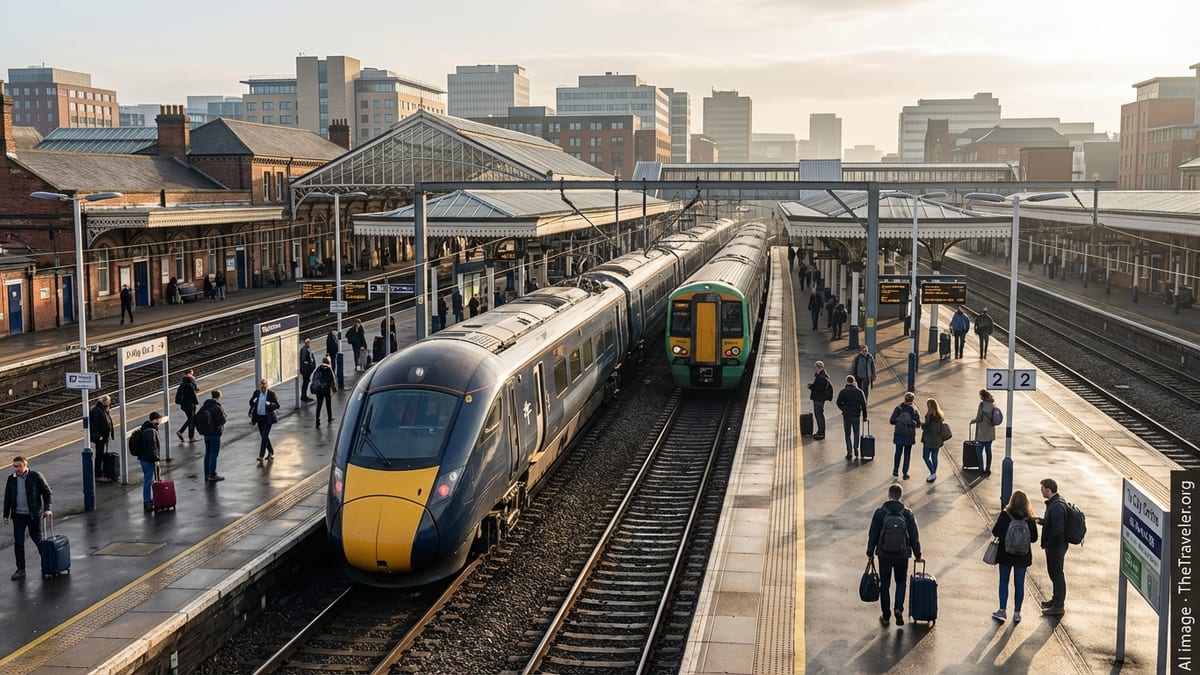
Extra capacity planned around Great North Run weekend
The Great North Run is scheduled to return to its traditional Newcastle to South Shields course on Sunday 13 September 2026, with tens of thousands of runners and spectators expected to travel into Tyneside. Multiple event partners, including charities and transport operators, already list the 2026 date and promote associated travel planning, underlining the scale of demand anticipated for the weekend.
Published coverage of recent editions shows that LNER has increasingly used targeted extra trains to cope with event crowds. For the 2025 Great North Run, the operator announced five additional morning services into Newcastle from Leeds, Doncaster, York, Edinburgh and intermediate stations, providing thousands of extra seats on top of the regular timetable. That pattern of bespoke services into the city on race morning is widely expected to form the template for 2026 planning.
Rail industry news reports for the current year also describe LNER preparing additional Great North Run trains that overlay the base timetable rather than replacing existing services. These extras have typically been timed to arrive in Newcastle before mid morning, giving runners enough time to reach assembly areas close to the start on the city side of the River Tyne.
Although detailed 2026 working timetables are not yet published, the combination of a confirmed event date and LNER’s recent practice of event day extras points to another year of strengthened rail provision for England’s largest half marathon.
New East Coast timetable brings more trains into Newcastle
The extra services for the Great North Run will build on significant underlying growth in LNER’s Newcastle service pattern. A major East Coast Main Line timetable change is due to take full effect from December 2025, increasing the number of LNER trains between Newcastle and London King’s Cross from two to three per hour in each direction. According to publicly available LNER briefings, that represents 37 additional services on a typical weekday compared with the previous pattern.
Under the revised timetable, an hourly limited stop service between Newcastle and London is planned to operate seven days a week, with southbound journeys taking just under 2 hours 50 minutes and calling only at York. Independent economic analysis cited by LNER suggests that the enhanced timetable could generate at least an additional £13 million a year for the North East economy, on top of hundreds of millions already attributed to East Coast Main Line investment.
More frequent London services are intended to sit alongside existing flows to Edinburgh and intermediate stations, giving Newcastle a denser long distance rail offering even before any event day extras are added. Early indications from enthusiasts and timetable summaries in 2026 also point to the reintroduction of InterCity 225 sets on selected North East services following the timetable change, adding further capacity on key diagrams.
As a result, by the time the 2026 Great North Run takes place, the baseline level of long distance rail connectivity into Newcastle is set to be higher than in previous years, making it easier to layer on bespoke Great North Run trains without displacing regular passengers.
Managing race day movements on a busy regional network
The Great North Run traditionally starts in Newcastle and finishes on the seafront at South Shields, with participants and spectators relying heavily on public transport to move between the city centre, the start area and the finish. Event information, local transport provider guidance and past participant accounts all highlight how busy the Tyne and Wear Metro, local buses and mainline trains become before and after the race.
In recent years, local bus and Metro operators have published dedicated Great North Run day ticket offers and special services to handle the surge in demand, including shuttle buses from South Shields back towards Newcastle. These measures help spread crowds across modes, but long distance travellers from Scotland, Yorkshire and the Midlands remain strongly dependent on LNER and other intercity operators to reach Tyneside in time for the race.
Integrating extra LNER trains with a constrained regional network is a recurring operational challenge. Squeezing additional Azuma or InterCity 225 paths into an already busy East Coast Main Line must be coordinated with other operators and any engineering work. Documents outlining LNER’s performance management in 2025 show how factors such as infrastructure failures and capacity pinch points around Newcastle can affect punctuality, underscoring the need for careful planning ahead of high profile events.
For 2026, the presence of an expanded core timetable means that any Great North Run extras will need to be timetabled with precision to avoid bottlenecks, particularly on the approaches to Newcastle Central. At the same time, the higher baseline frequency gives planners more flexibility to route passengers across a wider spread of services.
Economic and tourism benefits for Newcastle and the North East
The Great North Run is widely described in charity and organiser literature as the world’s biggest half marathon, with around 60,000 runners regularly taking part. The event has long been regarded as a major driver of visitor numbers and spending in Newcastle, Gateshead and South Shields, filling hotels and drawing spectators to the route each September.
LNER’s enhanced timetable and special Great North Run services align with wider efforts to capture the event’s economic potential. The additional London and cross border capacity from December 2025 is forecast, in LNER’s own reporting, to generate sustained annual economic benefits for the North East, reflecting both business and leisure travel. Overlaying event day extras on top of that base is expected to make it easier for runners, charities and supporters from across Britain to attend the 2026 race.
Charity partners promoting Great North Run 2026 places already encourage participants to book travel early, and direct them to official event channels for the latest transport details. As timetables for late summer 2026 are finalised, rail capacity is likely to feature prominently in guidance aimed at out of region visitors, with a particular focus on the strengthened London and Edinburgh links provided by LNER.
With the race now firmly scheduled for 13 September 2026 and long distance rail capacity into Newcastle increasing from late 2025, publicly available information suggests that the city is on course for one of its best connected Great North Run weekends yet.
LNER: Extra services for the Great North Run 2025
LNER: East Coast timetable transformation and Newcastle frequency uplift