


More news on this day
Ripple effects from renewed conflict and airspace restrictions across the Gulf are again unsettling Middle East aviation in late August 2026, with operational data and local coverage pointing to 611 delays and 66 cancellations hitting Dubai and other major regional hubs as airlines juggle longer routings, constrained corridors and shifting security advisories.
Get the latest news straight to your inbox!
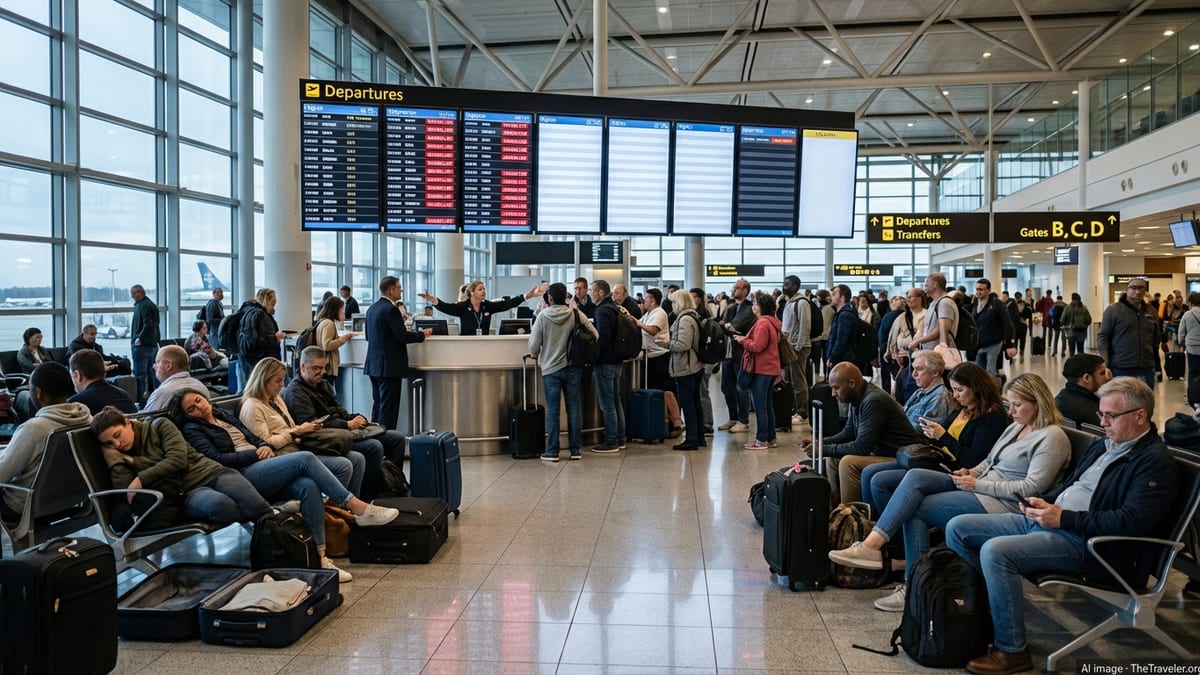
Conflict Fallout Keeps Pressure on Gulf Airspace
The renewed Iran conflict that erupted in late February 2026 continues to shape the operating environment for airlines across the Middle East, with strategic hubs still absorbing the aftershocks months later. Industry and policy analysis indicates that the initial wave of closures and restrictions forced thousands of cancellations across the region as carriers scrambled to replan routes between Europe, Asia and Africa around temporarily shut corridors and active conflict zones.
Economic assessments and situational briefings describe how airspace over Iran, Iraq, Lebanon and parts of the eastern Mediterranean remains subject to stringent risk controls. That patchwork has turned the Gulf into a narrow funnel for long haul traffic, concentrating flows into a smaller number of available corridors and amplifying the impact of any further tactical closures or flow-control measures. Even on days when airports remain fully open, those constraints can translate into knock-on delays across tightly banked hub schedules.
Global aviation monitoring shows that the Middle East is now one of the few regions where conflict-driven disruption is still materially affecting network planning in 2026. Capacity into and over the Gulf has been structurally reduced compared with pre-crisis norms, and regional hubs are operating with less schedule flexibility than before the first airspace shutdowns earlier in the year.
Dubai’s Mega Hub Feels the Strain
Dubai International Airport, which typically handles hundreds of departures a day to more than 200 destinations, remains at the center of the disruption. The city’s status as a global transfer point means even localized changes elsewhere in the region can cascade through banks of connecting flights, affecting aircraft rotations, crew rosters and minimum connection times.
Airport communications and local coverage emphasize that Dubai has kept its runways open and retained most of its long haul connectivity, including to Europe, North America and Asia. However, the war’s early months brought temporary closures, capacity caps and a shift to limited repatriation and cargo operations, while airlines used secondary gateways in Saudi Arabia and Oman to move stranded passengers. Although those extreme measures have eased, the current pattern of 611 delays and 66 cancellations across Dubai and fellow hubs reflects an operating landscape that has not fully normalized.
Flight tracking services and on-the-ground reports point to recurring clusters of late departures and arrivals at Dubai, particularly on eastbound routes that must avoid restricted airspace. Flow control over congested waypoints, extended routings around hot spots and tighter crew duty limits can all translate into missed slots and rolling delays throughout a day’s schedule. For travelers, that has meant a higher likelihood of missed connections and same-day rebooking, even when airports are officially described as operating normally.
Regional Hubs Share the Burden
The strain is not confined to Dubai. Other major Middle East hubs, including Doha, Abu Dhabi and key Saudi airports, have also recorded elevated disruption as airlines rebalance networks around shifting risk profiles and government guidance. Earlier phases of the crisis saw large volumes of cancellations at these gateways as carriers paused or rerouted traffic that would usually use the Gulf as a bridge between continents.
Data-led analysis of the crisis highlights that, at its peak, more than a third of scheduled flights across the wider region failed to operate on some days, before gradually improving as airlines and regulators carved out stable operating corridors. Today’s tally of 66 cancellations across major hubs suggests a more targeted pattern, focused on specific city pairs and time windows where rerouting or crew constraints make operations uneconomical or impractical.
Some carriers based outside the region have extended suspensions of services to Gulf destinations, citing the combination of longer flight times, insurance considerations and uncertain demand. That has shifted more of the heavy lifting onto local airlines, which continue to operate dense networks but with schedules reshaped by longer block times and additional operational buffers.
How the Crisis Is Reshaping Airline Operations
The current wave of 611 delays and 66 cancellations rests on a broader operational reset among Middle East and global airlines. Extended routings around closed or high-risk airspace have increased fuel burn and reduced daily aircraft utilization, shrinking the margin for recovery when things go wrong. Longer flights demand more crew time, and tight duty limits can quickly turn a modest delay into an overnight disruption if a rotation misses its planned slot.
Publicly available industry commentary indicates that Gulf super-connectors have responded by retiming departure banks, consolidating some low-demand flights and temporarily trimming frequencies on routes where connectivity can be preserved via alternative hubs. Selective cancellations, rather than wholesale schedule cuts, are being used as a tool to protect the reliability of core long haul links, especially those carrying significant transfer traffic.
Analytics from airport and airline data providers suggest that while headline passenger numbers at Dubai and other hubs have remained robust compared with the immediate aftermath of the initial strikes, underlying performance indicators tell a more complex story. On-time performance has been weaker than in 2025, particularly on long haul corridors intersecting the Gulf, and average delay minutes per flight have risen. That trend underpins the accumulated count of delays now being tracked across the region’s busiest gateways.
What Travelers Should Expect in Late 2026
For passengers planning to transit Dubai or neighboring hubs over the coming weeks, publicly available advisories and travel industry guidance point to a mixed picture. Airports across the United Arab Emirates, Qatar and Saudi Arabia are open, and most scheduled flights are operating. At the same time, the persistent risk of last-minute airspace adjustments means even confirmed services can experience significant timing changes with limited warning.
Travel specialists recommend allowing longer connection windows through Gulf hubs, especially for itineraries involving eastbound long haul flights that must route around restricted corridors. The clustering of 611 delays illustrates how quickly punctuality can deteriorate during peak periods if a few key waypoints become congested or if air traffic control introduces flow restrictions along constrained corridors.
Passengers are also being encouraged to monitor airline apps and airport websites closely on the day of travel, as same-day retimings and aircraft substitutions remain common. While the current level of 66 cancellations across Dubai and other major hubs is far below the early-crisis peaks, the experience of the past months suggests further pockets of disruption are possible as long as underlying regional tensions and airspace limits persist.
For now, the Middle East’s aviation system continues to function, but with less slack than in previous years. Dubai and its fellow hubs remain central to global connectivity, yet the combination of conflict, airspace constraints and network complexity has made routine travel more fragile, translating into the hundreds of delays and dozens of cancellations now shaping the experience of passengers passing through the region.
Cirium: Impacts to Middle East Hub Airports and Airlines
Dubai Airports: DXB connectivity and regional disruption update
IATA: Global Air Traffic Disruptions in Strategic Middle East Hub