


More news on this day
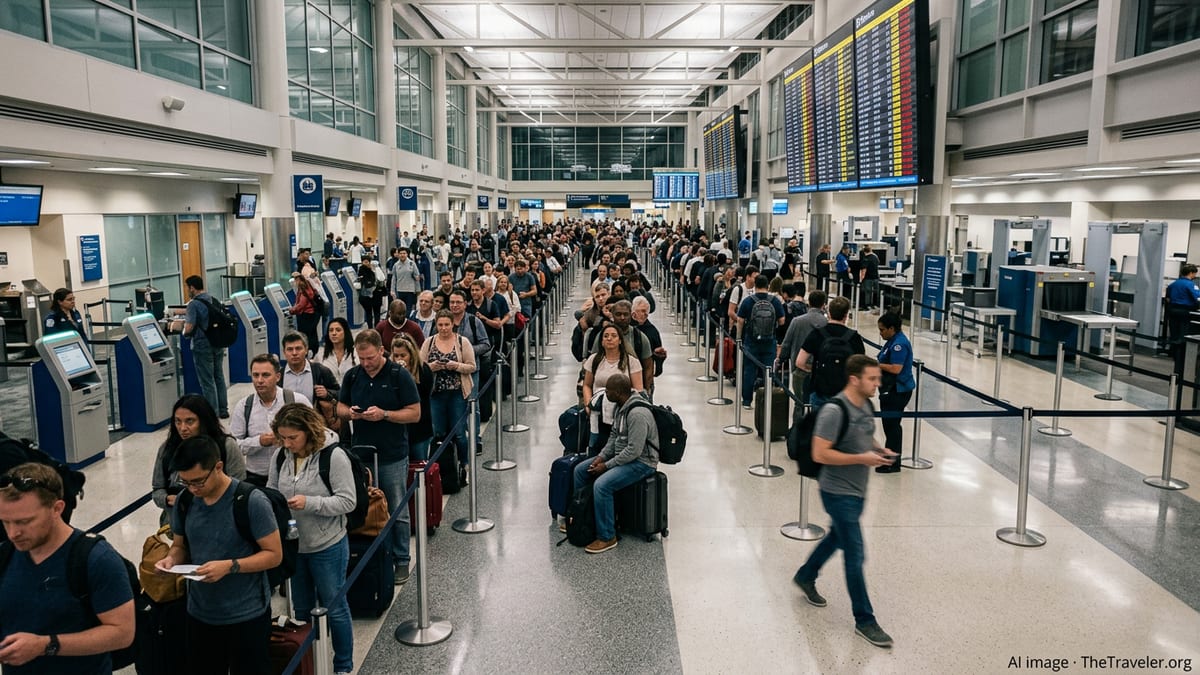
Operations at Boston Logan International Airport were severely strained on Sunday, with publicly available flight-tracking data showing 137 delayed departures and arrivals and five cancellations, disrupting JetBlue, Republic, Delta and other major carriers on routes spanning the United States, Canada, Germany, France, South Korea and additional destinations.
Get the latest news straight to your inbox!
Ripple Effects Across Domestic and International Networks
According to multiple flight-status dashboards that aggregate data from airline and aviation feeds, delays at Logan on June 21 affected a broad mix of short-haul and long-haul services. Disruptions were recorded across high-frequency domestic corridors such as Boston to New York, Washington, Atlanta, Chicago and key transcontinental links, as well as transatlantic routes connecting Boston with hubs in Germany and France.
Internationally, widely used trackers showed schedule changes and late arrivals on flights linking Boston with major Canadian gateways, while long-haul services toward East Asia, including itineraries involving South Korea, also absorbed knock-on delays as aircraft and crews fell out of position. While most affected flights eventually departed or arrived, the compounding impact of rolling delays left many itineraries misaligned with their planned connections.
Industry data for recent months has highlighted Boston among large U.S. airports with some of the lowest on-time arrival performance, a trend that has increased the sensitivity of Logan’s operation to any added strain. When dozens of flights shift even modestly from their scheduled times, the congestion can cascade into later rotations, particularly for airlines that rely on tight turnarounds.
The five cancellations recorded on Sunday, though small compared with the total flight volume, created outsized disruption for travelers whose options out of Boston and onward to secondary markets were limited once seats on alternative services began to fill.
JetBlue, Republic, Delta and Other Carriers Under Pressure
JetBlue, which maintains one of its largest operations at Boston Logan, appeared prominently in Sunday’s disruption profile, with flight-tracking tools listing the carrier on a significant share of delayed departures and arrivals. Public documents and recent analyses have noted that JetBlue’s concentrated Northeast network, centered on Boston and New York, can leave it particularly exposed when conditions deteriorate at those hubs.
Republic Airways, operating regional services under major-brand banners, also figured into the tally of delayed movements. As a key provider of feeder flights that connect smaller U.S. cities to Boston, schedule problems on Republic-operated segments can quickly reverberate, severing links for passengers relying on same-day connections to and from long-haul services.
Delta Air Lines, which has expanded its presence at Logan in recent years, likewise experienced delays among its Boston departures and arrivals. The airline has been in the spotlight this weekend after a widely reported go-around involving one of its flights approaching Logan, an incident that remains under federal review. While that specific episode did not result in injuries, it contributed to operational complexity on a morning when controllers and airlines were already working to manage tight runway and gate capacity.
Other major U.S. carriers and a number of international airlines serving Boston were also listed with delayed flights, reflecting the shared reliance on Logan’s constrained runways and terminal infrastructure during peak periods.
Operational Strain, Weather Systems and Network Congestion
Publicly available aviation data and recent consumer reports indicate that flight delays and tarmac waits across the United States have reached some of their worst levels in years, driven by a blend of strong travel demand, limited spare aircraft, staffing challenges and weather-related traffic management programs. Boston has appeared repeatedly in federal statistics as one of the large airports with elevated delay rates.
On Sunday, the pattern at Logan fit into that broader picture. While skies over Boston were not marked by a major local storm system during the height of the disruptions, thunderstorms and traffic management initiatives elsewhere in the national airspace, including at other hub airports, contributed to ripple effects in aircraft and crew positioning. In several cases, flights scheduled to depart Boston were reliant on inbound aircraft arriving late from other cities facing congestion and weather delays.
Runway and taxiway configuration at Logan, which sits on a compact footprint along Boston Harbor, also leaves little margin when traffic bunches up at similar times of day. Recent infrastructure work on runways and taxi surfaces has at times required operational adjustments, and sector congestion in the busy Northeast corridor can prompt air traffic managers to meter flows into and out of the airport, lengthening ground and airborne holding times.
Airlines across the industry have emphasized in public comments that safety margins take precedence over on-time performance, particularly when traffic levels are high. As a result, conservative spacing between aircraft and occasional ground stops upstream from Boston can quickly translate into a visible spike in delays on airport departure and arrival boards.
Impact on Travelers and Options for Rebooking
For passengers at Logan on Sunday, the practical effects of the 137 delays and five cancellations included missed connections, late-night arrivals and, in some instances, the need to secure hotel rooms or alternative transport at short notice. Travelers on affected flights to Canada, Europe and Asia faced particular challenges, as limited frequencies on some long-haul routes meant that the next available departure might not be until the following day.
Consumer advisories published in recent months have repeatedly urged passengers flying through Boston to build additional connection time into itineraries, especially during busy summer travel periods and in winter, when weather volatility is higher. Guidance also encourages travelers to monitor airline apps and flight-tracking platforms closely, as rolling delays can escalate over the course of a day.
On Sunday, reports from travelers and public discussion on social platforms suggested a mix of experiences at Logan. Some passengers were able to secure same-day rebookings on later flights or on competing carriers, while others described long lines at customer-service counters and challenges securing timely information about evolving departure times.
Travel experts typically recommend that passengers facing extended delays document their disruption, keep receipts for meals or lodging, and review airline policies on compensation and rebooking, which can vary depending on whether the cause is within the carrier’s control or related to weather and air traffic management constraints.
Logan’s Role in a Strained Summer Travel Season
Sunday’s disruption at Boston Logan comes as the broader U.S. aviation system moves through a demanding summer travel season marked by high passenger volumes and a network still adapting to staffing and fleet changes adopted in recent years. Federal statistics and independent analyses have pointed to 2025 as one of the poorest years for on-time performance in the past decade, and early data for 2026 indicate that many of the same pressures remain in place.
Logan’s importance as a gateway for New England, combined with its strong European and growing transpacific links, means that even a modest number of cancellations or a temporary spike in delays can have disproportionate consequences for travelers across a wide geography. When operations at Boston falter, connections from smaller U.S. communities and Canadian cities into long-haul flights, including those bound for Germany, France and South Korea, can be particularly vulnerable.
Publicly available planning documents from the airport operator describe ongoing efforts to expand and modernize terminals and airfield infrastructure, with the aim of improving resilience during peak travel waves. However, any capacity gains are likely to be tested as long as travel demand continues to rise and airlines run schedules that leave limited slack for recovery.
For now, Sunday’s count of 137 delays and five cancellations at Boston Logan offers another data point in a year where travelers across North America and beyond are encountering frequent disruptions, and where even routine operational challenges can quickly ripple across continents.