


More news on this day
Flight delays at Boston Logan International Airport eased on Tuesday morning after an air traffic control equipment failure in the Philadelphia area grounded or delayed hundreds of flights across the Northeast on Monday, snarling travel at some of the region’s busiest hubs.
Get the latest news straight to your inbox!
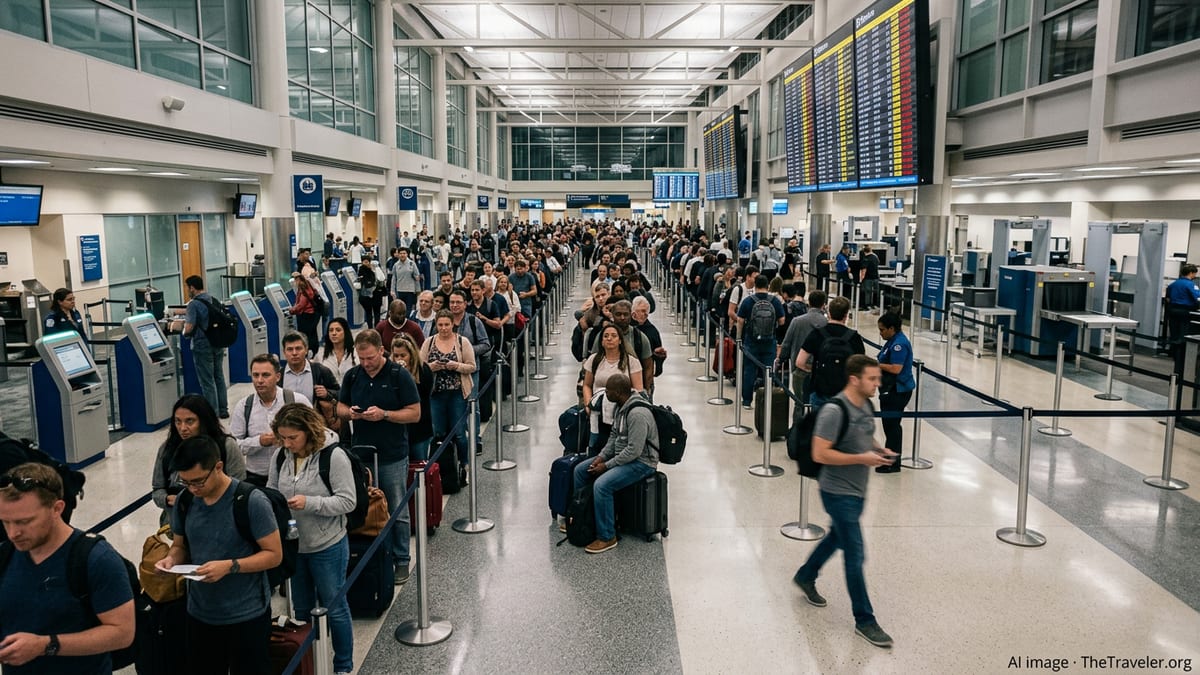
From widespread ground stops to gradual recovery
Publicly available information shows that the disruption began on Monday, September 21, when a critical circuit failed at an air traffic control facility serving Philadelphia. Backup lines were also affected after a fiber cable was damaged at a New Jersey construction site, triggering ground stops at several major airports including Newark Liberty, Philadelphia International, LaGuardia, John F. Kennedy, and Boston Logan.
According to published coverage and flight-tracking data, arrivals into Philadelphia were halted for much of Monday, and operations were sharply curtailed across the New York and New England air corridor. Traffic bound for the affected airports was held on the ground at departure points or diverted en route, creating a cascading effect that rippled through airline schedules nationwide.
By Monday evening, transportation officials reported that the damaged telecommunications lines had been repaired and that the Federal Aviation Administration was lifting ground stops across the Northeast. Although the immediate technical issue was resolved, clearing the backlog of delayed aircraft, crews, and passengers has taken longer, leaving airlines to work through displaced equipment and out-of-position staff into Tuesday.
At Logan, data compiled by flight-tracking services indicated that more than 450 flights were delayed and upward of 70 were canceled by late Monday. The airport was placed under a formal ground delay program, which required airlines to meter departures and arrivals based on the reduced capacity of the regional air traffic control system rather than the airport’s own runway and gate availability.
Impact on Boston travelers and Tuesday’s outlook
On Monday afternoon and evening, publicly available dashboards from the Federal Aviation Administration and sites such as FlightAware showed average delays at Logan reaching around 90 to 105 minutes, with some flights experiencing significantly longer waits. A mix of the equipment outage and low cloud ceilings over the region contributed to the congestion, limiting the rate at which aircraft could be safely spaced for takeoff and landing.
As of early Tuesday, September 22, reports from local outlets in Boston indicated that the situation at Logan was improving, with substantially fewer delays than the day before. However, airlines continued to cancel or retime some departures as they repositioned aircraft that had been diverted or held at other airports during the outage.
Public advisories from Logan’s operator and major airlines continued to urge passengers to check their flight status before leaving for the airport, noting that residual disruptions were likely through the day. Travelers on early-morning departures generally faced shorter waits, while afternoon and evening flights were more exposed to ongoing schedule adjustments and the knock-on effects of earlier delays.
Construction work at Logan, including runway and taxiway projects that were already contributing to lengthier afternoon delays in recent weeks, added another layer of complexity for airlines rebuilding their schedules. While the technical failure occurred outside Massachusetts, the combination of constrained runway capacity at Logan and limited air traffic flow in the wider Northeast meant that the airport’s recovery has been more gradual than a typical single-weather event.
Cause of the outage and the regional picture
According to reporting from national and regional outlets, the air traffic disruption was traced to a telecommunications failure linked to a cut fiber line in New Jersey that was part of the network connecting facilities in the Philadelphia area. That failure affected systems used to manage and communicate with aircraft in a busy stretch of controlled airspace, prompting the FAA to slow or stop traffic into multiple airports while safeguards were put in place.
Philadelphia International Airport saw hundreds of delays and cancellations as a result, and New York-area hubs such as Newark and LaGuardia experienced near standstills for portions of the day. Aircraft destined for New York and Philadelphia were in some cases diverted to airports including Boston, which increased gate and ramp congestion even as Logan’s own departures were being held back.
Industry data and published coverage indicate that altogether, the outage led to thousands of delayed and canceled flights across the United States, as aircraft that normally cycle through the Northeast during the day fell out of position for subsequent routes. This wider network disruption is one reason flight schedules have remained fragile into Tuesday, even after the immediate technical problem was resolved.
Early assessments shared in public briefings described the incident as a telecommunications and fiber-infrastructure problem rather than a cybersecurity event. Additional reviews of how the outage unfolded, and whether redundancies functioned as intended, are expected to continue in the coming days as aviation authorities and service providers analyze system logs and repair records.
What passengers flying through Logan should know
For travelers planning to use Logan on Tuesday and in the next several days, airline and airport communications stress the importance of monitoring flight status frequently. Because many aircraft and crews are still recovering from Monday’s disruption, published guidance notes that flights that appear on time in the morning can later be delayed if inbound aircraft encounter lingering congestion elsewhere in the system.
Airlines generally encourage passengers to enroll in text or app-based notifications so they can receive updates on gate changes, departure times, and any potential rebooking options. With lines at customer service counters lengthening quickly during disruptions, digital tools can offer faster access to alternative routings if a connection is missed or a flight is canceled.
Travelers connecting through other affected hubs such as Newark, Philadelphia, JFK, or LaGuardia may face additional uncertainty, since operations there are also in recovery mode. Publicly available information from flight-tracking services shows elevated delay levels at those airports on Tuesday, although markedly lower than peak figures recorded on Monday.
Passengers who experienced substantial delays or cancellations are being directed in airline communications to review carrier-specific policies on meal vouchers, hotel accommodations, and refunds. Consumer resources point out that assistance varies depending on whether a disruption is considered within the airline’s control, and that travelers may need to retain boarding passes, receipts, and delay notifications if they plan to pursue reimbursement or file a complaint.
Continuing construction and a busy fall travel season
The latest disruption comes as Logan manages an extended period of construction and a busy fall travel calendar, factors that can magnify the impact of any external system failure. Runway and taxiway projects underway this fall have already prompted airlines to schedule additional buffer time on some afternoon and evening flights to and from Boston.
Travel industry coverage notes that passenger volumes at Logan and other major Northeast airports remain high heading into late September, as business travel ramps up after summer and visitors arrive for conferences, sporting events, and New England’s foliage season. High utilization of aircraft and tight crew scheduling leave airlines with less flexibility to absorb large-scale disruptions without visible effects at the terminal.
Aviation analysts quoted in recent coverage of the outage have highlighted how interdependent the Northeast corridor has become, with a single control center or telecom node serving multiple large airports. When problems arise at one point in that network, airports hundreds of miles away can see delays and diversions within hours, even if their local weather is clear and their runways are open.
For travelers, the events of the past two days serve as a reminder that technical issues far from their departure point can still reshape their plans. In the short term, passengers flying through Boston are likely to see operations continue to normalize, but with occasional knock-on delays as airlines and airports across the region work to restore the finely tuned rhythm of the Northeast air traffic system.