


More news on this day
Travelers at Boston Logan International Airport faced mounting delays and cancellations after a Federal Aviation Administration equipment failure in the Northeast disrupted air traffic and triggered ground stops at multiple major airports.
Get the latest news straight to your inbox!
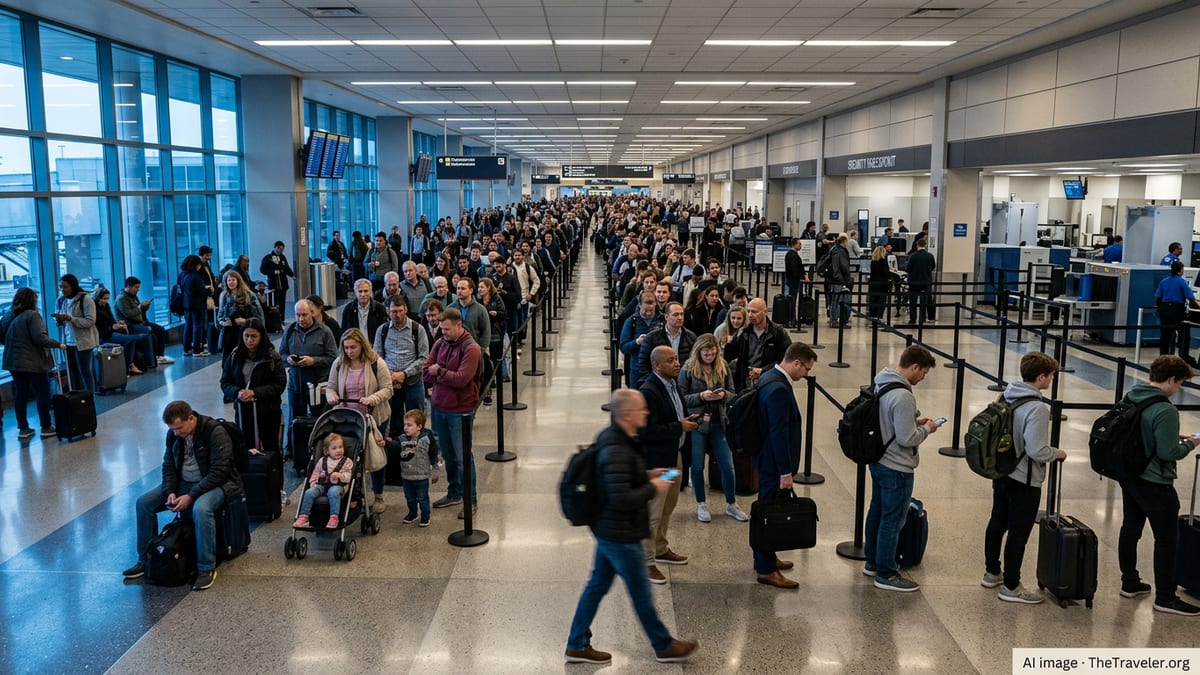
Regional equipment failure ripples into Boston
Publicly available information shows that a technical problem at a key Federal Aviation Administration facility serving the New York and Philadelphia region on Monday, September 21, led to widespread disruption across the Northeast airspace. Flight tracking data and news coverage indicate that ground stops were ordered at several large airports, including Newark Liberty International Airport, John F. Kennedy International Airport, LaGuardia Airport and Philadelphia International Airport.
The outage was linked to a damaged fiber optic line in New Jersey, according to national news reports and aviation industry summaries. The cut line affected communications and frequencies used by air traffic controllers, forcing the FAA to slow or temporarily halt departures and arrivals while traffic was rerouted and backup systems were brought online.
Although Boston is outside the core New York airspace, Logan quickly felt the consequences. Flight boards on Monday afternoon showed hundreds of delayed and canceled departures and arrivals, with many flights held at gates or diverted from airports farther south as controllers worked through the backlog.
Massport’s public alerts page, which provides real time operational notices, stated that air traffic control equipment issues across the Northeast were affecting flights into and out of Boston Logan. The notice advised travelers to expect delays and to check directly with their airlines for the latest status.
Ground delay program and runway work compound backups
Coverage from local outlets in Boston indicates that Logan was placed under a ground delay program for much of Monday. Under such a program, departures are metered and assigned specific departure slots in order to manage congestion in the national airspace system. Flight status tools cited in that coverage showed average delays at Logan reaching roughly 105 minutes during the peak of the disruption, with some services facing significantly longer waits.
Operational constraints at Logan itself added to the strain. Reports describe ongoing runway and airfield construction that has limited capacity at the airport in September and October. Work to add safety measures on at least one runway, along with airfield improvement projects, has required periodic closures and altered traffic patterns, leaving less flexibility when an external shock such as Monday’s equipment failure occurs.
Local broadcast coverage noted that Logan was also contending with low cloud ceilings on Monday, a weather factor that can require increased spacing between aircraft for safety reasons. With one runway partially unavailable and weather limiting throughput, the airport was less able to absorb the additional arrivals from diverted flights and delayed departures feeding into the same limited airspace.
By Monday evening, federal transportation updates indicated that the damaged telecom lines had been repaired and the immediate technical issue resolved. Even so, Logan’s evening schedule continued to reflect rolling delays as aircraft and crews ended up out of position and airlines reshuffled rotations.
Tuesday travel: fewer delays, lingering disruption
On Tuesday morning, September 22, the situation at Logan showed signs of improvement but had not fully normalized. Early morning flight data cited in Boston based coverage reported a few dozen delayed departures and arrivals and a small number of cancellations, far fewer than the hundreds recorded the previous day but still above typical weekday levels.
Reports indicate that average delays had dropped back from the previous day’s highs, with many flights departing within an hour of schedule. However, airlines were still working through knock on effects such as aircraft starting the day at the wrong airports, crew duty time limits after extended shifts on Monday and residual congestion on popular routes along the Northeast corridor.
Logan’s operator advised travelers in public messaging to arrive with extra time, monitor airline apps or airport displays frequently and prepare for the possibility of gate changes and rolling departure time adjustments throughout the day. Some carriers adjusted schedules by proactively consolidating lightly booked flights or swapping aircraft types to move more passengers on fewer departures as the system recovered.
Travelers with connections through New York and Philadelphia hubs remained particularly vulnerable to disruption. Even as ground stops lifted, the backlog of delayed aircraft feeding into those hubs meant that missed connections and rebookings continued into Tuesday, with Boston passengers caught in the broader regional recovery effort.
What travelers through Logan should know now
Current information suggests that Monday’s outage was an isolated technical failure rather than a weather event, labor issue or intentional shutdown, but it has renewed attention on the resilience of critical infrastructure that links major Northeast airports. The incident also highlighted how quickly a localized equipment problem can cascade into long delays for airports such as Logan that depend on shared air traffic control facilities farther down the corridor.
For travelers with near term plans through Boston, airline and airport advisories emphasize the importance of checking flight status before leaving for the airport, even if the broader system appears to be recovering. Same day schedule changes, equipment swaps and crew reassignments can persist for 24 to 48 hours after a large scale disruption as operations teams work flights back into their normal patterns.
Reports from aviation data providers show that connecting itineraries to or from Newark, New York and Philadelphia remain the most exposed to residual delays. Travelers able to choose nonstop routes from Boston, particularly on carriers with strong local bases, may encounter fewer complications as the week goes on, though they are not entirely insulated from broader network effects.
Local coverage around Logan’s ongoing runway and airfield work also suggests that passengers should plan for somewhat elevated delay risk through the construction period, especially during peak afternoon and evening travel banks. While the worst of Monday’s disruption traces back to the FAA equipment failure, the convergence of infrastructure work, weather and regional constraints underscores how tight margins are in one of the country’s busiest air corridors.
Broader questions about Northeast airspace reliability
The latest disruption comes against a backdrop of prior technical issues and congestion episodes in the New York and Philadelphia region. Industry reporting in recent years has pointed to aging systems, dense traffic and complex overlapping airspace as persistent challenges that can magnify the impact of any single failure.
According to publicly available FAA planning documents and previous delay reduction reports, projects aimed at modernizing equipment and expanding capacity in the Northeast have been underway for several years. Even so, advocates for infrastructure investment argue that incidents such as this week’s outage illustrate the need for robust redundancy, rigorous testing of backup systems and clear communication when problems arise.
For Boston and other secondary hubs that rely heavily on connections through New York area airports, the episode underlines how regional interdependence shapes the travel experience. A severed fiber line in one state quickly translated into hours long waits at terminals hundreds of miles away, and into missed family events, business meetings and holiday plans for passengers whose flights never passed over the original trouble spot.
While operations at Logan and across the Northeast were moving closer to normal by Tuesday, the chain reaction from the equipment issues is expected to feature in future discussions about how to harden the nation’s air traffic control network against similar shocks, and how to give travelers more predictability in one of the world’s busiest aviation corridors.